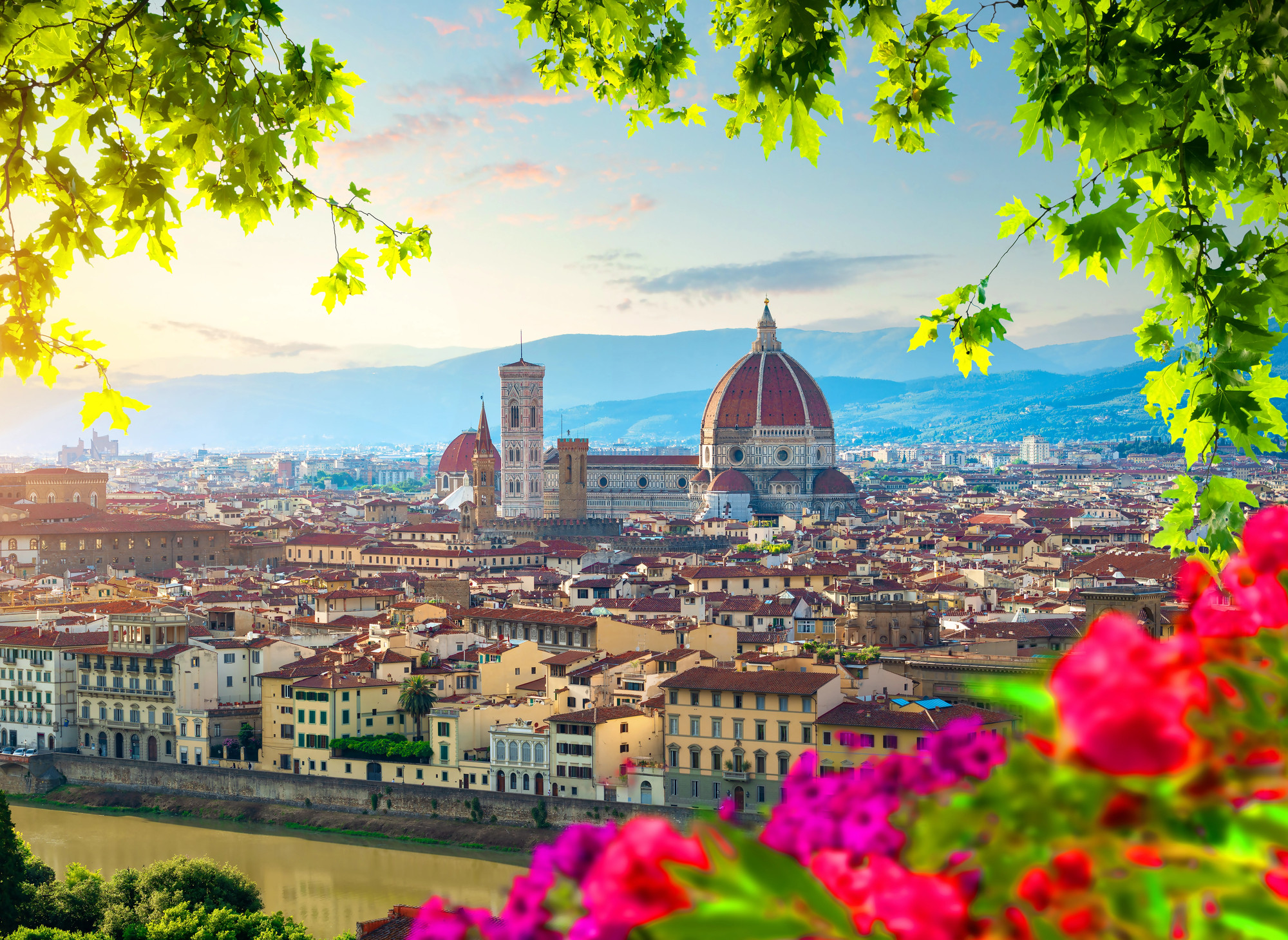
Planning a trip to Florence is really an exercise in restraint. The city is small enough to cross on foot in half an hour, yet it holds more Renaissance art per square metre than anywhere else on earth, and the temptation is to try for all of it in two days. Do that and you will spend your visit in queues. Give Florence three or four unhurried days and it becomes one of the most rewarding stops in Europe for Australian travellers, a place where the architecture, the marble and the food all belong to the same story.
Sam Newman spent time here on his run down through Italy, arriving from the marble country to the north and heading on to Rome the same evening. His day in the city says a lot about what Florence gives you easily, and what it makes you work for.
The Duomo, and the queue nobody warns you about
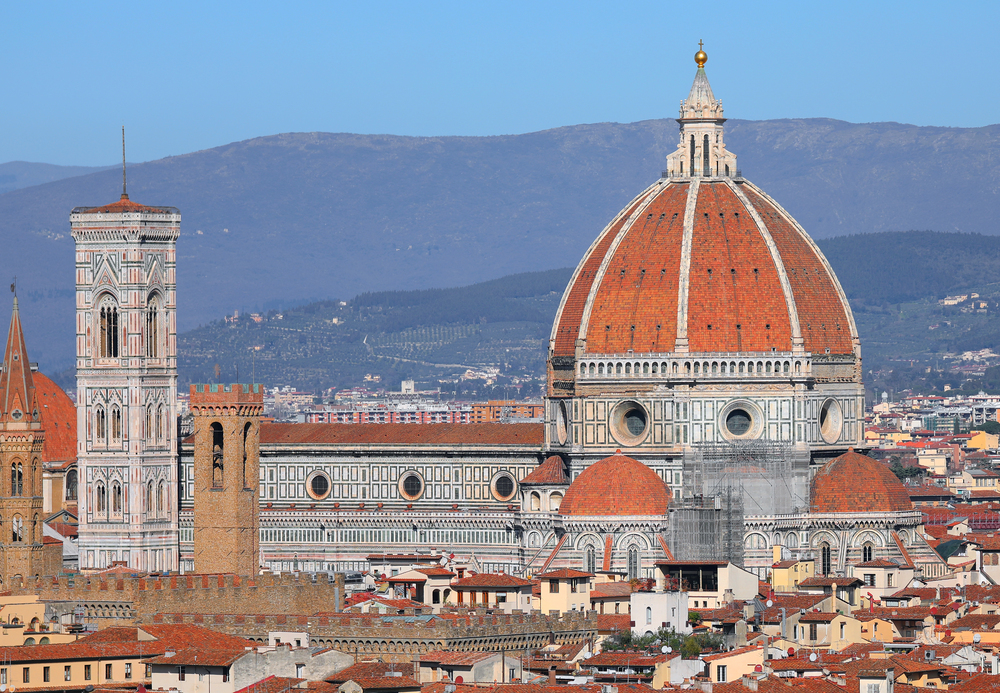
Santa Maria del Fiore, the cathedral everyone calls the Duomo, is the reason most people come. Brunelleschi’s dome still dominates the skyline, and the exterior, banded in green, white and pink marble, is worth standing in front of for a while before you think about going inside. The cathedral, the baptistery, the bell tower and the dome climb are separate experiences within the one complex, and each has its own entry arrangement.
The queue is the part that catches people out. Sam clocked it at what he reckoned was close to half a kilometre and decided the exterior would do, on the reasonable grounds that he had already seen a great many cathedrals on the way south. That is a perfectly good outcome if you have run out of appetite for interiors, but it is not much of a plan. Book the dome climb and cathedral entry in advance, go early, and treat the piazza itself as the free half of the experience.
Cathedral fatigue is real
If Florence sits late in a longer Italian itinerary, be honest about how many churches you have already walked through. It is better to choose two things and see them properly than to trudge through six because they were on a list.
Michelangelo, marble and the open-air sculpture
Michelangelo carved the David between 1501 and 1504, from a block of marble quarried at Carrara in northern Tuscany. The original now stands indoors at the Galleria dell’Accademia. The copy in Piazza della Signoria, outside the Palazzo Vecchio, stands roughly where the sculpture was first placed, and it is free to look at whenever you like.
That square and the neighbouring Loggia dei Lanzi are effectively an open-air sculpture gallery, and they are one of the best value hours in the city. There is a satisfying thread to pull here too. Head north-west out of Tuscany and you reach the Carrara quarries, where the marble for the David and centuries of Italian sculpture was cut, and where you can go into the mountain itself. Sam had come through that country before reaching Florence, and the connection between the white rock in the hills and the figures standing in the piazza makes both stops better.
The Arno, the bridges and the goldsmiths
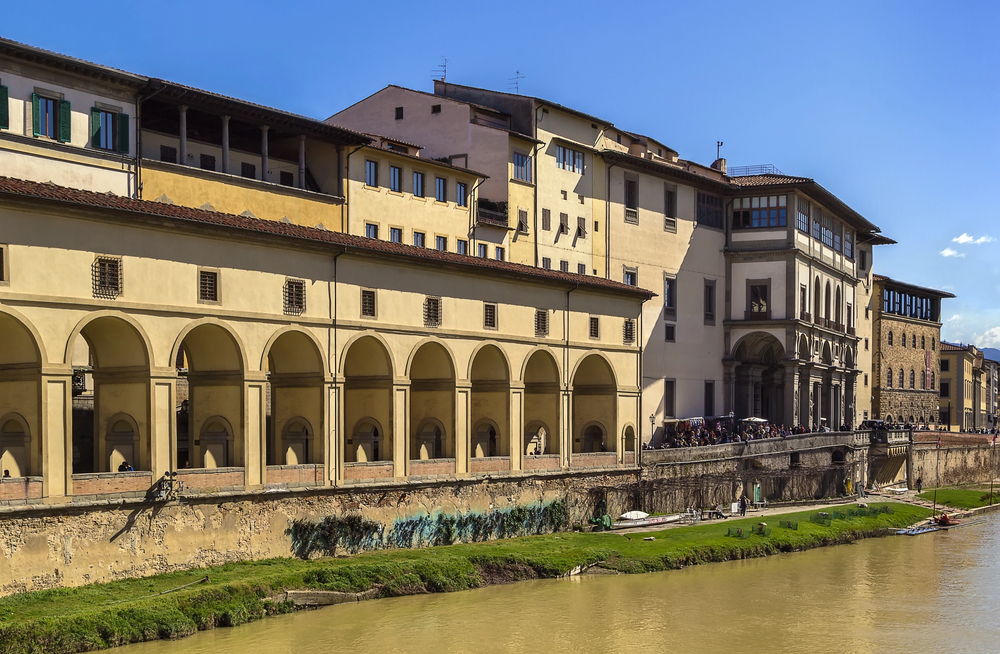
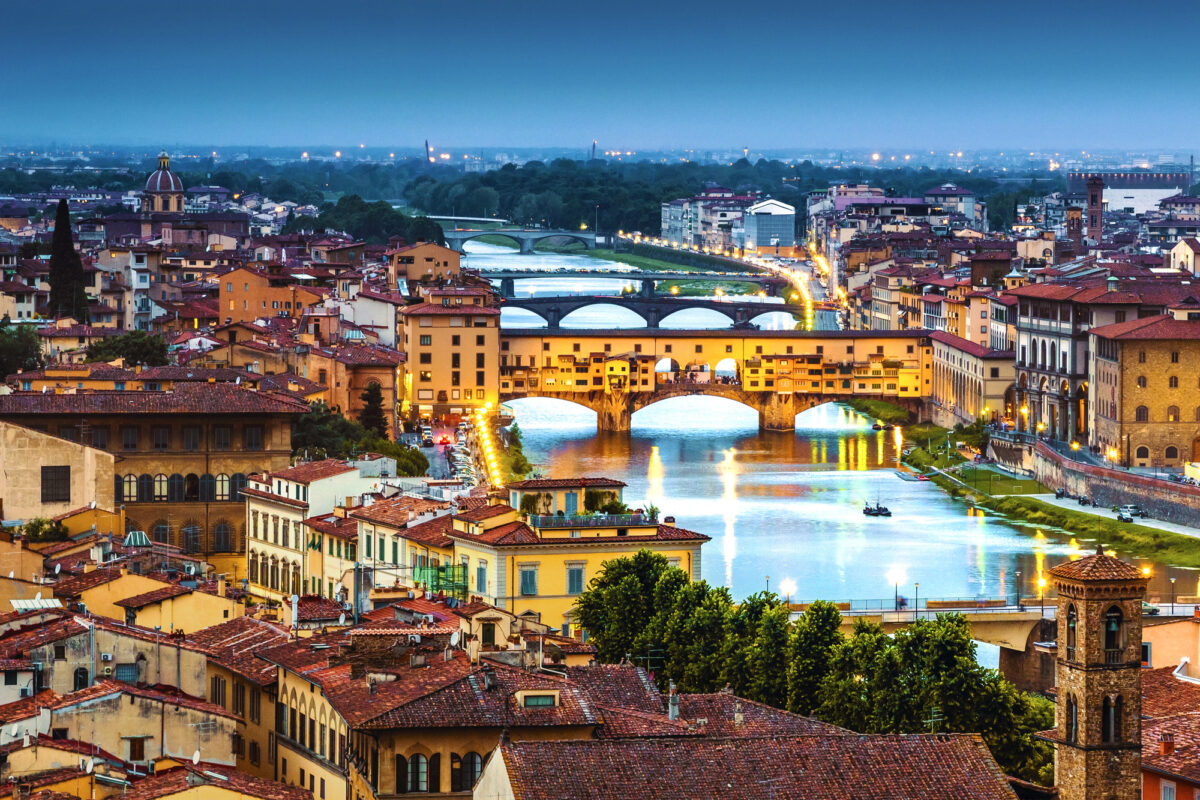
The Arno runs through the middle of Florence and the walk along it is a good way to reset between galleries. The Ponte Vecchio is the famous crossing, lined with shops that have belonged to goldsmiths and jewellers for centuries, and the streets around it carry on the tradition with watchmakers and jewellery houses one after another. Sam wandered that stretch weighing up whether anything in the windows was worth the exchange rate, which is the correct way to enjoy it whether or not you buy.
Cross to the Oltrarno side and the city loosens up. It is the quieter half, with workshops, leather and craft trades, and a slightly more local rhythm to the streets.
Eating in Florence
Tuscan food is plain in the best sense: bread, beans, olive oil, marbled beef, sheep’s cheese. The bistecca alla fiorentina is the local trophy, a thick T-bone grilled over coals and sold by weight, which means the conversation about how big a steak you actually want is part of the ritual. Order it knowing that portions here are genuinely large.
Florence also has its theatrical dishes, and Sam went looking for one of them: spaghetti finished inside a hollowed-out wheel of parmesan, tossed at the table so the cheese melts into the pasta, then plated with truffle shaved over the top. It is a spectacle as much as a meal, and it delivered.
Planning a trip to Florence around the driving problem
This is the practical heart of the matter. The historic centre is ringed by restricted traffic zones, the ZTL, monitored by cameras, and fines find their way to hire car companies and then to you months later. Add roadworks and closed streets and a self-drive arrival becomes an ordeal. Sam spent an hour and a half looking for a public car park, found plenty he could see but could not legally reach, and in the end handed the keys to an attendant who took the car off him at the kerb.
There are two sensible approaches. Arrive by train, because Florence is beautifully connected to Milan, Bologna, Venice and Rome by fast rail and the station is a short walk from the centre. Or, if you are driving Tuscany, park outside the ZTL for the duration of your stay and walk in, then collect the car when you leave for the countryside. Sort the toll and parking arrangements before you set off rather than at the kerb, and keep a record of every toll you pay.
When to go, and where Florence fits
Late spring and early autumn are the sweet spots: long daylight, walkable temperatures and gardens at their best. Midsummer is hot and crowded, and the queues Sam looked at are at their worst. Winter is the quiet reward, with cold clear mornings, far fewer people in the galleries and the city feeling like it belongs to Florentines again.
Florence is an easy piece to place in a larger trip. It sits naturally between Milan and Rome on the fast train line, it is the gateway to the Tuscan hill towns and the Chianti country, and it pairs neatly with the marble quarries at Carrara or a few days on the Ligurian coast. Three nights minimum, four if you want a gallery day and a countryside day without rushing either.
The parts of Florence that catch travellers out are all logistical: the entry bookings, the traffic zones, the timing of a train that gets you in before the middle of the day. Get those settled in advance and what is left is the city itself. If you would like your Italian itinerary built around the way you actually travel rather than a fixed departure list, our team in Ballan is happy to help you shape it.