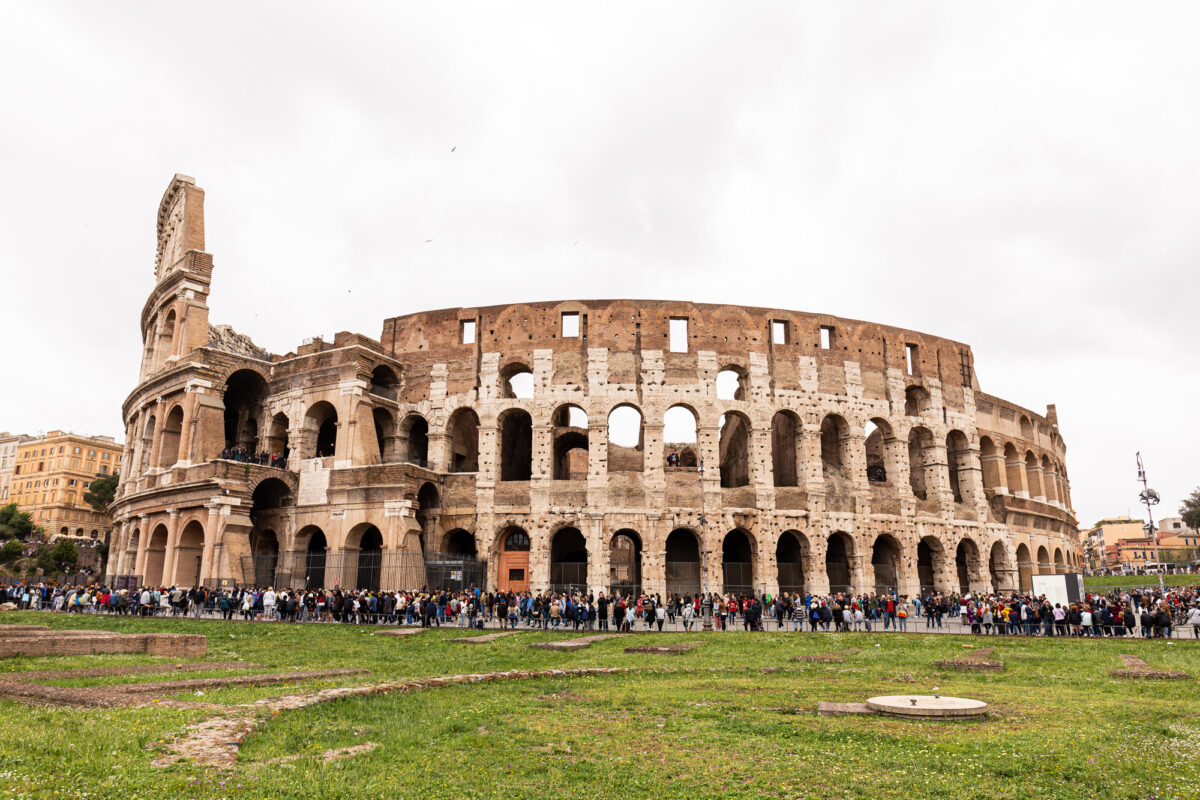
Most first trips to Rome are spent looking up, at domes, columns and ceilings. Visiting the Rome catacombs turns the city on its head. A few kilometres southeast of the Colosseum, beneath fields, pines and a road laid down before the Republic became an empire, lies a second Rome of tunnels, stairways and burial galleries cut by hand out of soft volcanic rock. It is quiet, cool, entirely underground, and it leaves most travellers more shaken than anything above ground does.
Sam Newman spent part of his forty-fourth day in Europe at the Catacombs of San Callisto, and came back up talking about nothing else. It is that kind of place.
Visiting the Rome catacombs of San Callisto
San Callisto is the best known of the catacombs strung along the Appian Way, and the largest you can readily visit. Its galleries were cut from the second century AD onwards and run on four levels, dropping well below the surface and adding up to roughly twenty kilometres of passages. Something in the order of half a million people were buried here, in shelves cut into the tunnel walls one above the other.
You see it on a guided tour, in groups sorted by language, and the English tour takes about forty minutes. That structure matters. There is no wandering off on your own down here, and you would not want to. A guide leads you through the sections that make sense of the rest: the Crypt of the Popes, where a number of third century bishops of Rome were laid to rest, and the nearby crypt of Saint Cecilia, whose tomb was found in this complex before her relics were moved into the city. Pilgrims came to pray at both, and the two crypts sit at the heart of the network.
Practical notes. It is a working religious site, so dress as you would for a church. It is noticeably cooler underground than in the street, which is a mercy in summer and worth a light layer in the shoulder seasons. There are stairs. And be prepared for restrictions on photography inside, which is not the worst thing that can happen to a visitor. What stays with people is not a photo but the arithmetic of it, all that rock removed by hand, all those names, level after level.
The Appian Way above your head
The catacombs are where they are because of the road. The Via Appia Antica was begun in 312 BC and ran southeast from Rome towards Capua and eventually Brindisi, the great trunk road of the ancient world. Roman law kept burials outside the city walls, so the road out of town became a corridor of tombs and mausoleums, and later of Christian cemeteries tunnelled underneath the surrounding land.
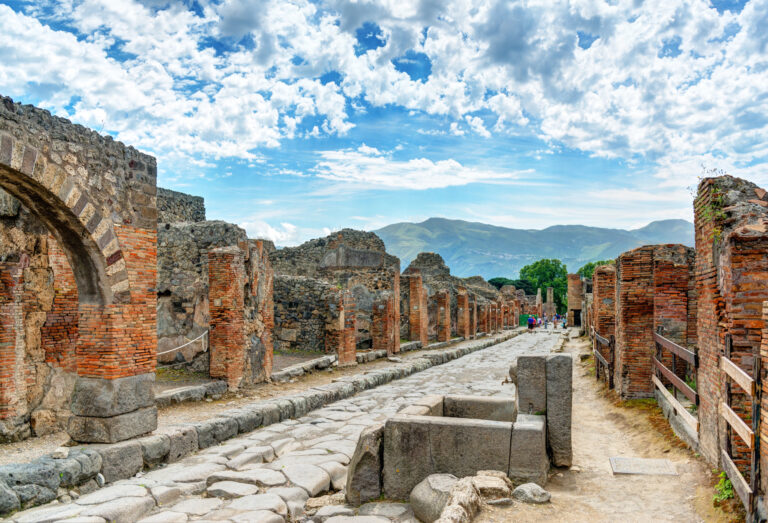
Above ground it is still there: worn basalt paving, umbrella pines, ruined tomb facades, open countryside surprisingly close to a capital city. Walking a stretch of it is one of the great free pleasures of Rome. Hiring a bike near the start of the old road, as Sam and his crew planned to do, covers far more of it and takes the sting out of the distances between sights. The Circus of Maxentius and the drum of the Tomb of Cecilia Metella are both along the way, and other catacomb complexes sit within an easy ride.
How to fit it into a Rome itinerary
Give it a half day and treat it as the counterweight to your Forum and Vatican days. The site sits outside the historic centre, so build in the transfer rather than trying to squeeze it between two morning bookings. Morning visits tend to be calmer, and pairing the underground tour with a couple of hours on the old road makes a complete, unhurried outing rather than a tick.
When to go
Spring and autumn are kindest in Rome, and they are kindest on the Appian Way in particular, where there is little shade and the paving throws back the heat in July and August. April to early June, or late September into November, gives you comfortable walking weather above ground and a city that has not yet emptied out for the Ferragosto lull. Winter is cold on the surface but the temperature underground barely notices, and the crowds thin considerably.
Rome sits neatly at the start or the end of a wider Italian trip, whether you are heading north to Tuscany and the lakes or south towards Naples and the coast. If your time is short, a well planned couple of days will still get you the ancient centre, one great gallery and an afternoon out on the Appia. That is the sort of shaping we do for travellers from Ballan and beyond every week, so the quiet, strange corners of a city make the cut alongside the famous ones.