Visiting Vatican City is one of those rare travel experiences where the reality is larger than the photographs prepared you for. The whole sovereign state fits inside a walk you could finish before lunch, yet it holds the seat of a religion followed by more than a billion people, a square built to swallow crowds, and a basilica so ornate that most people fall quiet the moment they step inside. For an Australian who has flown twenty-odd hours to reach Europe, it is worth the detour from anywhere in Italy.
Sam Newman spent part of his European trip in Rome and walked across the border into the Vatican, which is the easiest international crossing you will ever make: you simply keep walking up the approach and the paving changes underfoot.
St Peter’s Square, and the point of all that space
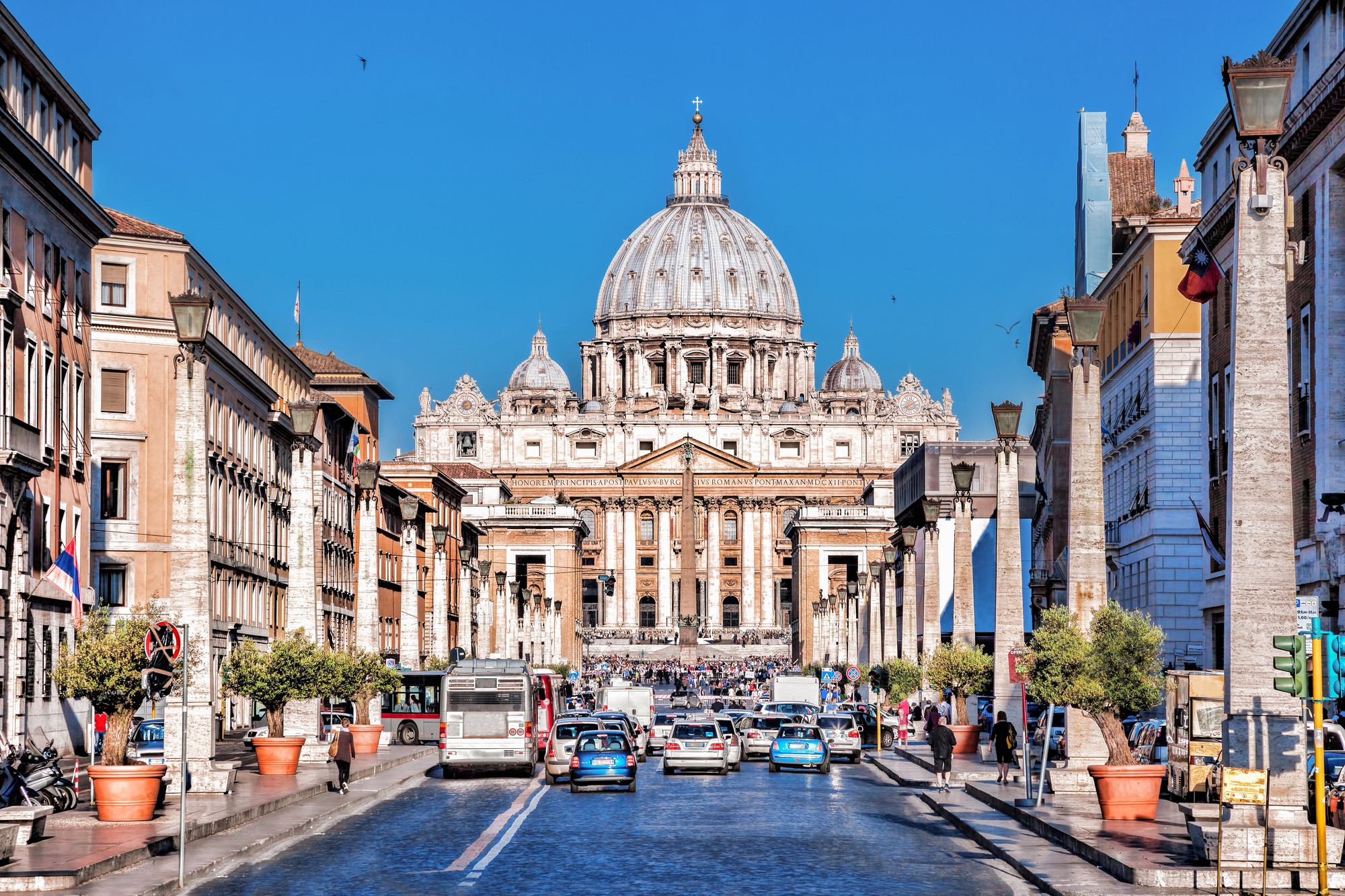
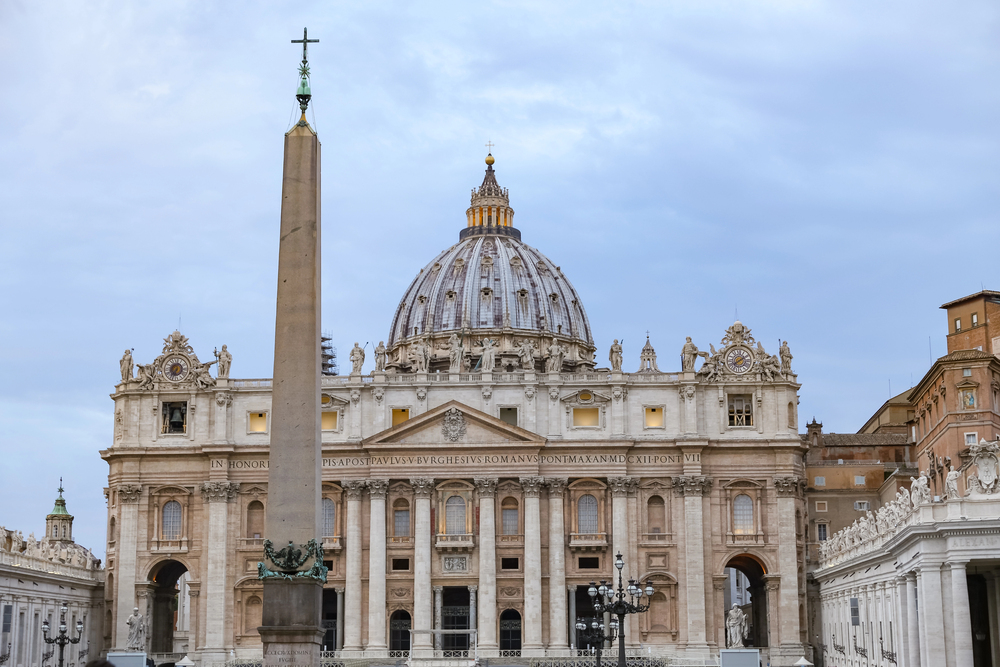
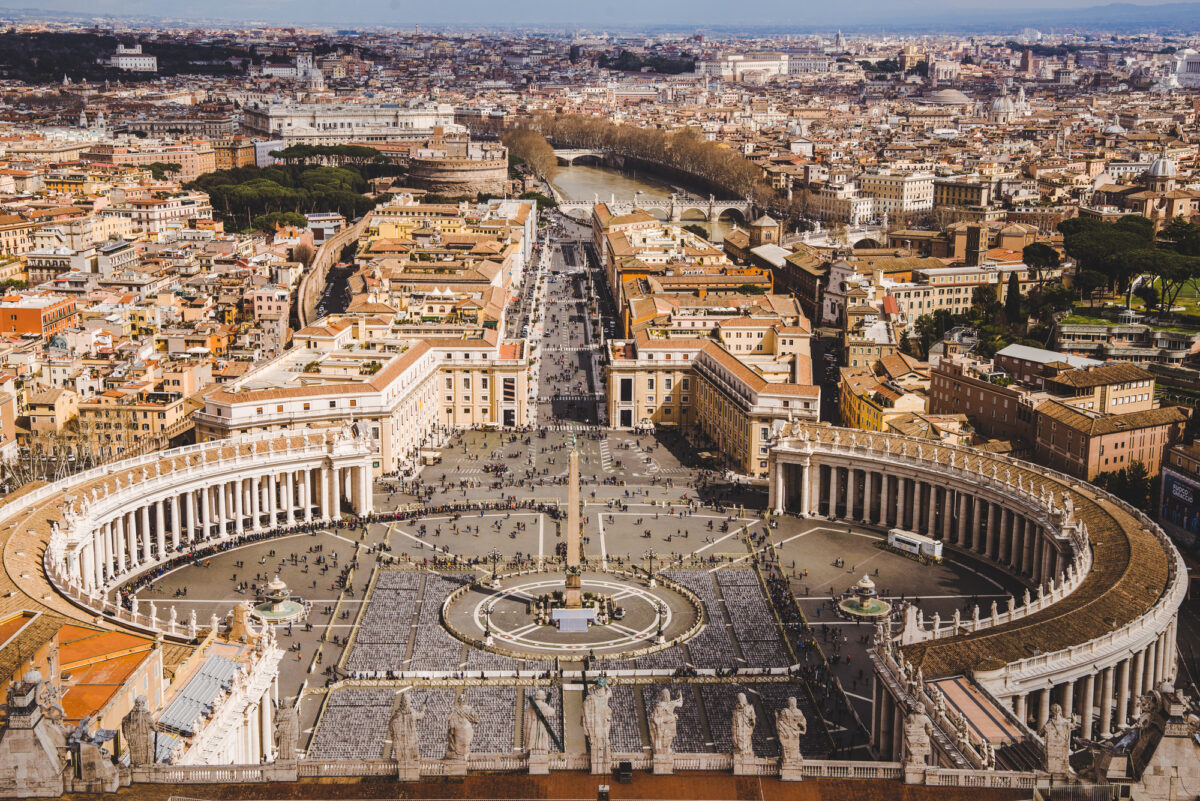
The square is the first thing that lands. It is enormous, oval rather than square, and wrapped in a double colonnade that curves out like two arms. There is an obelisk at the centre and a fountain on either side of it, and the whole design pulls your eye up to the facade of the basilica and the balcony above the central arch. That balcony is the one worth finding before you go any further, because it is where the pope appears to address the crowd, and where a new pope is presented to the world.
Stand in the middle and try to picture the square full. On the biggest occasions, the crowd fills the oval and spills back down the approach road toward the river. Empty or half full, the space still does its job: it is built to make one human figure on a distant balcony visible to hundreds of thousands of people at once.
The touts on the approach
Expect to be offered a private tour repeatedly on the walk to the square. Sam counted around eight approaches on a single morning. Some of these operators are perfectly legitimate and some are not, and there is no reliable way to tell them apart on the footpath. If you want a guided visit, book it before you leave home or through your accommodation, and then you can decline everything else without a second thought.
Inside St Peter’s Basilica
The interior is the reason people who have already been come back. Marble, gilt, mosaic that looks like paint until you are close enough to see the tesserae, and a nave so long that the human figures at the far end read as small. Off to one side there is a chapel set aside for prayer, with pews where visitors can sit and reflect away from the flow of people. It is the one part of the building where the volume drops, and it is worth using whether you are religious or not.
The basilica also holds the tombs of popes, some displayed in glass, dressed and shod. The scale of the place and the weight of what is buried under it are what stay with people, more than any single artwork.
The dome
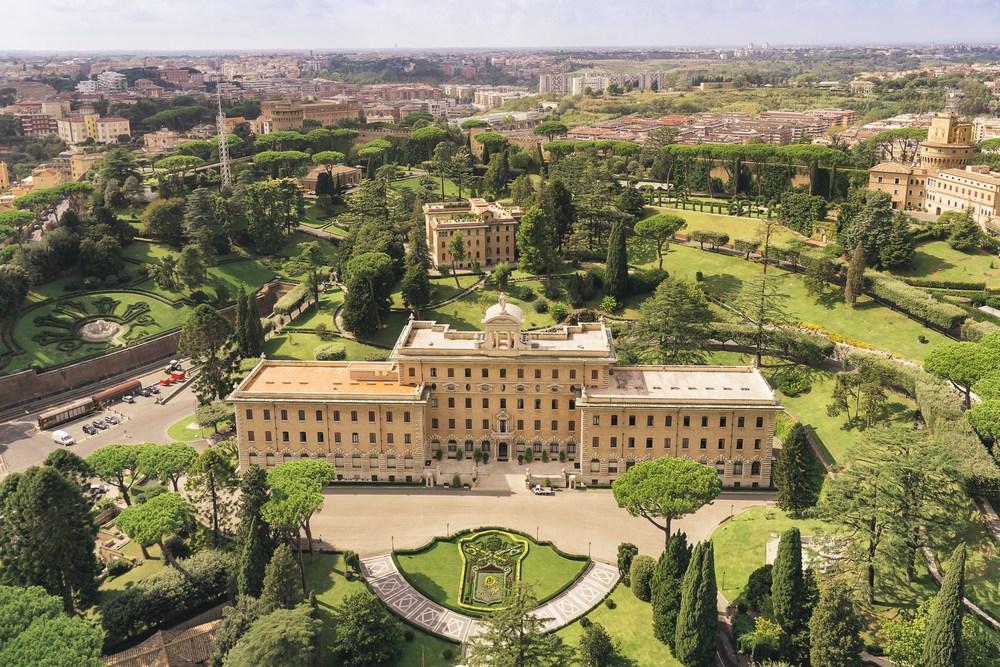
If your knees are willing, the climb up to the dome is the other half of the visit. It ends with a view straight down the length of the colonnade and out across the roofs of Rome, and it explains the geometry of the square better than any diagram.
What visiting Vatican City asks of you
Security. There is a proper screening point before you enter, similar to an airport. Travel light. A day pack full of gear is a slower entry than a phone and a bottle of water.
Dress. Shoulders and knees must be covered, for men and women alike. Shawls are handed out at the entrance for visitors who arrive uncovered, and returned to a box on the way out, but it is far more comfortable to arrive already dressed for it. A light scarf in a bag costs you nothing and solves the problem in every church in Italy, not just this one.
The guards. The men in the striped uniforms are Swiss. The Vatican has relied on Swiss soldiers for centuries, a neutral force brought in to protect the pope and the treasures of the state, and they are still the ones on the gates today.
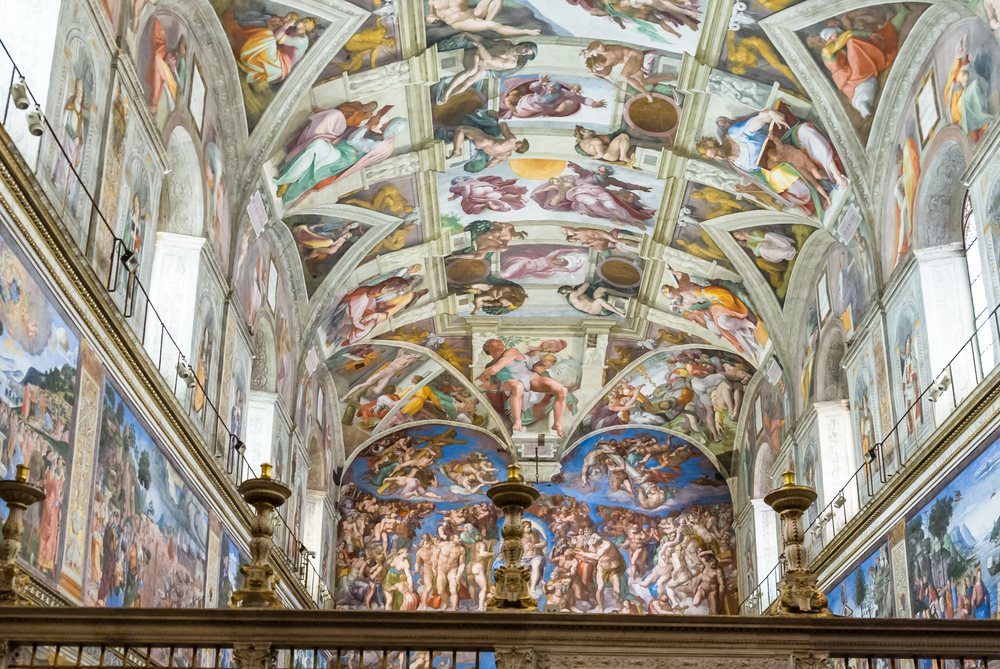
Two separate visits. St Peter’s Basilica and the Vatican Museums have different entrances on different sides of the walls. The Sistine Chapel sits at the end of the museum route, not inside the basilica. Trying to do both properly in one push is how people end up exhausted and remembering neither.
When to go, and how it fits a wider trip
Early morning is the kindest time of day here. The queues are shortest, the light on the facade is soft, and the square has not yet warmed up like a stone frying pan. Spring and autumn are the sweet spots for the season: April to early June, or late September through October, when Rome is pleasant to walk in and the crowds are thinner than the July peak. Winter is cold but quiet, and the interiors are just as extraordinary under grey skies. Bear in mind that papal audiences and major religious occasions draw very large crowds, so if you want the square calm, check what is on before you fix the date.
Most travellers give the Vatican half a day and build the rest around it, with the basilica in the morning and the older part of Rome in the afternoon. As part of a longer Italian itinerary it sits naturally between Florence and Naples, or as the anchor of three or four days in Rome before heading north to Tuscany or south toward the coast. Two or three unhurried days in the city will always beat one frantic one, and the difference is entirely in the planning.