Syracuse
Syracuse, Italy

Visiting Syracuse in Sicily: Where Greece Never Left

Plan a Syracuse trip in Sicily: Ortigia's lanes, a cathedral built inside a Greek temple, the Neapolis ruins and how long to stay.

Italy 5 landmarks Tailored by Cartier World Travel

Visiting Syracuse in Sicily is one of those rare experiences where the layers of history do not sit behind glass. They are underfoot, in the wall of a cathedral, in the shape of a harbour that once held off the Athenian fleet. This was among the greatest cities of the ancient Greek world, the home of Archimedes, and the Greek bones of it have never really been covered over. Two and a half thousand years later, people still live in it, hang their washing above the lanes and argue about parking in front of ruins.

For Australian travellers, Syracuse rewards the long flight because it is not a single monument you tick off. It is a working city on the Ionian coast with an island old town, a serious archaeological park, honey coloured baroque streets and Europe’s most active volcano on the northern horizon.

Ortigia, the island at the heart of it

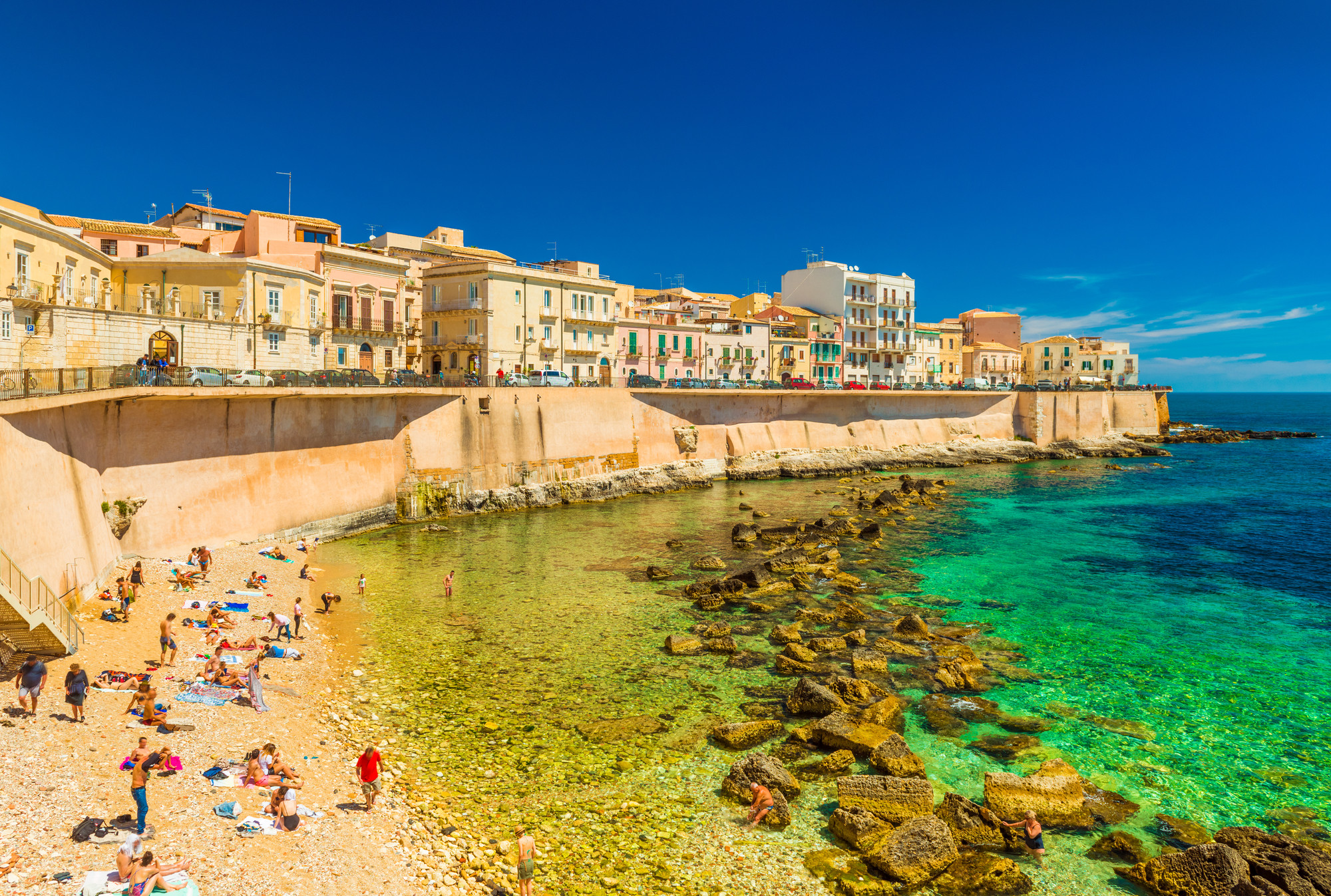
Ortigia is the original settlement, a small island joined to the modern city by bridges, and it is where most visitors spend their days. The lanes are narrow, shaded and slightly crooked, and they have a habit of opening without warning onto a square or a wall of blue sea. Sam and his travelling companion wandered its heart on their first day and came back through it in the evening heat, noting that the residences here are old, tall and generally reached by a climb of stairs. That is worth knowing when you book: character and lifts rarely come together in a place like this.

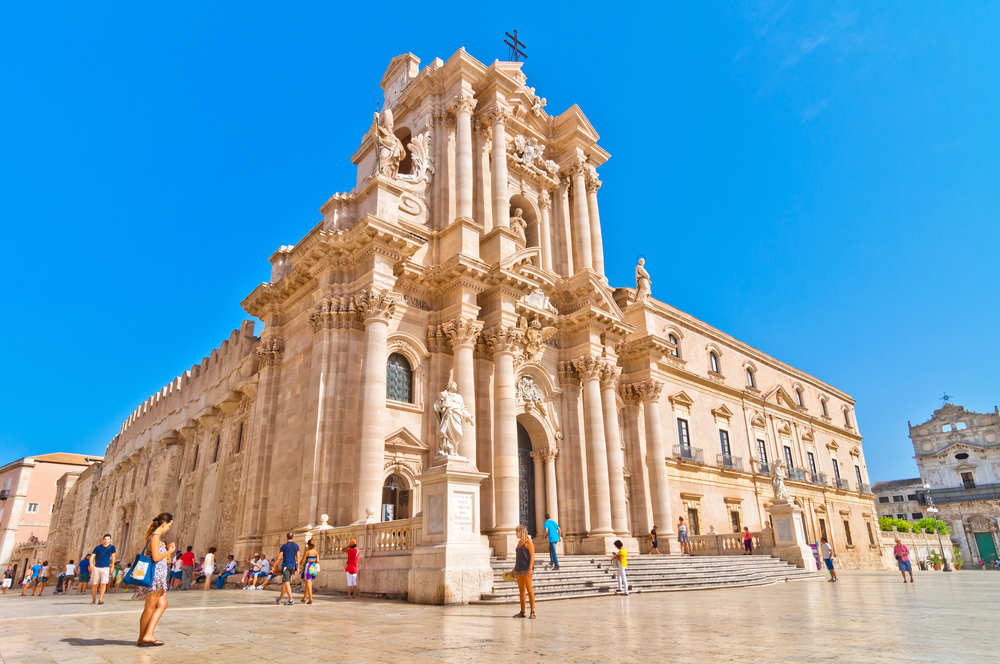
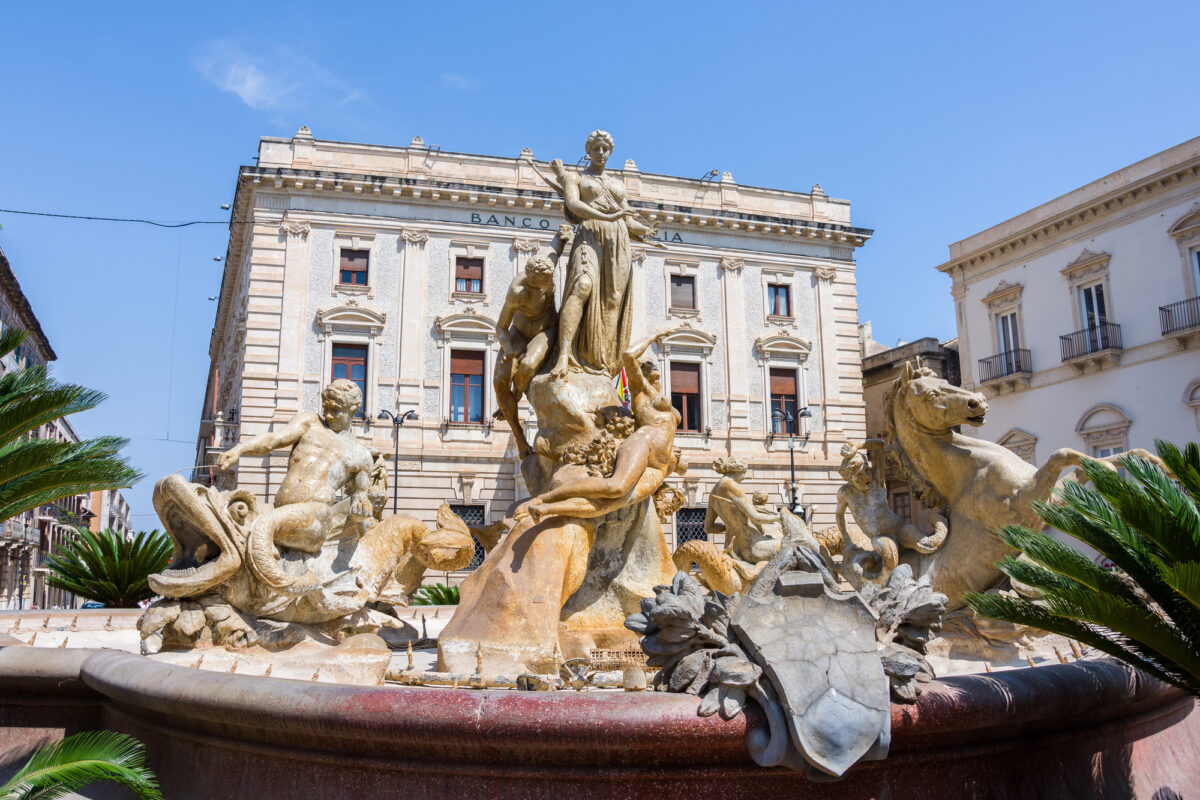
The cathedral is the clearest illustration of the city’s habit of building on top of itself. The Doric columns of a fifth century BC temple to Athena are still standing inside the walls, so you walk past ancient stone on your way to a baroque facade. Elsewhere in Ortigia, grand old palazzi sit shoulder to shoulder with corner bars, and ancient ruins stand in the middle of open squares, close enough to touch. Sam joked that they must be constructing the ruins on purpose to add a bit of history, which is a fair reaction the first time you see antiquity used as street furniture.

The Greek and Roman city

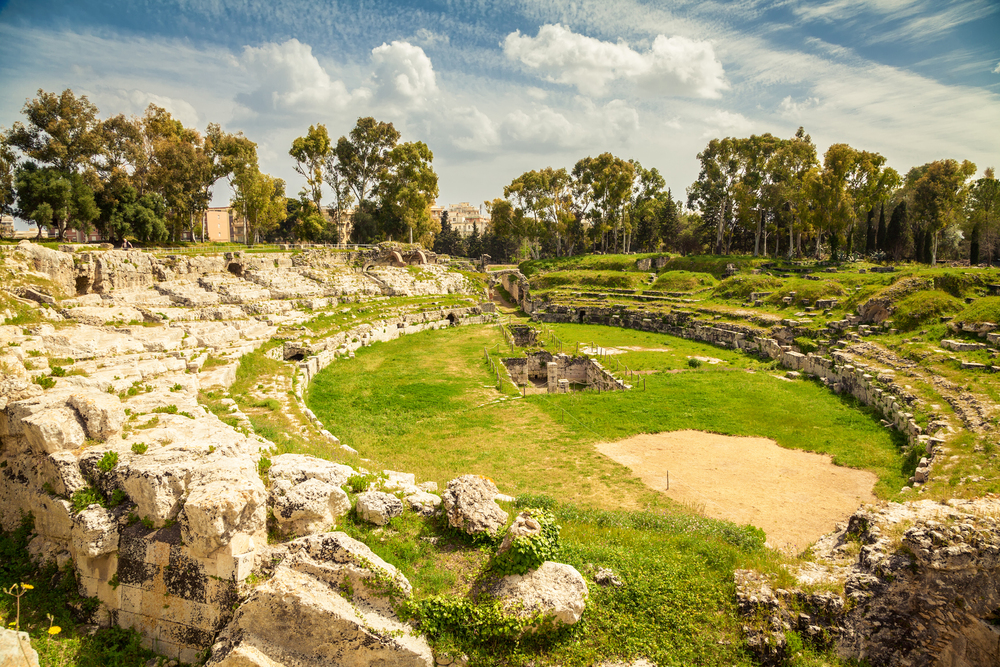
Across the water from Ortigia, the Neapolis archaeological park holds the Greek theatre cut into the hillside, the Roman amphitheatre and the vast limestone quarries that supplied the ancient city. Among them is the tall, curved cave known as the Ear of Dionysius, famous for the way sound travels inside it. Go in the cooler part of the day, take a hat and water, and allow more time than you think, because the site is bigger and more exposed than it looks from the entrance.

Mount Etna on the horizon

Etna dominates this side of Sicily, and from Syracuse it is close enough for a full day on the mountain. The usual approach is from the southern slopes above Catania, with a cable car, then four wheel drive vehicles, then a guide on the upper reaches. How high anyone gets on the day depends on the weather and on the volcano’s own mood, which is part of the appeal. Sam had the mountain firmly in his sights, having already seen Vesuvius further north on the mainland.

Visiting Syracuse in Sicily by ferry and autostrada

Arriving overland is a fine way to reach the island. Sam drove down the toe of Italy and took the car ferry across the strait, then continued south past Catania to Syracuse. If you are driving yourself, take his warning seriously: on narrow streets, drivers step out of parked cars without looking, and he lost a wing mirror to exactly that on the way to the ferry. Tolls, ticket machines and queues also take patience, and the far more relaxed option is to fly into Catania and have a transfer or a driver waiting.

When to go and how it fits a wider trip

Spring and autumn are the sweet spots. The days are long enough for both the archaeological park and the old town, the sea is still inviting and the heat is manageable, which matters in a city where the walking is done on stone in full sun. High summer is hot, as Sam kept noting, and midsummer crowds concentrate in Ortigia.

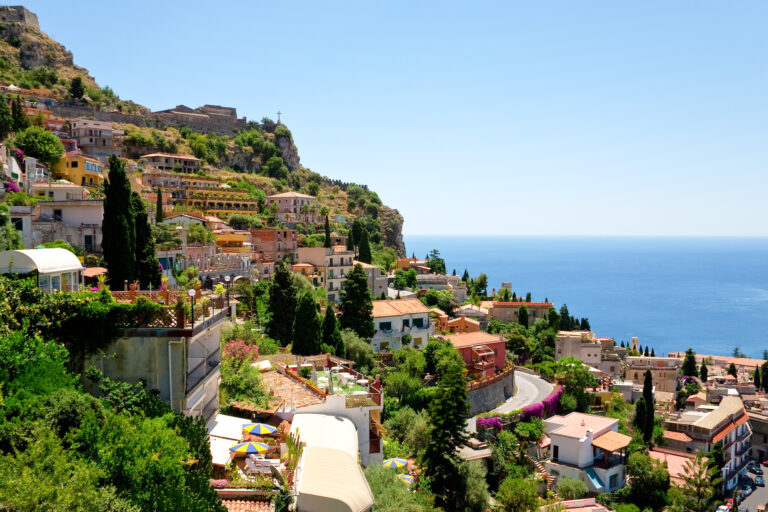
Syracuse sits neatly on a wider Sicilian loop with Etna and Taormina to the north and the baroque towns of the Val di Noto inland. It also works as the southern end of a longer Italian journey that comes down from Rome and the Bay of Naples by road and rail. Three or four nights lets you slow down properly, and we are always happy to shape a Sicilian leg around what you actually want to see, whether that is ancient stone, volcanic slopes or long lunches by the water.

In his own words

What Sam said

Mount Etna is 11,000 odd feet above sea level. That's a big mountain. We've seen its little brother, Vesuvius. Sam Newman, on the ground
See it for yourself

Sam Newman in Syracuse

Filmed on Sam's own trip through Europe, parts of which Cartier World Travel arranged.

On the map

Syracuse laid out

What to see

Syracuse, up close

Duomo di Siracusa and Piazza Duomo, Ortigia
01

Duomo di Siracusa and Piazza Duomo, Ortigia

Cathedral and square

The cathedral is a fifth century BC Greek temple to Athena that was never demolished, just built around, so the original Doric columns still bulge out of the nave walls under a Sicilian Baroque facade. The square outside is one of the finest in Italy, a long white limestone stage that glows at dusk. Walk the whole of Ortigia afterwards, out to Fonte Aretusa with its papyrus, then into the lanes of the Giudecca. Do it on foot, slowly, twice, once in the morning and once after dark.

Visit the cathedral mid morning and return to the piazza for an aperitivo around sunset, allow an hour inside plus a two hour wander through Ortigia.

Parco Archeologico della Neapolis (Neapolis Archaeological Park)
02

Parco Archeologico della Neapolis (Neapolis Archaeological Park)

Ancient site

This is the Syracuse that once rivalled Athens, spread across a terraced hillside of limestone quarries above the modern city. The Teatro Greco is carved straight out of the rock and still stages classical drama, and the Orecchio di Dionisio (Ear of Dionysius) is a cave with acoustics that make a whisper carry. Add the vast Ara di Ierone II and the Roman amphitheatre and you have several centuries in one walk. The lemon and oleander planted through the old quarries make it far prettier than most ruins.

Book online ahead in high season, go in the first hour after opening for shade and quiet, allow two to three hours, and check the Fondazione INDA season if you want to see Greek tragedy in the theatre itself in late spring.

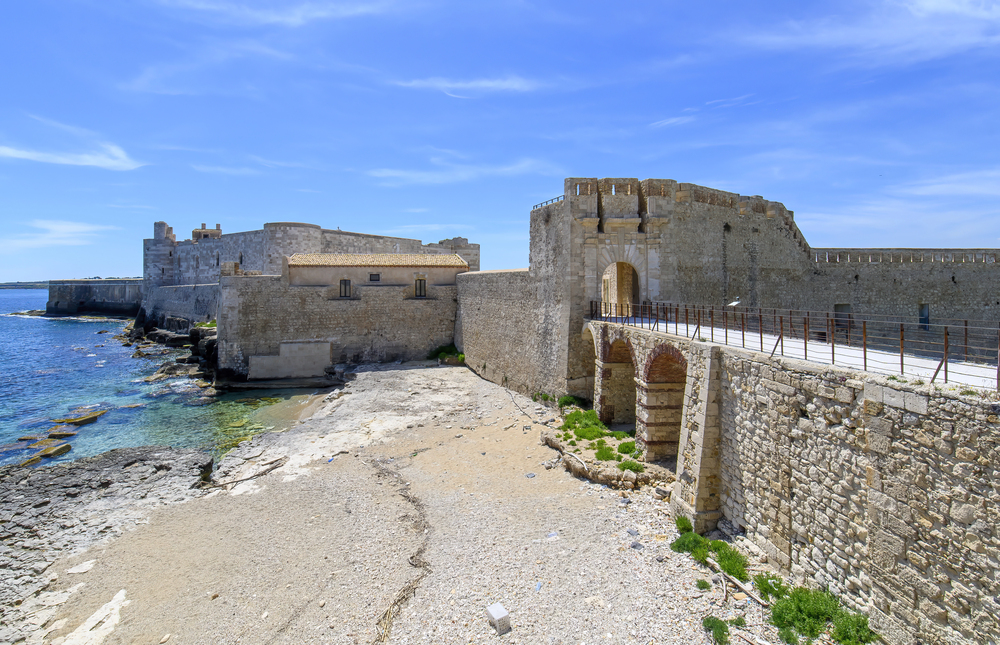
Castello Maniace
03

Castello Maniace

Fortress

Frederick II's thirteenth century fortress occupies the sharp tip of Ortigia with sea on three sides, and the great vaulted hall inside is a genuinely beautiful piece of Swabian engineering rather than just a rampart to climb. The approach along the seafront past the Lungomare d'Ortigia is half the pleasure. Come late in the day when the light turns the limestone gold and the wind drops. Swimmers use the rocks and small platforms on the way out, so bring a towel.

Go in the last two hours before closing, check the day it takes its weekly rest before you walk out, allow an hour plus a swim.

04

Mercato di Ortigia and Caseificio Borderi

Market and food

The morning market on Via Emanuele De Benedictis is the best eating in Syracuse and it is all outdoors: swordfish and tuna on ice, wild fennel, blood oranges, pistachio and almond stalls, salted capers from Salina. Caseificio Borderi builds sandwiches to order in a piece of street theatre worth the queue, and Fratelli Burgio nearby does a platter of Sicilian cheeses and salumi with a glass of local white. It is a market rather than a food court, so it winds down by early afternoon.

Arrive by mid morning on a weekday, expect to queue at Borderi and put your name down before you browse, allow ninety minutes.

05

Riserva Naturale Fiume Ciane e Saline di Siracusa (Ciane River and Syracuse Salt Pans Reserve)

Nature and boat trip

A short drive from the city, a spring fed river runs through the only wild papyrus stands in Europe, a leftover of Greek Sicily. Local boatmen row small flat boats up the narrow channel between papyrus walls higher than your head, and the water is startlingly clear. Almost no cruise or coach visitor ever comes here. Pair it with the adjacent salt pans for birdlife, including flamingos on passage.

Arrange the rowboat through your hotel or driver a day ahead since it depends on the boatmen being at the river mouth, go early morning for light and birds, allow two hours including the drive.

Contact us about

Syracuse

Tell us roughly when and for how long. We build the rest around you, the way we built Sam's.

    Have you booked your flights? *