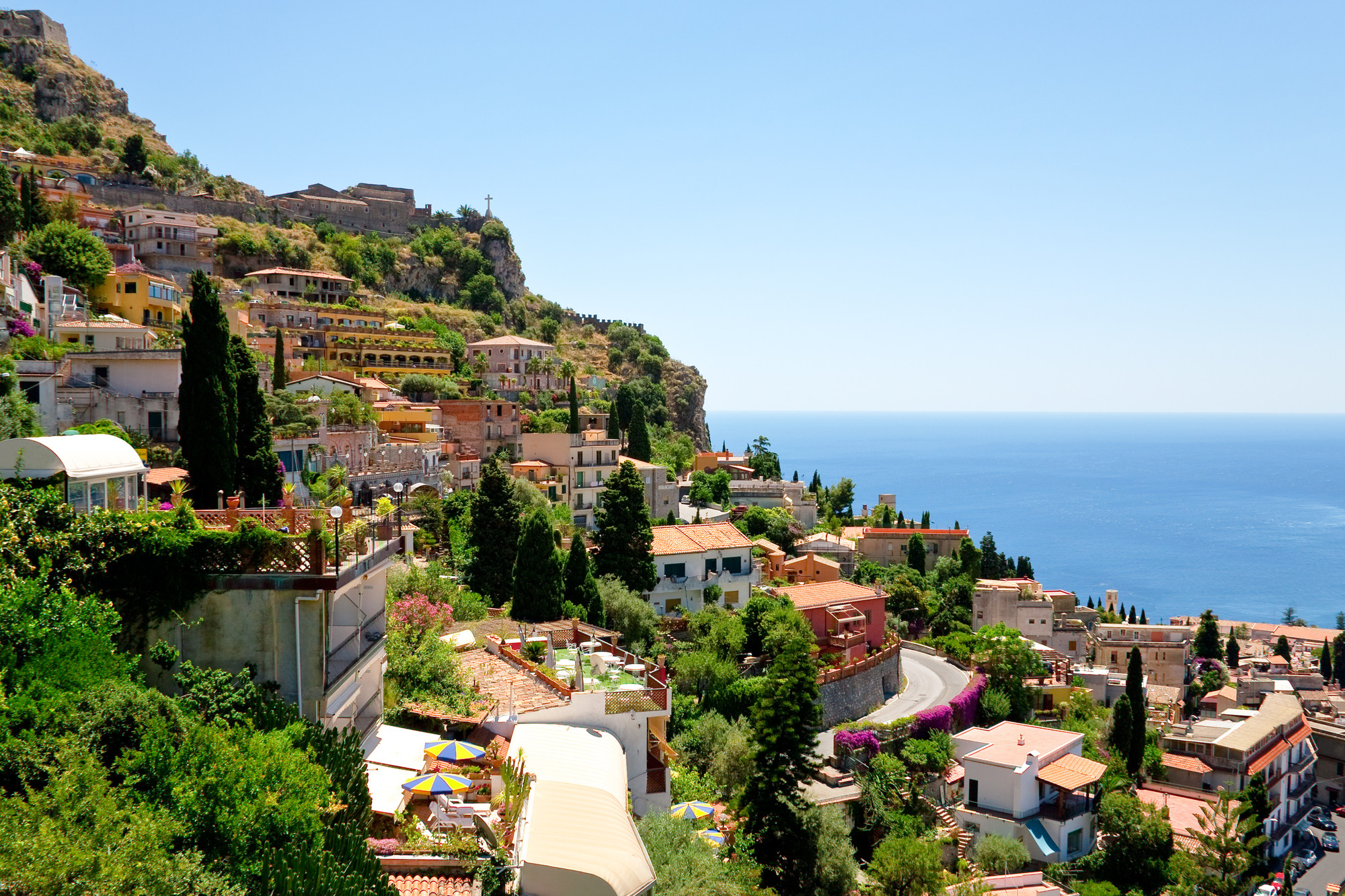
Some towns are pleasant detours. Taormina is the one you build the itinerary around, which is why visiting Taormina in Sicily is worth the long haul from Australia rather than a rushed overnight on the way to somewhere else. It sits high on Monte Tauro, a ledge of stone streets and terraced gardens with the Ionian Sea a long way below and Mount Etna smoking away to the south west. Sam Newman filmed part of his Sicilian leg from the mezzanine balcony of the Grand Hotel San Pietro here, looking out over the grounds and the pool, and the thing he kept returning to was how good the setting is.
Why visiting Taormina in Sicily feels different
The town has the geometry of a balcony. Everything faces outward and downward: the sea, the sweep of coast towards Giardini Naxos, the volcano. That is unusual in Italy, where the best views often ask you to climb a bell tower. In Taormina the view is simply the default condition, from a café chair, from a hotel terrace, from a gap between two buildings on the main street.
It is also a small place, walkable end to end, and that suits travellers who would rather settle in for a few nights than pack and unpack. You can spend a morning doing very little and still feel you have seen something.
The ancient theatre
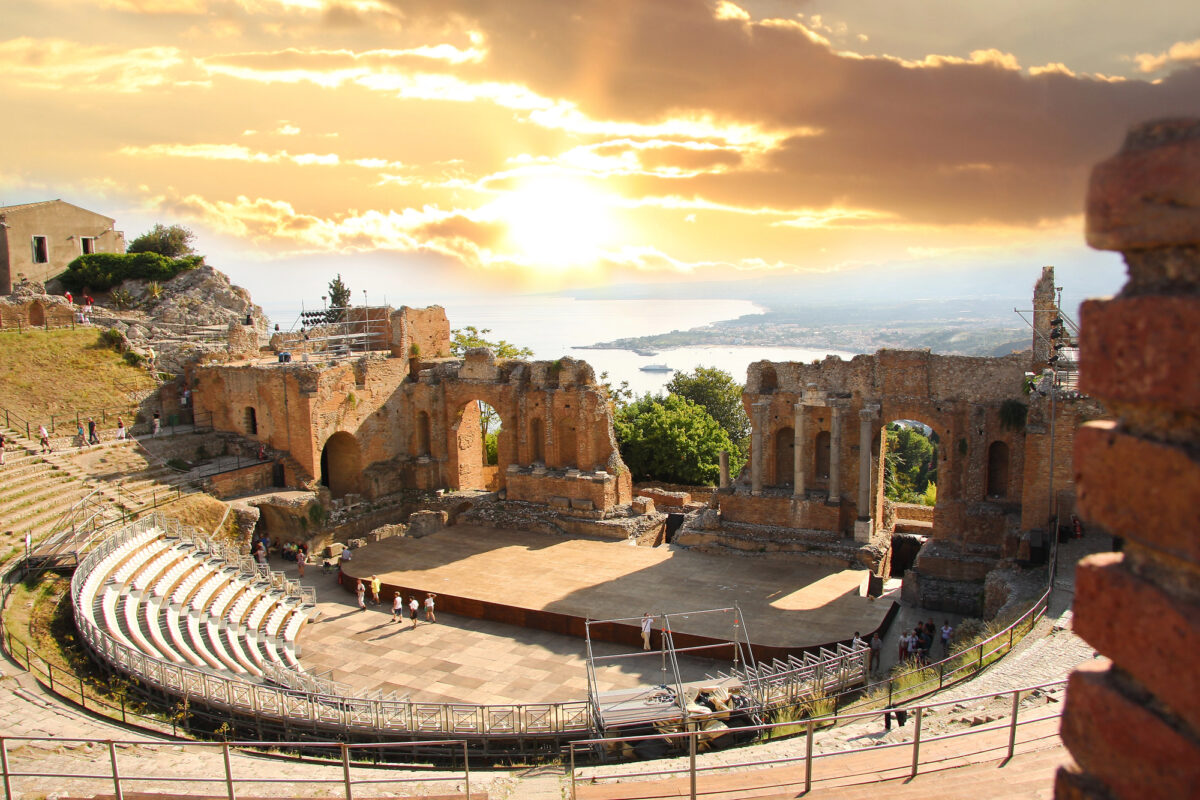
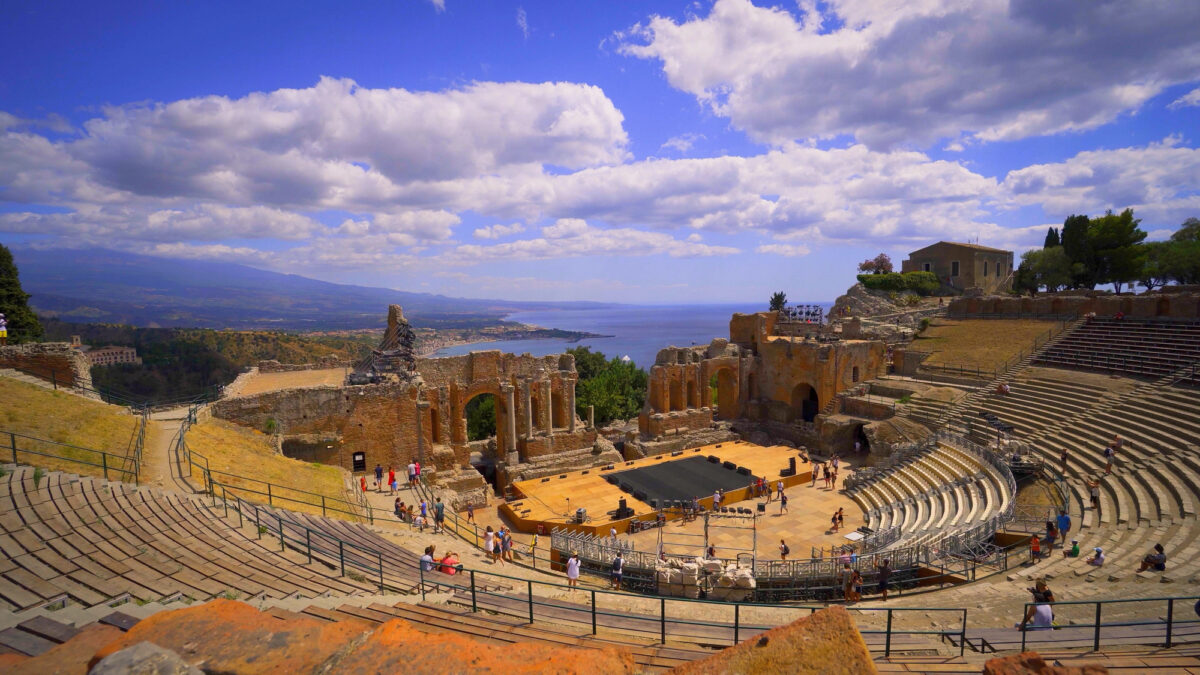
The Teatro Antico is the town’s great set piece. Built by the Greeks and reworked by the Romans, it is cut into the hillside so that the stage opens onto the coast and Etna beyond. Ruins are often about imagination. This one does the work for you.
The old town
Corso Umberto runs the length of the ridge, closed to traffic and lined with pastry shops, ceramics, granita and linen. Piazza IX Aprile is the wide belvedere halfway along, with a chequered pavement and the whole gulf laid out in front of it. The public gardens, the Villa Comunale, are the quiet alternative when the main street fills up. Below the town, reachable by cable car, are the beaches at Mazzarò and the little tied island of Isola Bella. Above it, the hamlet of Castelmola sits even higher, for anyone who thinks Taormina is not quite lofty enough.
Mount Etna, close enough for a day
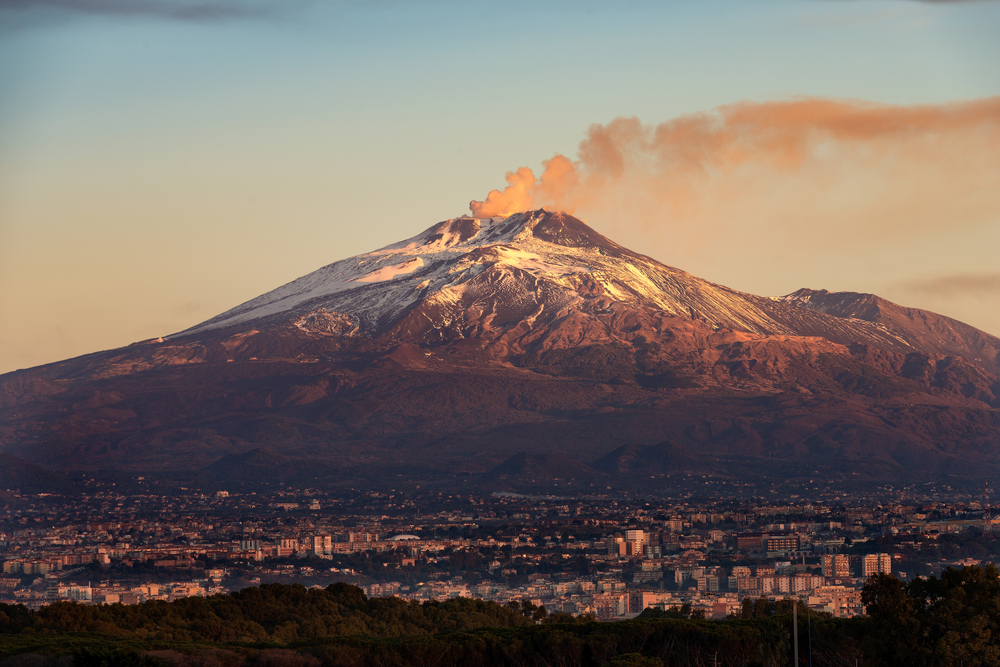
Etna is the reason the soil here grows what it grows and the reason the horizon is never dull. It is an easy day out from Taormina and Sam and Sue made the drive up during their stay, a run of switchbacks that climbs out of citrus country into black lava fields and thin air. Going with a guide or a driver takes the pressure off, particularly if you want to walk on the higher craters or stop at a winery on the lower slopes, where the volcanic soil produces some of Sicily’s most interesting reds and whites.
Getting there and getting around
Catania is the closest airport, an hour or so away by road, and connects through Rome or Milan for travellers coming from Australia. The last stretch into town is a climb of tight hairpins, and the approaches to the cliffside hotels are tighter again. Sam was full of praise for the local coach drivers who thread buses through it every day, and he is right that the drive itself becomes part of the memory.
If you hire a car, take the parking seriously, because much of the centre is pedestrian or restricted, and treat the autostrada tolls as a small ritual to be learned rather than rushed. One more practical note straight from Sam’s Etna day: keep a spare set of hire car keys with your travelling companion. A bag left on a car roof does not come back, and a spare key is the difference between a laugh and a very long afternoon on a volcano.
Eating and the aperitivo hour
Late afternoon is when Taormina is at its best. The light goes gold on the stone, the day trippers thin out and the terraces fill with people having a drink and something small to eat, which is exactly how Sam and Sue spent their time at the hotel, a cold drink and a slice of pizza with hot salami. Sicilian food rewards curiosity here: seafood off the boats at the coast below, pistachio and almond in everything sweet, granita and brioche in the morning, and the Etna wines to finish.
When to go, and how it fits a wider trip
Late April to June and September into October are the sweet spots, warm enough for the sea and the terraces without the peak summer crowds and heat. High summer is busy and hot. Winter is quiet and cool, with snow on Etna and a much more local feel, though some seasonal places close.
Three or four nights is a sensible allocation, long enough to see the theatre, ride down to the water, take the volcano day and still have an afternoon with nothing planned. From there Sicily opens up in every direction: Syracuse and Ortigia to the south, the baroque hill towns of the south east, Palermo and the Greek temples in the west. It also slots neatly into a wider Italian itinerary, either as the reward at the end of a run down through Rome and Naples, or as the slow start before heading north. Either way, it is the kind of place we like to plan around rather than squeeze in, with the transfers, the Etna day and the drives all sorted before you land.