Most visitors meet Crete along its north coast, where the airports, the resorts and the cruise traffic are. The island’s other side is a different proposition altogether, and driving to Plakias in Crete is how you find it. The road climbs out of the olive country south of Rethymno, threads through gorges so deep the sky narrows to a strip, then drops in a series of hairpins to a coastline of clear water, small beaches and villages that seem to appear from nowhere. It is one of the great short drives in the Mediterranean, and the village at the end of it rewards the effort.
Plakias faces the Libyan Sea, which means it looks towards Africa rather than back at Europe. The light is harder, the mountains come almost to the water, and the pace is slower than anywhere on the tourist strip up north. For travellers who want a few days of genuine quiet in the middle of a Greek itinerary, this is the place to book them.
Why driving to Plakias in Crete is the point, not the chore
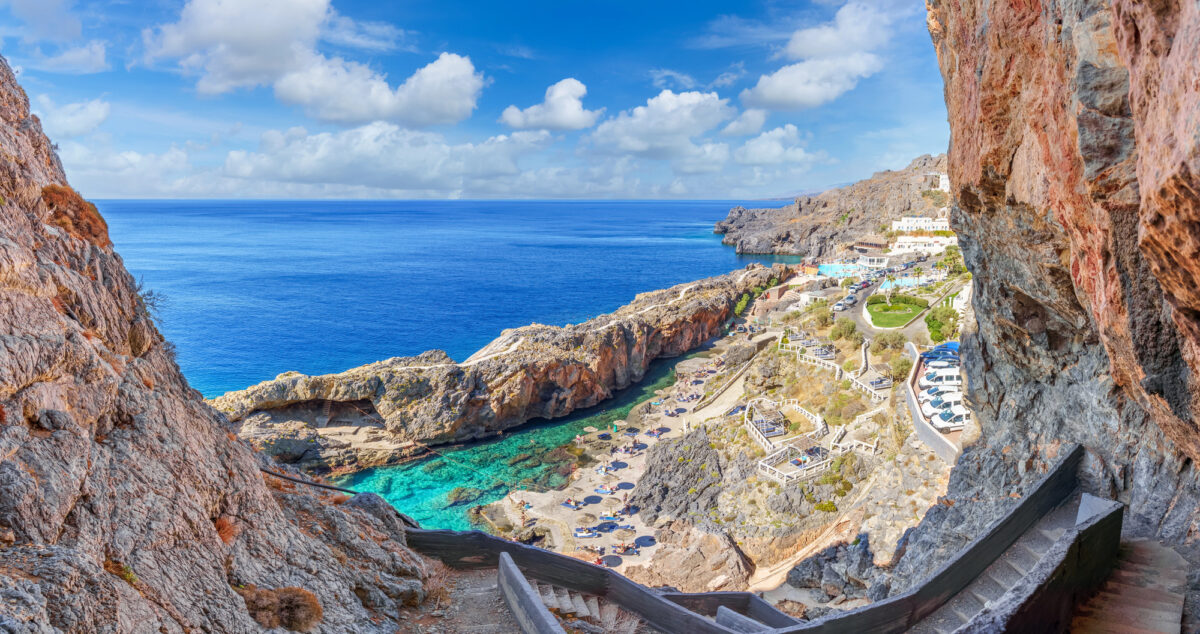
The transfer from the north coast is short in kilometres and long in memory. The two routes that matter are the Kourtaliotiko Gorge and the Kotsifou Gorge, both of which cut through the mountain wall that separates the island’s interior from its southern shore. The road in the Kotsifou runs along a ledge with sheer rock on one side and a drop on the other, and partway through there is a tiny whitewashed chapel built directly into the cliff, the kind of thing you slow down for and then stop for.
Beyond the gorges the road leads along the coast in tight turns, often with no barrier and no shoulder. It is spectacular and it demands your full attention. Sam summed up the mix of feelings better than a guidebook would, and the honest advice is simple: allow twice the time the map suggests, drive it in daylight, and pull over properly when you want to look. There are parking spots at the best viewpoints, and most of them fit two cars at a squeeze.
Practical notes for the drive
A small car is a genuine advantage on these roads. Fuel up before you leave the north coast, take water, and do not rely on phone signal in the gorges. If anyone in the party is nervous about heights or hairpins, put them in the back seat on the inside and make the trip in the morning, when the light is kinder and the traffic is thinnest.
What Plakias is actually like
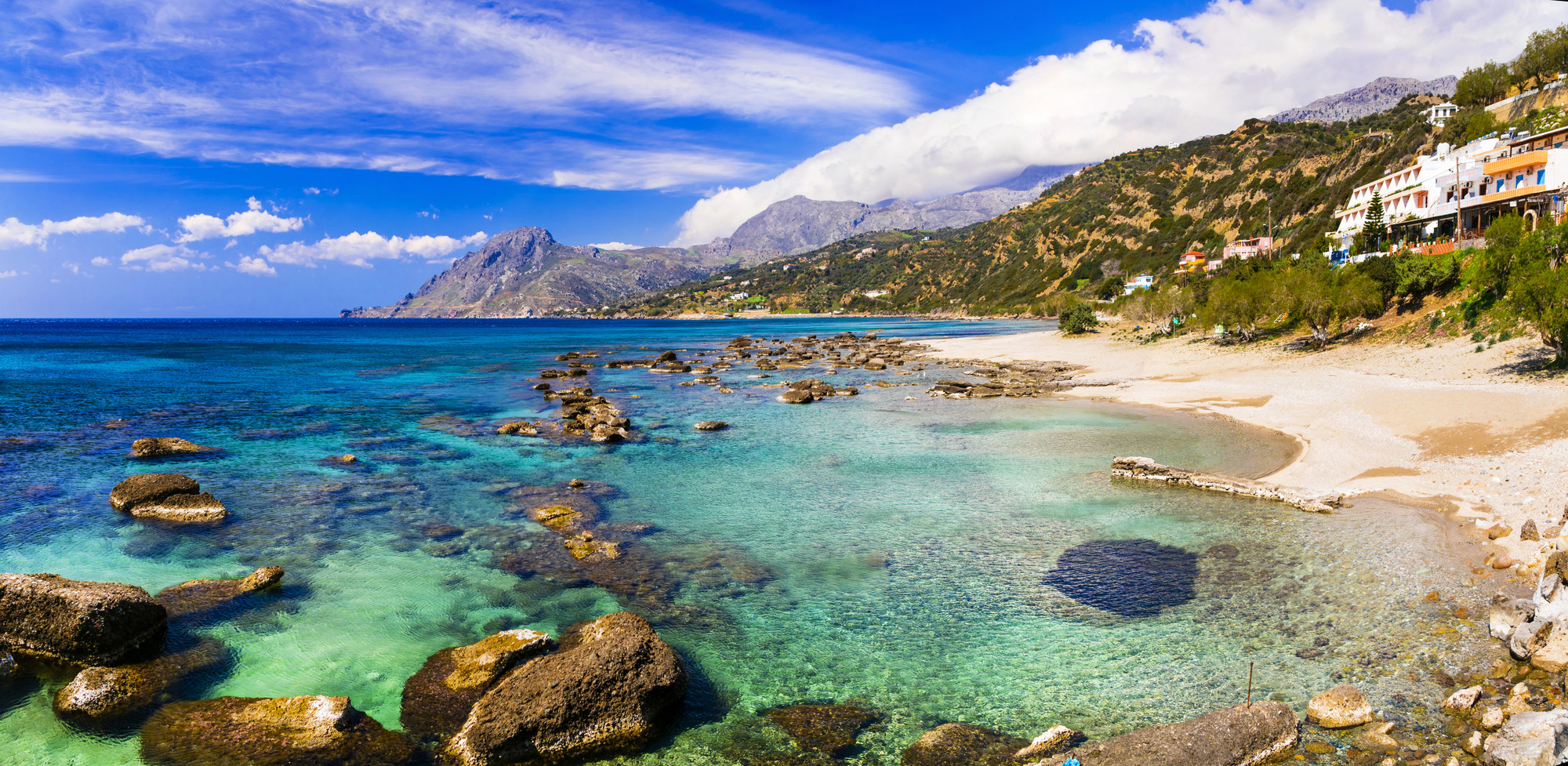
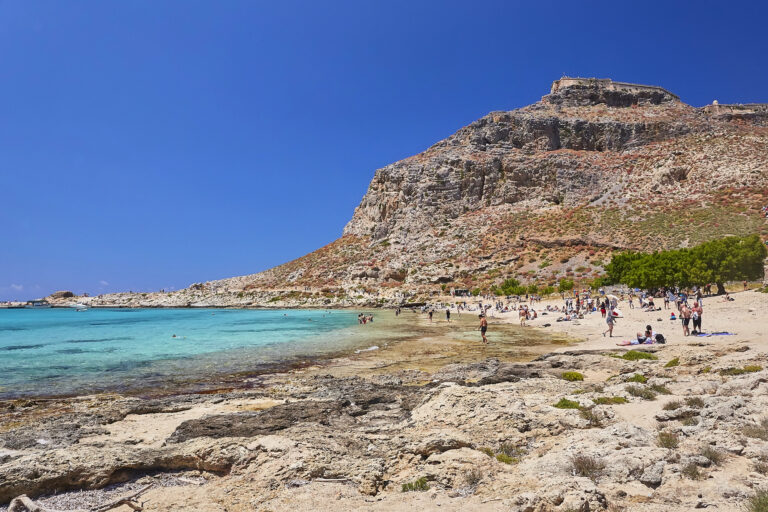
The village sits in a wide bay with mountains rising behind it, a long stretch of sand and a low-rise waterfront where you can eat with the water a few metres away. It is not a manicured resort town. It is a working Cretan village that happens to have one of the best beaches on the island at its feet, along with a string of smaller coves within a short drive in either direction.
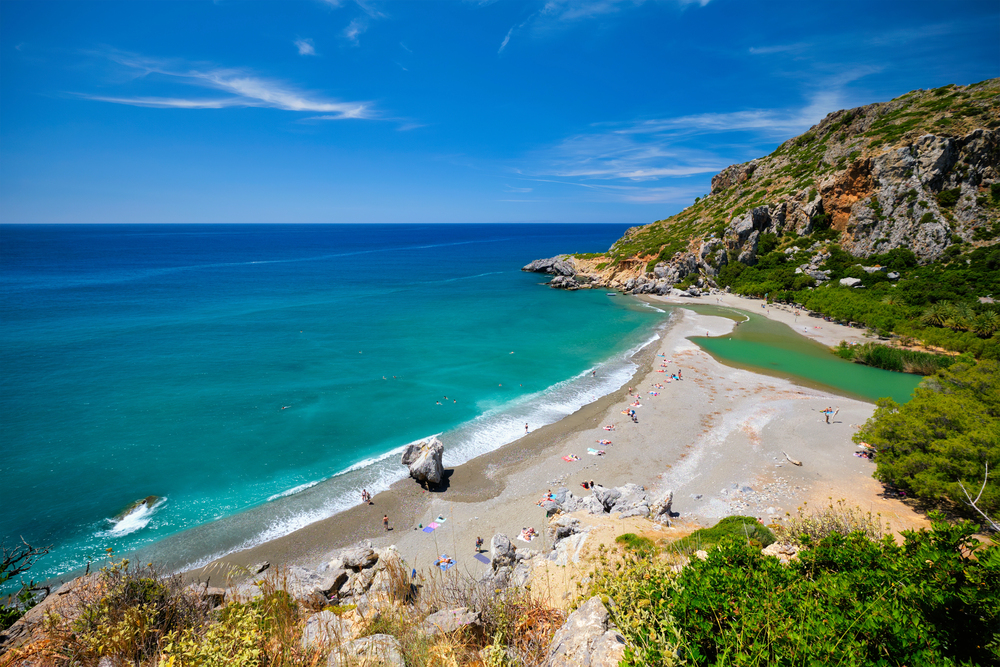
The water is the headline. Protected bays along this coast hold that deep, glass-clear blue you usually only see in photographs, and because the beaches are separated by headlands, you can drive ten minutes and find a different one almost to yourself. Inland, villages such as Asomatos give you the other half of the picture, olive groves, churches, old stone houses and very little in the way of souvenir shops.
How long to stay
Two nights is enough to see it. Three or four is enough to feel it, and that is really what the south coast is for. Build the days around swimming in the morning, a long lunch, a slow exploration of a nearby gorge or beach in the afternoon, and dinner by the water. It is the part of a Greek itinerary that stops you checking the clock.
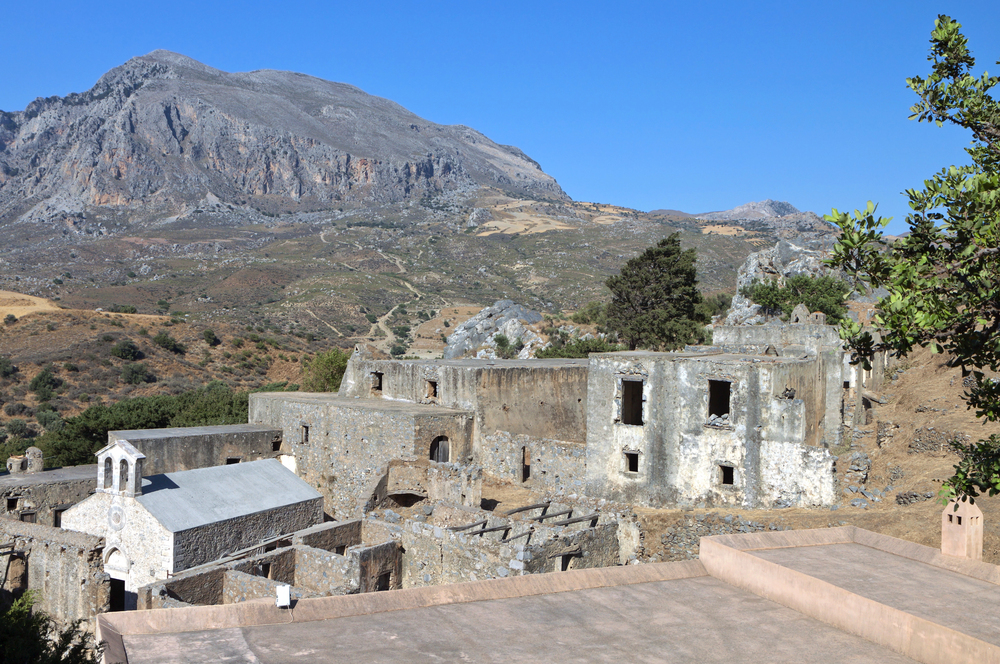
If you want a little more structure, the surrounding region gives you plenty without ever feeling busy, coastal walks between beaches, boat trips along an otherwise inaccessible shoreline, and the monastery country in the hills behind the bay.
When to go and how it fits a wider trip
Late spring and early autumn are the sweet spot. In May and June the hills are still green and the sea has warmed enough to swim, while September and October bring warm water, softer light and far fewer cars on those mountain roads. High summer is hot and bright and the south coast handles it better than most of the island, but the roads are busier and shade is scarce. In deep winter many of the smaller places along this coast close down.
Plakias works best as the slow chapter in a larger Crete itinerary. Fly into Chania or Heraklion, give yourself a night or two in Rethymno or the Venetian harbour at Chania, then cross the mountains for the south coast before heading back north for the ferries or the flight out. Paired with a few days in the Cyclades or a longer run through mainland Greece, it gives an Australian trip the thing that is hardest to plan for on your own, real quiet in a place worth being quiet in.
At Cartier World Travel we build this kind of itinerary from the ground up, matching the driving to how confident you are behind the wheel, and putting the right number of nights in the right places so the best roads are enjoyed rather than endured.