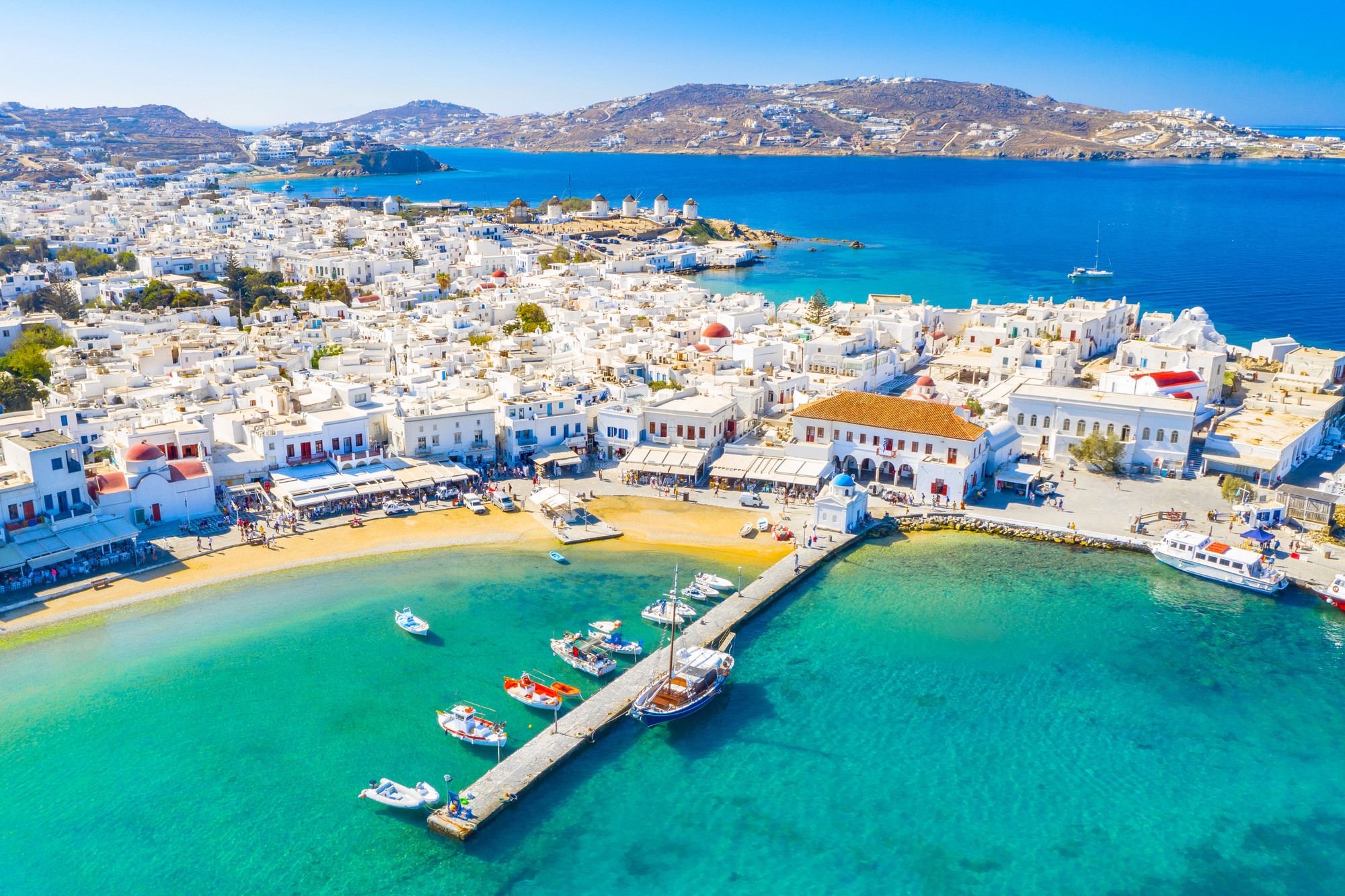
Planning a trip to Mykonos usually starts with the postcard, whitewashed cubes, blue shutters, a windmill on a rise above the water. What makes the island worth the long flight is that the postcard is genuinely there, and that there is more behind it than the party reputation suggests. Mykonos sits in the middle of the Cyclades, a short hop from Athens and an easy link in a wider Greek island run, and it works just as well for travellers who arrive by sea after an Adriatic crossing from Split as it does for those flying in.
Sam Newman filmed here on his European trip, walking down from his accommodation into the heart of town for the windmills, Little Venice and a look at the crowd. What comes across is how compact the whole scene is. The famous parts of Mykonos Town sit within a few minutes of each other.
The town of Chora, and why the lanes are like that
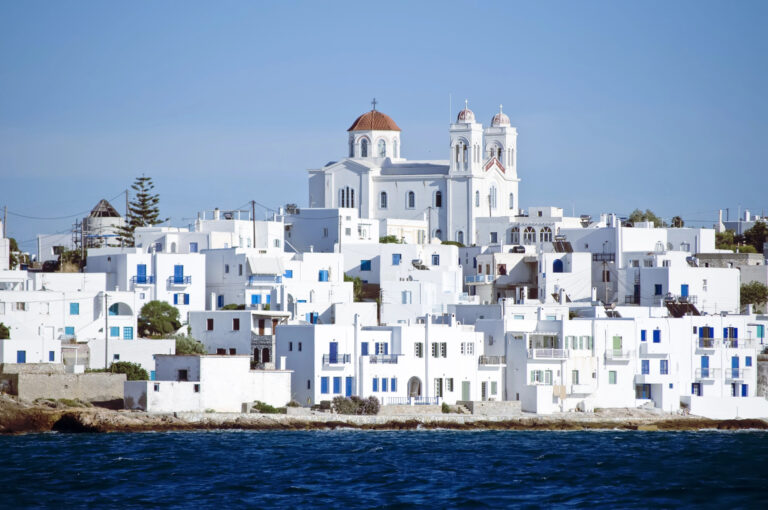
Mykonos Town, known as Chora, is a maze on purpose. The narrow, curving whitewashed lanes were built to confuse raiders and to break the force of the wind, and they still do both. Cars are kept out of the centre, so the only way to see it is on foot, and the only sensible approach is to accept that you will get lost for a while.
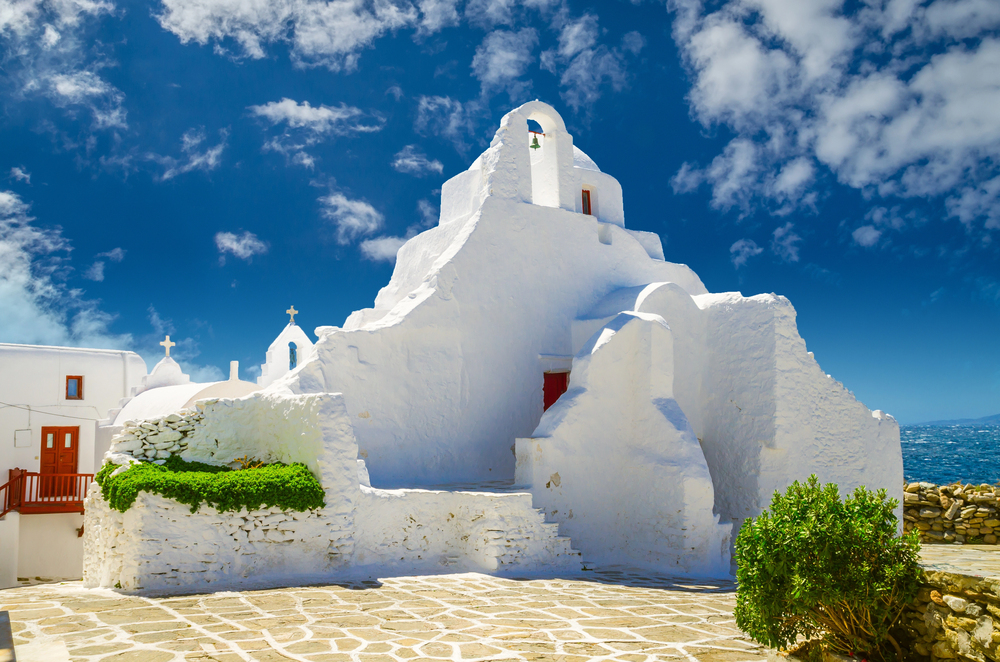
The blue and green shutters, the painted steps, the bougainvillea against the lime wash, it is all repeated endlessly and it is still lovely. The town’s most photographed church, Panagia Paraportiani, sits near the water at the edge of the old quarter, a cluster of chapels merged into one strange white shape. Small churches turn up everywhere else too, tucked between houses and out along the roads.
The windmills at Kato Mili
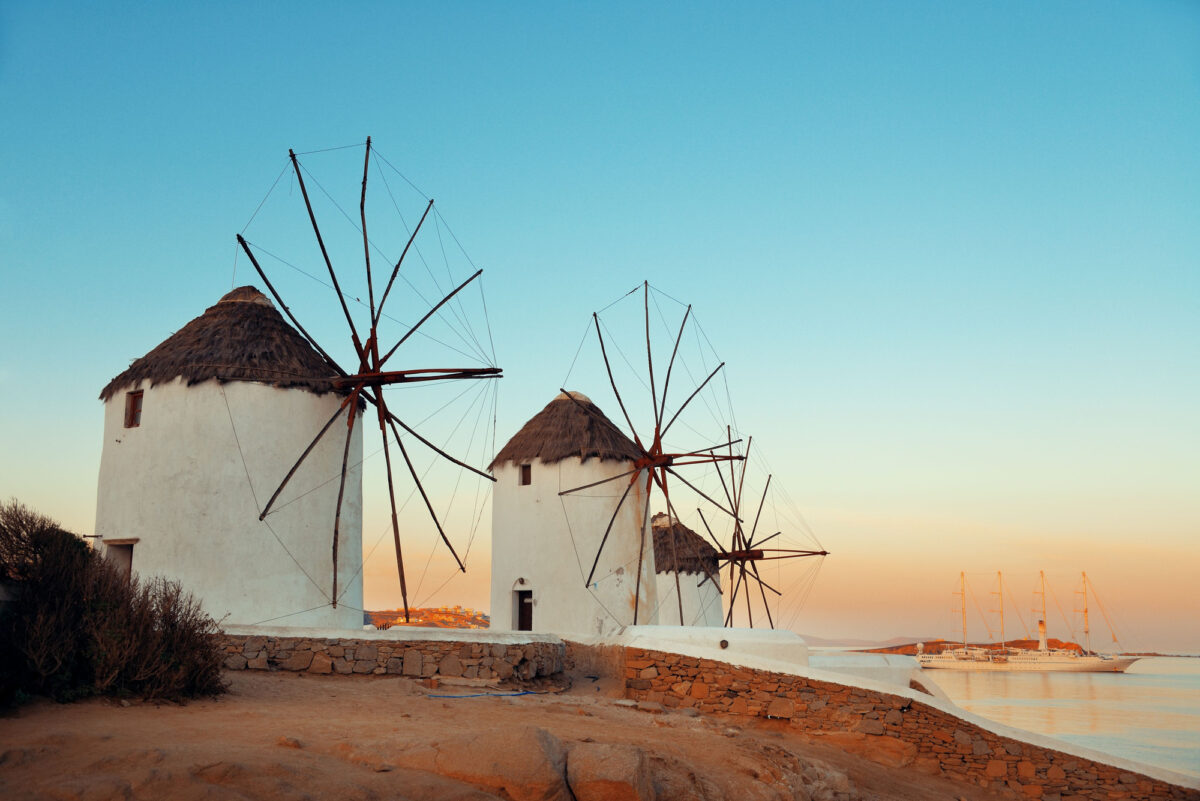
The row of round stone windmills on the rise above the harbour is the island’s signature, and it was working infrastructure long before it was a photo stop. Mykonos was a milling and shipping island, and the mills ground grain that moved on through the Aegean. The sails and much of the timber machinery are long gone from most of them, which is why they look like sturdy white drums with caps rather than the working mills of a painting.
They are worth the short uphill walk for the outlook as much as the mills themselves. From up there you see the whole curve of the town, the boats, and on many days a cruise ship or two anchored offshore.
Little Venice
Immediately below the windmills is Little Venice, a line of old merchants’ houses built hard against the sea with balconies hanging directly over the water. The name explains itself the moment you see it. The front yards are the Aegean. Sit at one of the waterfront tables at the right moment and the swell will reach you, which is part of the appeal and part of the risk.
Beaches, boats and the rest of the island
Beyond the town, Mykonos is a ring of bays. Some are sheltered and family quiet, some are organised with loungers and music, and a few are known well beyond Greece for their beach clubs. The island is small enough that you can sample more than one in a day, and a hire car, scooter or the local bus network will get you to most of them.
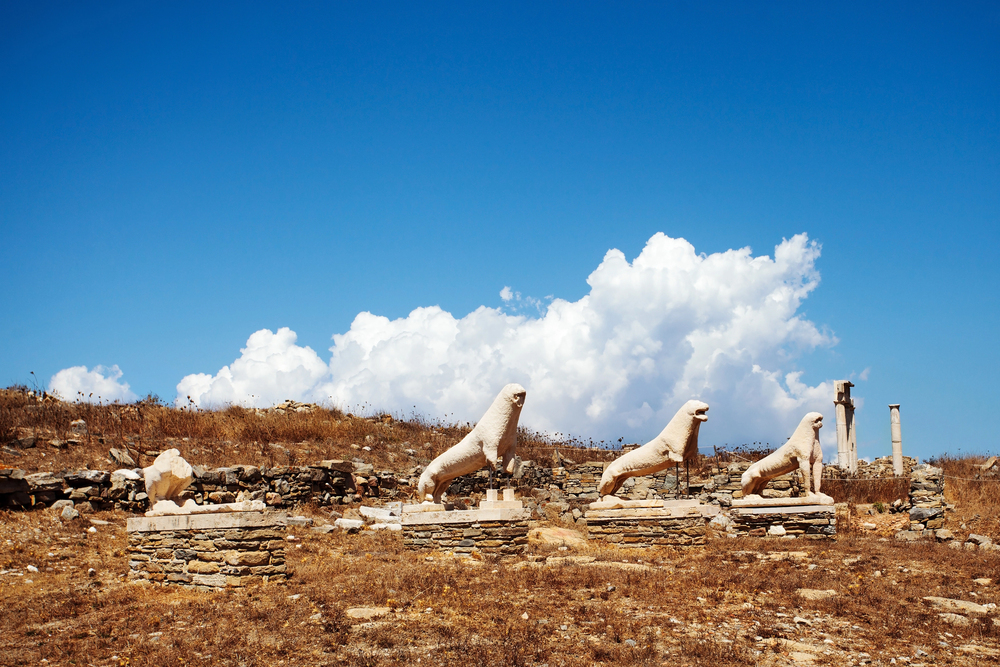
The other essential day trip is Delos, the ancient sanctuary island a short boat ride from Mykonos Town. It is one of the most significant archaeological sites in the Aegean, uninhabited now, and a complete change of pace from Chora.
The crowds, and how to work around them
Mykonos gets busy, and the rhythm of the day is worth understanding before you book. Cruise ships and day boats deliver large numbers into the same small grid of lanes, so the middle of the day in Chora is the most congested part of the island. Early morning is calm and the light on the white walls is at its best. Late afternoon into sunset belongs to Little Venice and the windmills, which is the busiest and also the most rewarding hour there.
Staying outside the immediate centre, with the town a walk or a short drive away, gives you the option of quiet when you want it. Self-catering suits the island well, since the walk home after a long dinner is a great deal simpler than a drive.
When to go, and how Mykonos fits a wider trip
Late spring and early autumn are the sweet spot. May and June bring warm water, long days and a town that is open but not yet at full pitch, while September and into October hold the heat with far fewer people. July and August are the peak in every sense, hottest, busiest and loudest, and the meltemi wind can blow hard enough to affect small boat trips. Deep winter is a different island again, with much of the tourist trade closed.
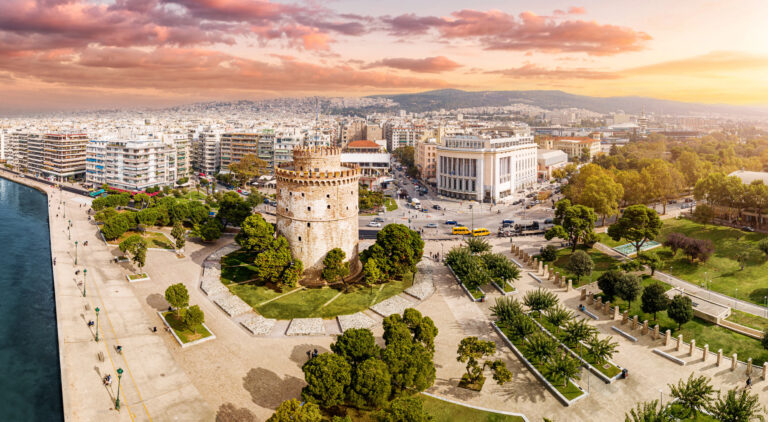
For Australians, Mykonos rarely justifies a trip on its own, and it is not meant to. It slots neatly into a Greek itinerary with Athens and another island or two of a different character, and it pairs naturally with a longer run through Italy and the Adriatic, or with a northern leg on to Thessaloniki and mainland Greece. Getting that sequence right, the ferry timings, which island first, where to stay so the town is close without being on top of you, is the difference between a hurried stop and a few days you remember. That is the sort of detail we enjoy working through with travellers from our base in Ballan, shaping an itinerary around the pace you actually want to travel at.