Driving into Bulgaria is one of those border crossings that quietly resets the whole trip. One minute you are in the familiar rhythm of Western European motorways, the next you are through a set of boom gates and passport lanes and into a country that feels less rehearsed, less packaged and a good deal cheaper. The road ahead runs long and open towards Sofia, and the first hour of it tells you most of what you need to know about travelling here.
Bulgaria rarely makes the shortlist for Australians planning a European holiday, which is precisely why it rewards the ones who add it. It has Roman ruins, Ottoman mosques, Orthodox domes and Soviet-era concrete stacked within a few blocks of each other, a mountain range visible from the capital’s main boulevards, and a food culture built on yoghurt, grilled meat, salty cheese and pastry. It is also genuinely easy to drive.
Driving into Bulgaria: what the border is actually like
Bulgaria is in the European Union but keeps its own currency, the lev, so the crossing is a real border rather than a sign on the verge. Expect lanes, boom gates, mirrors on poles for checking underneath vehicles, and a passport control booth. It is usually straightforward, but it is not automatic, and it is worth having passports, the hire car paperwork and the vehicle’s insurance documents somewhere you can reach without emptying the boot.
Two practical things matter more than anything else. Bulgarian motorways require an electronic vignette, so check whether your hire car already has one before you set off. And the first services you pass may well be the usual international chains, which is oddly comforting when you are hours from your hotel and have not yet worked out the alphabet.
The Cyrillic question
Road signs on the main routes generally carry Latin transliterations alongside Cyrillic, so navigation is easier than first-timers fear. In smaller towns and on menus, the Cyrillic stands alone. Learning to recognise a handful of letters takes about twenty minutes and makes the whole country more legible.
The motorway run to Sofia
The approach to the capital is a proper long-distance drive through low hills and farmland, and the signposted motorway speed limit is 140 kilometres an hour. For anyone used to sitting on 100 between Melbourne and the coast, that alone is a novelty, and plenty of local traffic treats it as a starting point rather than a ceiling. Hold your lane, keep right unless overtaking, and let the faster cars go.
Traffic on this corridor can also do something Australians almost never see. A diversion further up the road can bank vehicles nose to tail for twenty kilometres or more, trucks and coaches included, with no realistic way around it. It is a good argument for building slack into a driving day here rather than timing arrival to the minute, and for choosing accommodation you can still reach comfortably if the road turns against you.
Stopping for banitsa
The roadside cafes along this route are where most travellers get their first taste of Bulgarian food, and the thing to order is banitsa. It is a coiled rope of filo pastry, baked golden, filled with sirene, the country’s salty white cheese, usually beaten through with egg and yoghurt. It is sold everywhere, by the tray, all day, and locals buy it constantly. Have it warm, with a cup of the thick local yoghurt drink if you want the full effect.
That is the honest character of Bulgarian eating. Not refined, not expensive, built around a small number of things done very well and repeated without apology.
What waits in Sofia
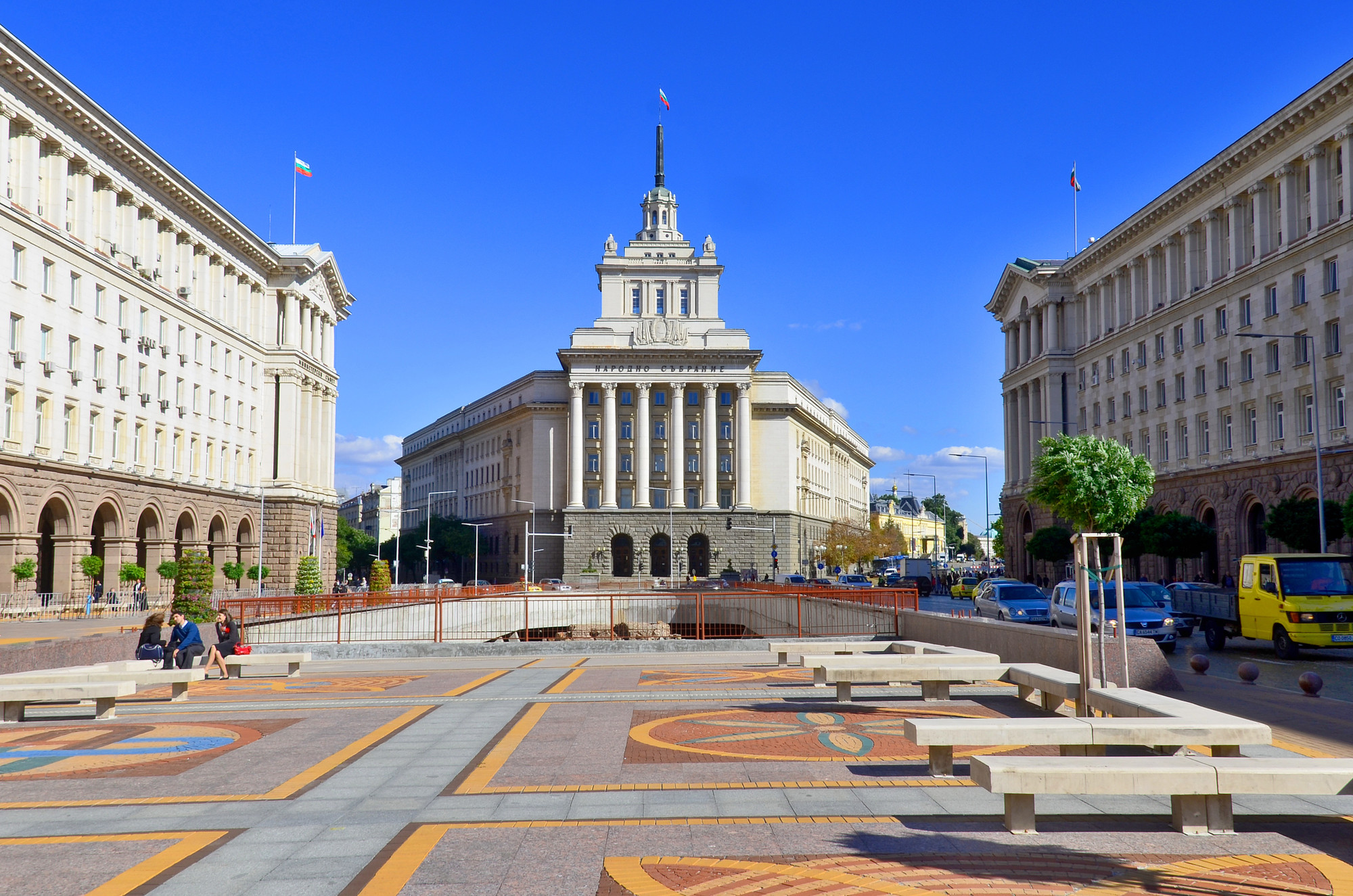
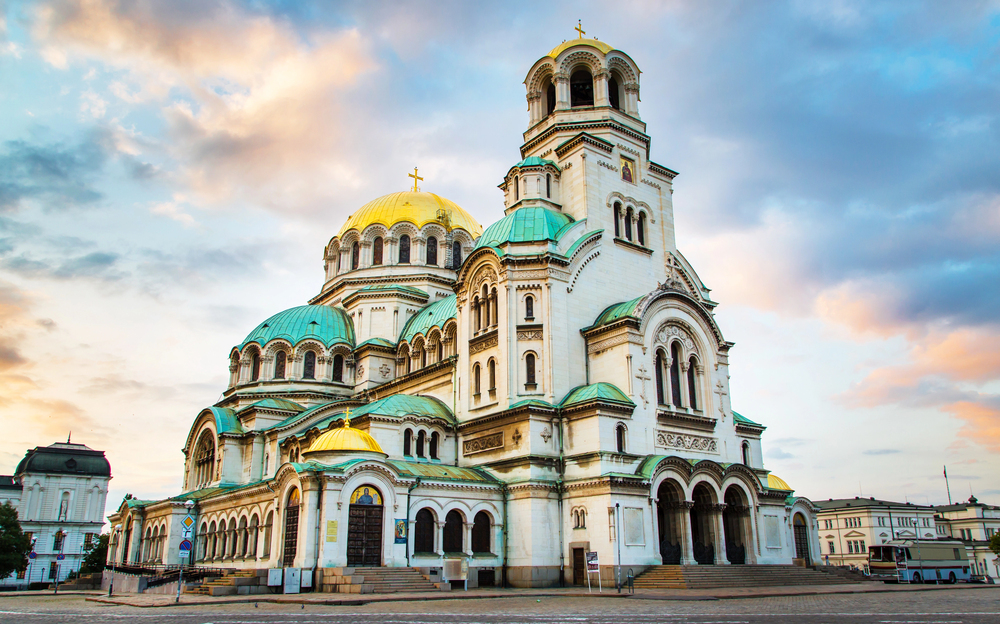
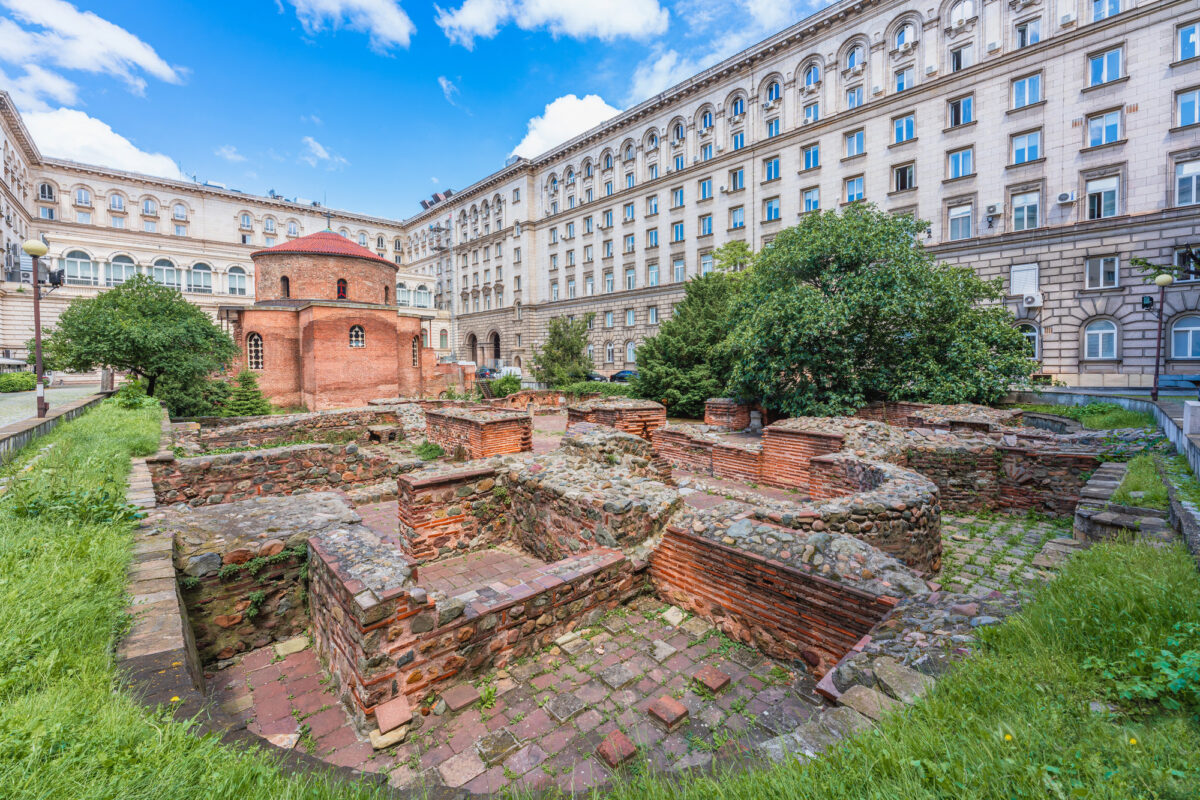
Sofia is a low, green, walkable capital sitting beneath Mount Vitosha, close enough that the mountain is part of the skyline from the city centre. In a single stroll you can pass the gold domes of the Alexander Nevsky Cathedral, a fourth-century Roman rotunda tucked between government buildings, a working mosque, a synagogue and the excavated Roman streets beneath the city’s central squares. It is a capital that never bothered to hide its layers.
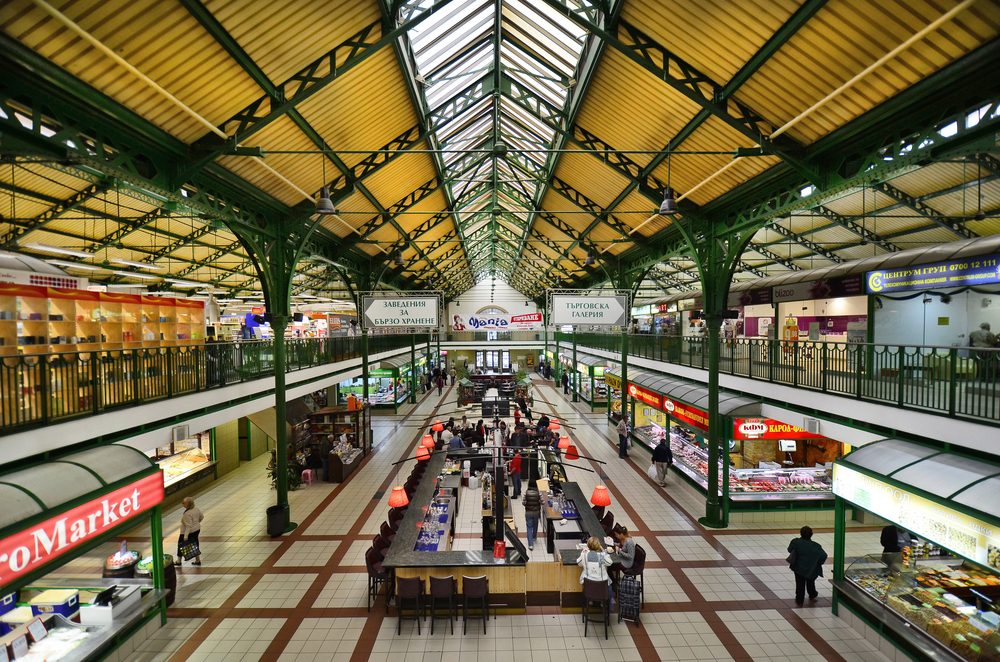
Two days is enough for a first visit, three if you want to take the road up Vitosha or spend a morning in the markets. Distances in the centre are short and the yellow paving underfoot makes the old core easy to recognise.
When to go, and how it fits a longer trip
Late spring and early autumn are the sweet spots. May and June bring green hills and mild driving weather, while September and October give you warm days, the harvest and thinner crowds. Summer is hot on the plains but excellent in the mountains. Winter is cold and serious, though it opens up the ski fields within an hour of the capital.
Bulgaria works beautifully as the eastern leg of a wider Balkan drive, linked with Serbia, North Macedonia, Greece or Romania, or as a well-priced week bolted onto a longer European itinerary. If you are driving it, the planning that matters is not the sightseeing list but the road logic: vignettes, border documents, fuel stops and realistic daily distances. Get that right and the rest of the country opens up at its own pace.