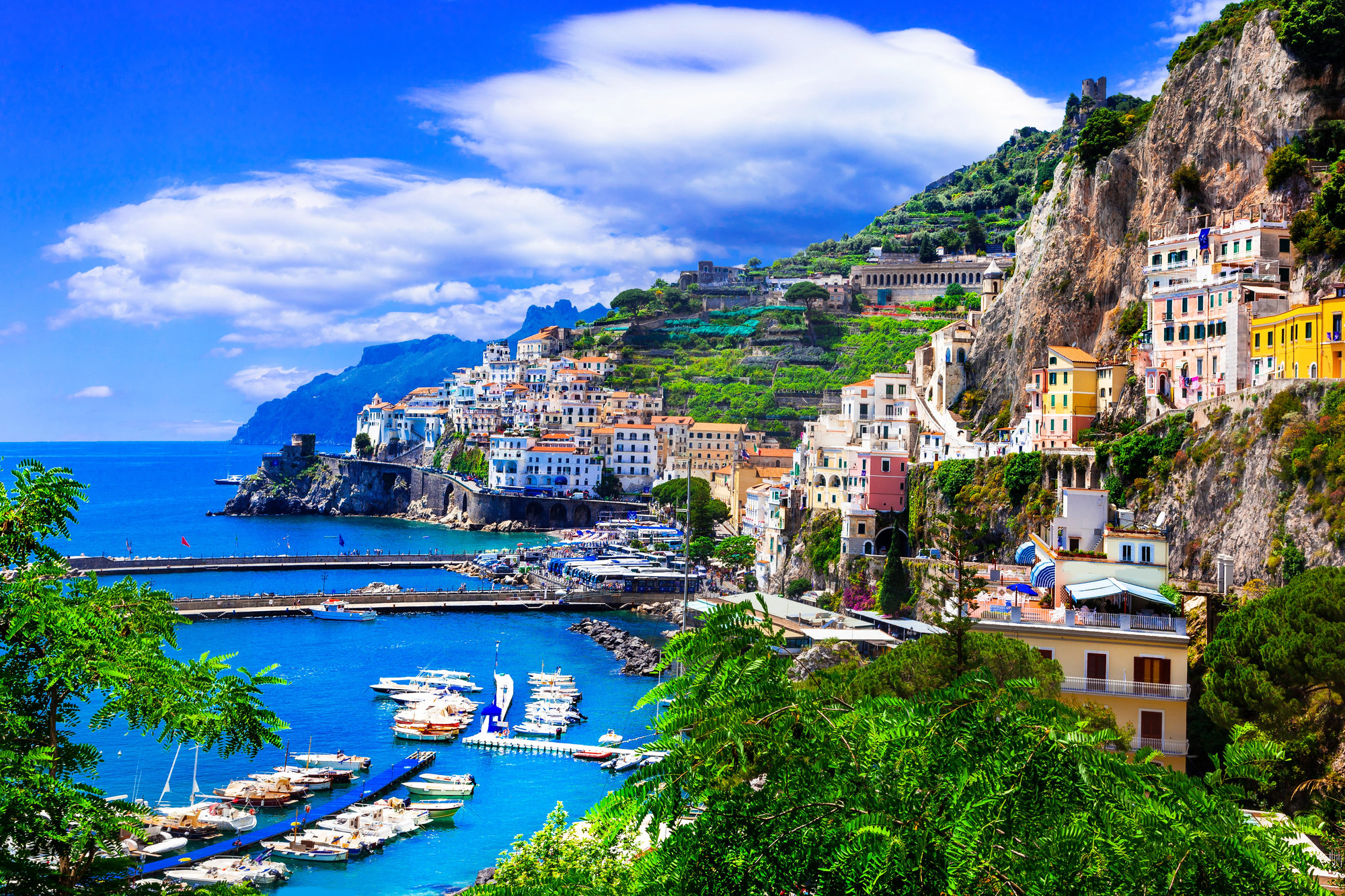
Almost everyone arrives on this stretch of Campania the same way, by bus or hire car on the hairpins of the coast road, and almost everyone spends the day looking at the back of the vehicle in front. Seeing the Amalfi Coast by boat turns the whole thing around. From a few hundred metres offshore the cliffs stand up in full, the villages stack themselves properly into their ravines, and the water you have been reading about for years is suddenly something you can slip into off the back step. For an Australian who has flown twenty-odd hours to get here, that is the version worth planning for.
Sam Newman spent a day on the water between Salerno and Positano on his run through Europe, and the footage makes the case better than any brochure: limestone, purple-tinged rock at the waterline, a cascade falling straight into the sea, and towns that only make sense when you can see how little flat ground they were given.
Why the Amalfi Coast by boat is the version to plan
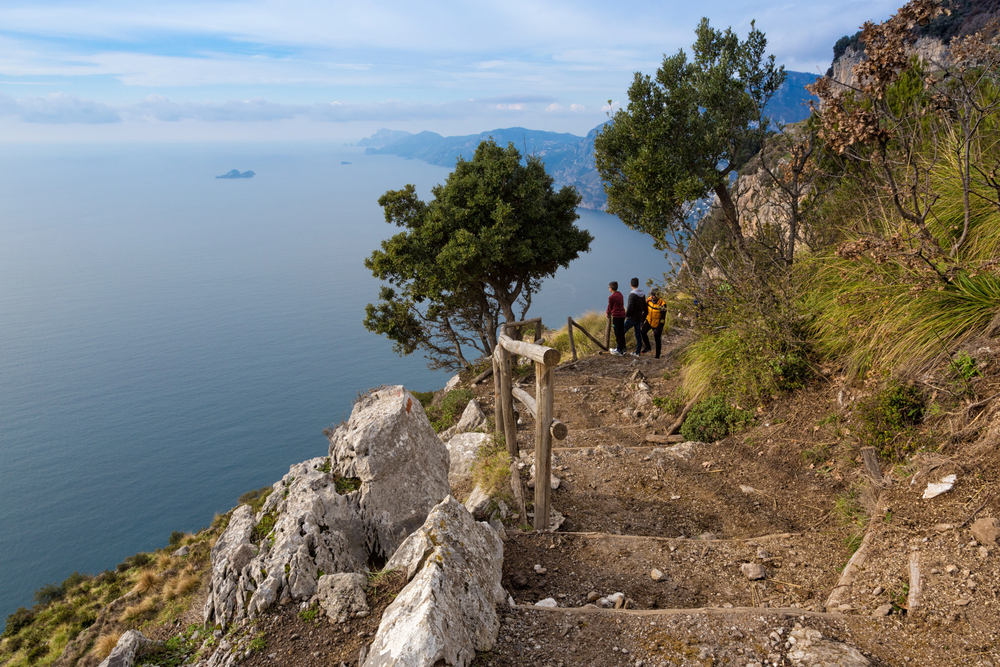
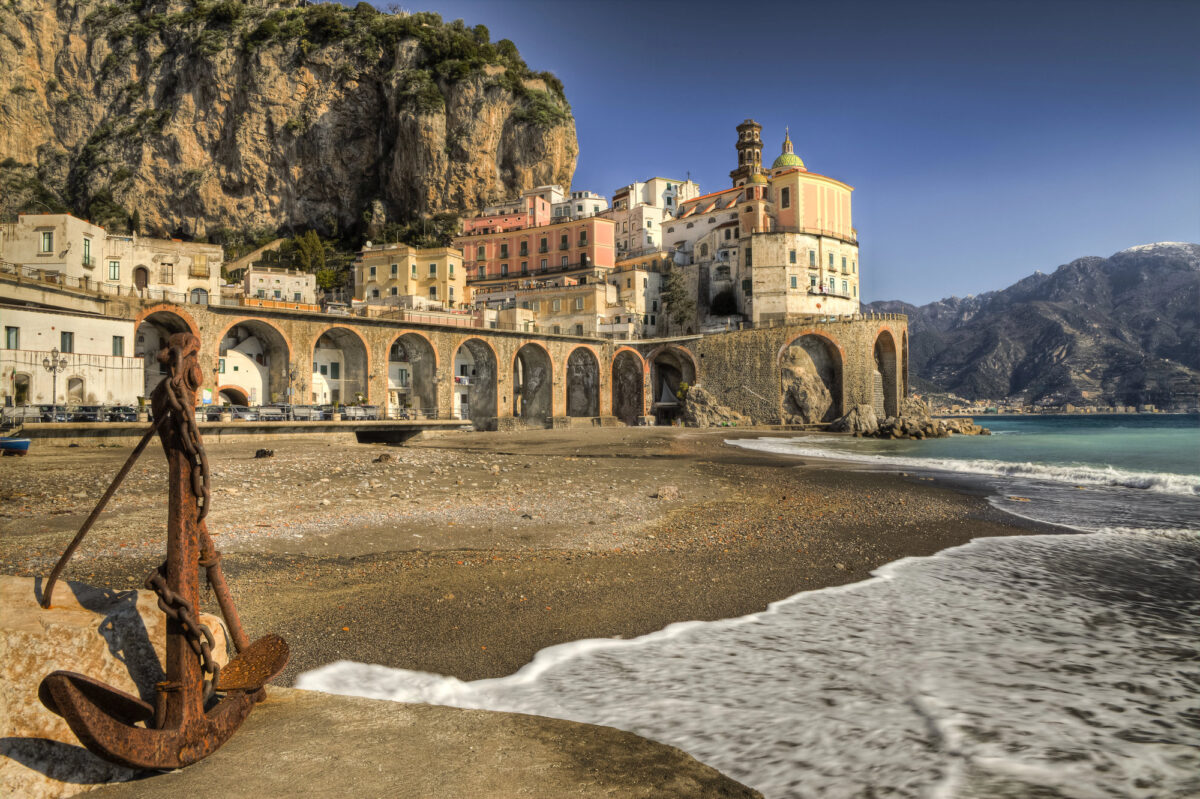
The Amalfitana road was cut into a cliff face and it behaves like it. It is beautiful and it is slow, and in the warm months it is full. From the water you get the geology instead of the guardrail. The coast is a wall of pale limestone dropping into deep water, cut by sea caves and by gullies where a village had just enough room to wedge itself in. Sam noticed the colour of the rock at the waterline, a purplish band under the stone, and the formations inside the caves, which is the sort of detail the road cannot show you at any speed.
The other advantage is timing. Mornings on this coast can be breezy and choppy without being unpleasant, and the afternoon often settles into glass, at which point the day boats and the crowds come out. On the water you can arrange your day around that rather than around a bus timetable.
What you actually pass
Salerno
Salerno is the eastern gateway and a working port, cruise ships and ferries and all, which makes it a practical place to start rather than a postcard. It has a long seafront promenade, an old quarter behind it and far more everyday Italian life than the resort towns further along. Many travellers never stop here. Starting a day on the water from this end means you meet the coast gradually rather than being dropped straight into the busiest part of it.
Amalfi and the coast around the headland
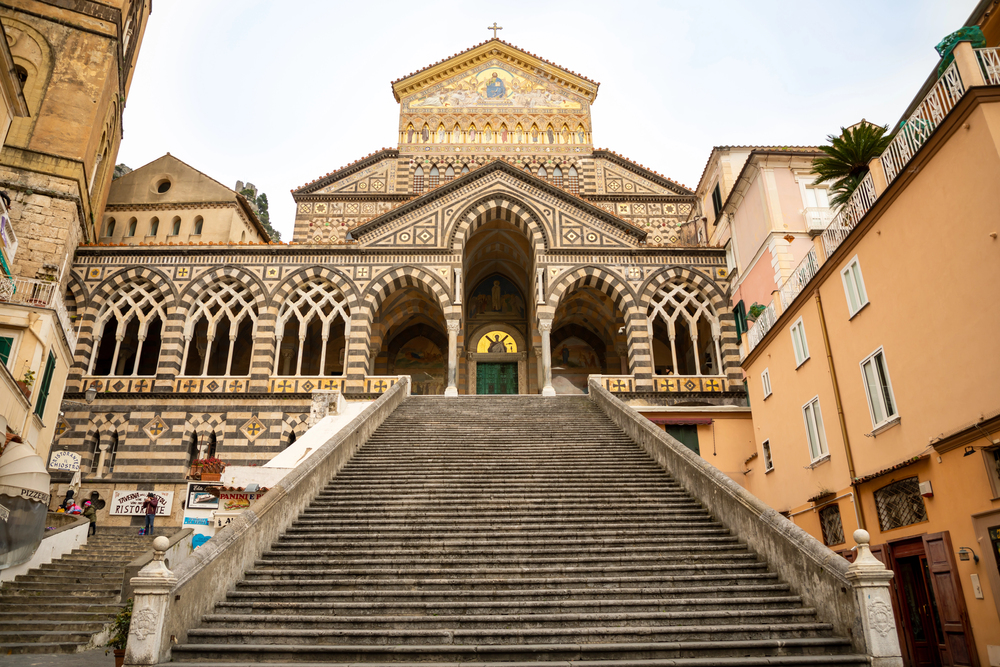
Amalfi itself is the harbour with the ferry berths, a compact town squeezed into a cleft with a cathedral at the top of a broad flight of steps and a lane of shops running back into the valley behind. The stretch just around the headland is quieter and, in some ways, better. That is where Sam moored, in warm water, beside a cascade falling down the cliff to the sea. It is a known feature of this part of the coast, and the traffic that gathers around it tells you as much: coach tours on the road above, taxis, water taxis and boats all pausing to look at the same fall of water.
Positano
Positano is the picture everybody has already seen, and it is the town most transformed by being viewed from offshore. From the road you get glimpses of roofs. From the water you get the full amphitheatre of houses in ochre, cream and pink climbing away from the beach with the dome of the parish church set into the middle of it. Sam ran on to Positano late in the day and filmed it from out in the bay, which is the aspect most visitors miss entirely.
The practical side of a day on the water
A few things are worth knowing before you commit. Boats on this coast are not cheap for the day, and the beach clubs are not cheap either, so the swim off the back of your own boat starts to look like sensible economics as much as pleasure. Sam made exactly that calculation, weighing a hired boat against the price of a lounger on somebody’s terrace.
Moorings need thought. Plenty of the buoys along the coast are private, and picking one up because it happens to be empty will earn you a polite request to move on, which is what happened to Sam and his party after a couple of swims. Currents around the headlands are real, and swimming back to a boat is harder than it looks from the deck. If you are not confident handling a boat in open water, a skippered day is money well spent, and it also means somebody on board actually understands the boat’s warning lights rather than shrugging at them.
Take provisions. There is nowhere convenient to shop once you are out, and the middle of the day is when you will least want to be looking for lunch.
When to go, and how it fits a longer trip
The sea is warm and the boats are running through the northern summer and into the shoulder of autumn, which is the sweet spot: the water still holds its heat, the light is longer and softer, and the coast is noticeably less pressed than at peak. High summer delivers the swimming and the crowds in equal measure. Deep winter is quiet and lovely on land but the water side of the coast largely shuts down, so a boat day should not be the anchor of a cold-season trip.
Two or three nights based on the coast, or in Salerno or Sorrento, gives you one day on the water, one day on land in the villages and one in reserve for weather. From there it slots naturally into Naples and Pompeii, into Capri, or into a wider southern Italian loop through Puglia. Sam’s Amalfi day came in the middle of a much longer European run that had already included time on the water at Saint-Tropez, and the comparison is a good argument for building more than one coastline into a European itinerary rather than choosing between them.