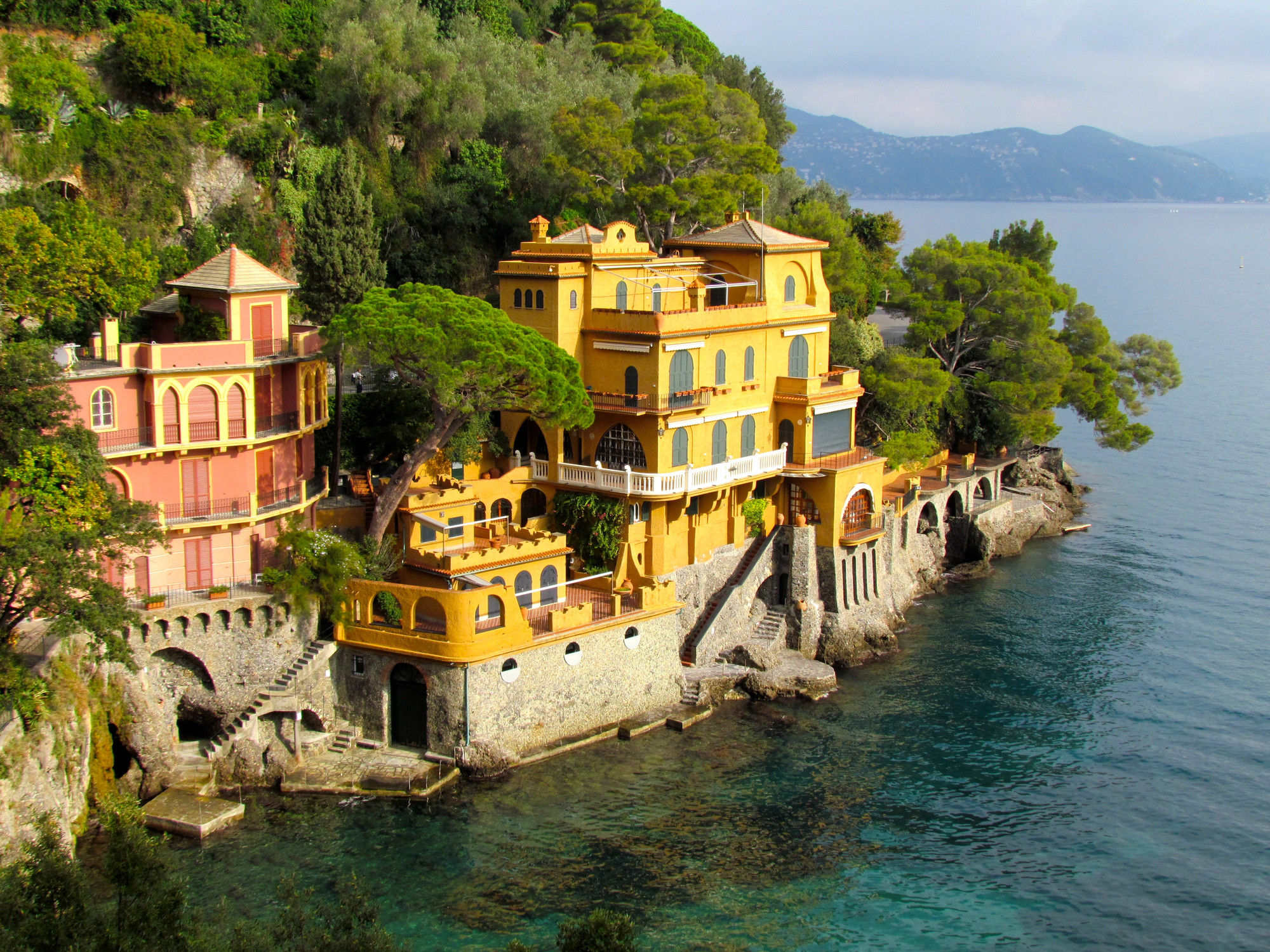
The Diamante Calabria beaches sit on a stretch of Italian coast that most Australians fly straight over on their way to Rome, Florence or the Amalfi Coast. That is precisely the appeal. This is the Riviera dei Cedri, the citron coast, where the Tyrrhenian Sea runs up against cliffs and headlands, small towns hold their shape rather than their crowds, and the sea is a working part of daily life instead of a backdrop for a queue. It is a long way to come, so it should feel like somewhere. Calabria does.
The coast here is a series of coves and rocky points broken by short beaches, with the mountains of the Pollino and the Appennino Lucano rising behind. Look north from the water and you are close to where Calabria meets Basilicata, with the clifftop town of Maratea and its Cristo Redentore statue looking out over the gulf. Look inland and you are in olive terraces and hill villages within twenty minutes of the sand.
What makes the Diamante Calabria beaches worth the flight
These are not the fine white beaches of the Whitsundays and they do not pretend to be. Much of the shoreline is coarse sand and smooth shingle, bright underfoot and clean in the water, and it behaves better than fine sand does when the afternoon breeze comes up. The trade-off is water clarity: because there is less fine sand to stir, the sea holds that glassy blue-green well into the day, which is why so much of the local sightseeing happens from a boat rather than a beach towel.
What Sam noticed
Sam Newman spent part of his European trip on this coast and made the same observation any Australian will make within five minutes of taking their shoes off, that the beaches here are built of something coarser and, in its own way, more practical.
Out on the water: caves, arches and headlands
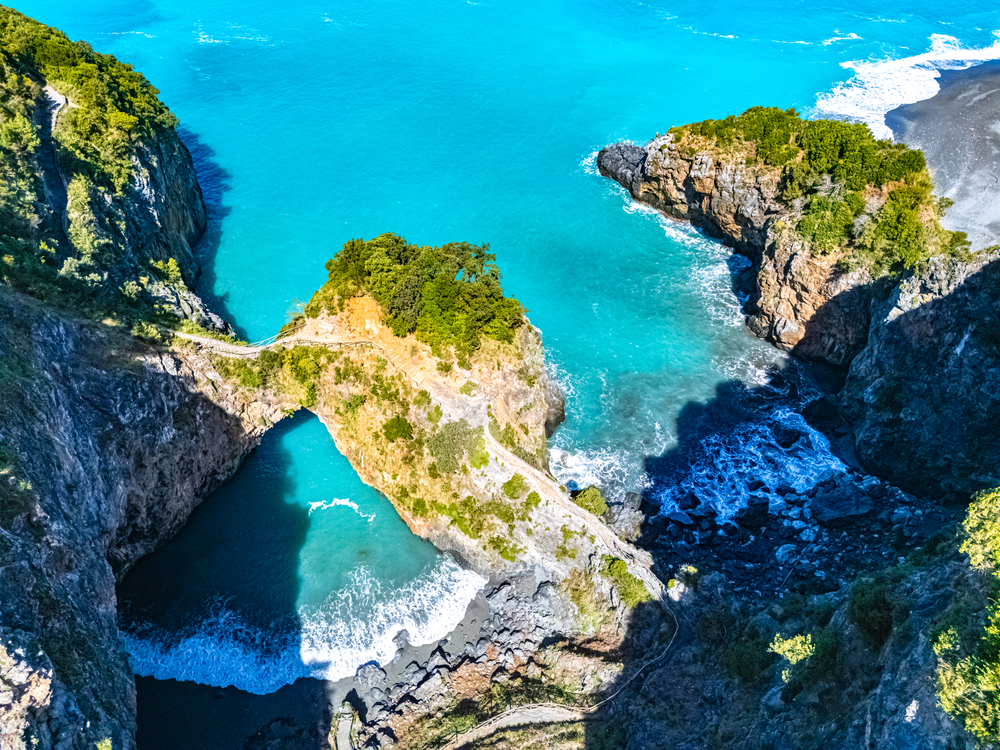
The best way to understand this coastline is to leave it. Small boats run out from harbours and beaches along the coast, including San Nicola Arcella, just up from Diamante, and the standard circuit takes in sea caves, a blue grotto lit from beneath the surface, and the natural rock arches that this shore is known for. The most famous of them is the Arcomagno, a great stone arch that frames a hidden pocket of beach reachable from the sea.
Some operators run glass-bottom boats over submerged points of interest, others simply run the caves and arches, and not every trip runs every day of the week. In southern Italy, the sensible approach is to ask locally the day before rather than to build a rigid plan around one departure. Weather can be flat calm and the boat can still be having a day off, and there is always another cove.
Diamante itself
Diamante is a low, bright town strung along the water, and it has two claims worth knowing. The first is its murals: the old lanes are painted, wall after wall, so a wander through the centre becomes an open-air gallery rather than a shopping strip. The second is chilli. Calabria is the heartland of Italian peperoncino, and Diamante is closely tied to it, which means the food here tips hot and southern, heavy on tomato, aubergine, cured pork, seafood and citrus.
The villages just above the sea
One of the pleasures of this part of Calabria is how quickly you climb. Villages such as Maierà sit in the hills a short drive up from the coast, cool in the evening, quiet in the middle of the day, and a far better base than a beachfront strip if you want to feel like you are living somewhere for a week. Staying up high and driving down to the water is the local rhythm, and it is what makes a week here feel restorative instead of busy.
A few practical realities are worth planning around. Distances on the map are short and the driving time is not, because the roads wind and the coast road is slow in high summer. Mobile and internet coverage in the deep south can be patchy in the villages. Neither is a problem if your itinerary allows for it, and both are a genuine problem if your day is booked to the hour.
When to go and how it fits a wider Italian trip
High summer here is hot in a way that arrives early in the day, so if you want beach weather without the peak heat and peak Italian holiday traffic, aim for late spring or the first half of autumn. The sea stays warm well past the end of summer, the boats are still running, and the towns feel like themselves again.
Calabria works best as a slow week inside a longer Italian journey, paired with Maratea and the Basilicata coast, with Matera inland, or as the southern end of a run down from Naples and the Cilento. From an Australian perspective, it also works as the deliberately unhurried part of a trip that starts in the big cities: three or four nights of galleries and ruins, then a week where the plan is a boat, a swim, a long lunch and a drive up the hill. That kind of shape does not build itself, and it is exactly the sort of itinerary we like to put together from our desk in Ballan, matched to how much time you actually have and how much of it you want spoken for.