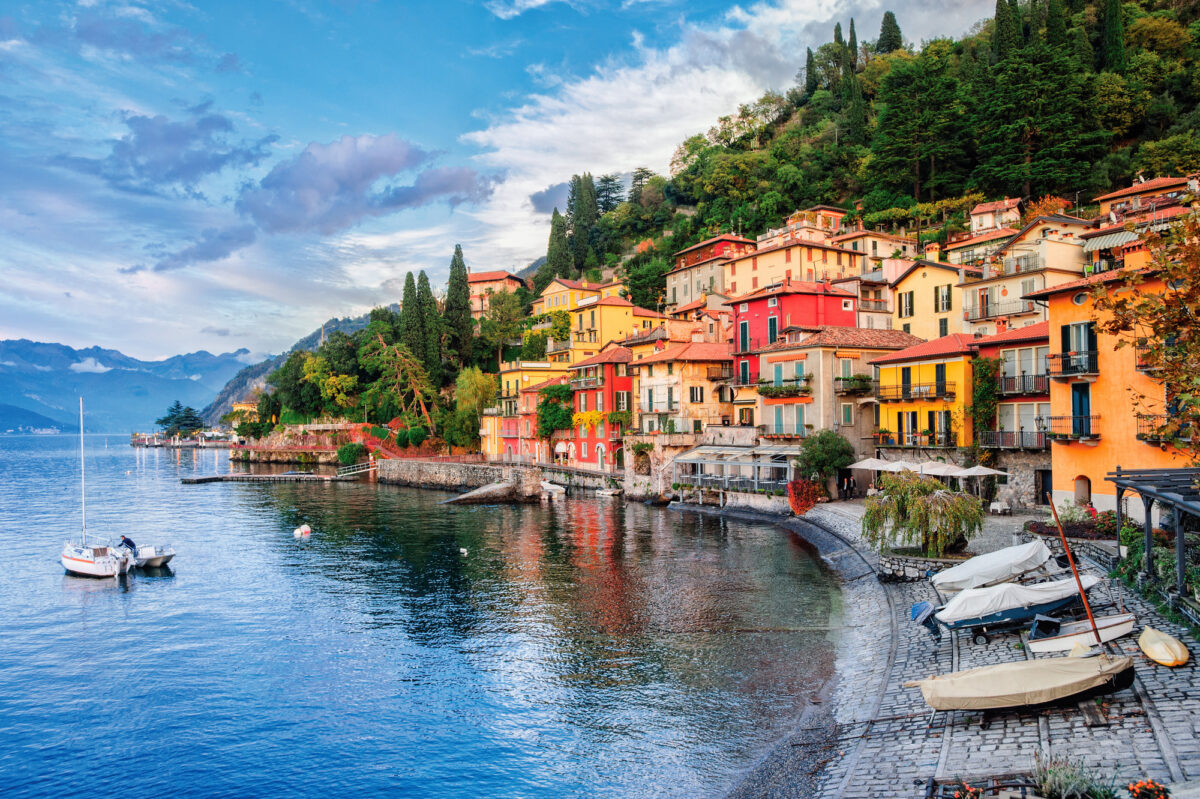
Driving to Bellagio on Lake Como is one of those journeys where the road is as memorable as the destination. The lake sits in a deep glacial trench below the southern Alps, the shoreline is a ribbon of pastel villages and cypress gardens, and the drive threads between stone walls and villa gates barely wider than your mirrors. Sam Newman filmed his run into Bellagio during his European trip, mirrors folded in, and the verdict at the end of it was that the drive alone justified the trip.
Bellagio itself is the town everyone pictures when they picture Lake Como. It stands on the tip of the promontory where the lake divides into its two southern arms, which is why the views from the point look in three directions at once, and why the ferries all converge here.
Driving to Bellagio on Lake Como takes longer than the map says
The shore roads were laid out for carriages and never widened. They run between the water and the retaining walls of private estates, they tighten without warning, and in places traffic is controlled by lights because two vehicles genuinely cannot pass. Sam’s group needed roughly three quarters of an hour to cover five kilometres, had to fold the mirrors in more than once, and had to reverse to let a truck through. That is not unusual and it is not a sign you have taken a wrong turn.
Two practical things follow from that. Choose the smallest hire car you can live with, not the largest you can afford. And build far more time into the day than the distance suggests, because there is nowhere to make it up.
Parking is the real constraint
Bellagio is compact and built on a slope, so parking is limited and often some distance from the waterfront. It is worth knowing this before you commit to a booking with a fixed time, since a late arrival can cost you the slot. Many visitors avoid the problem entirely by leaving the car and arriving by ferry.
What the village is actually like
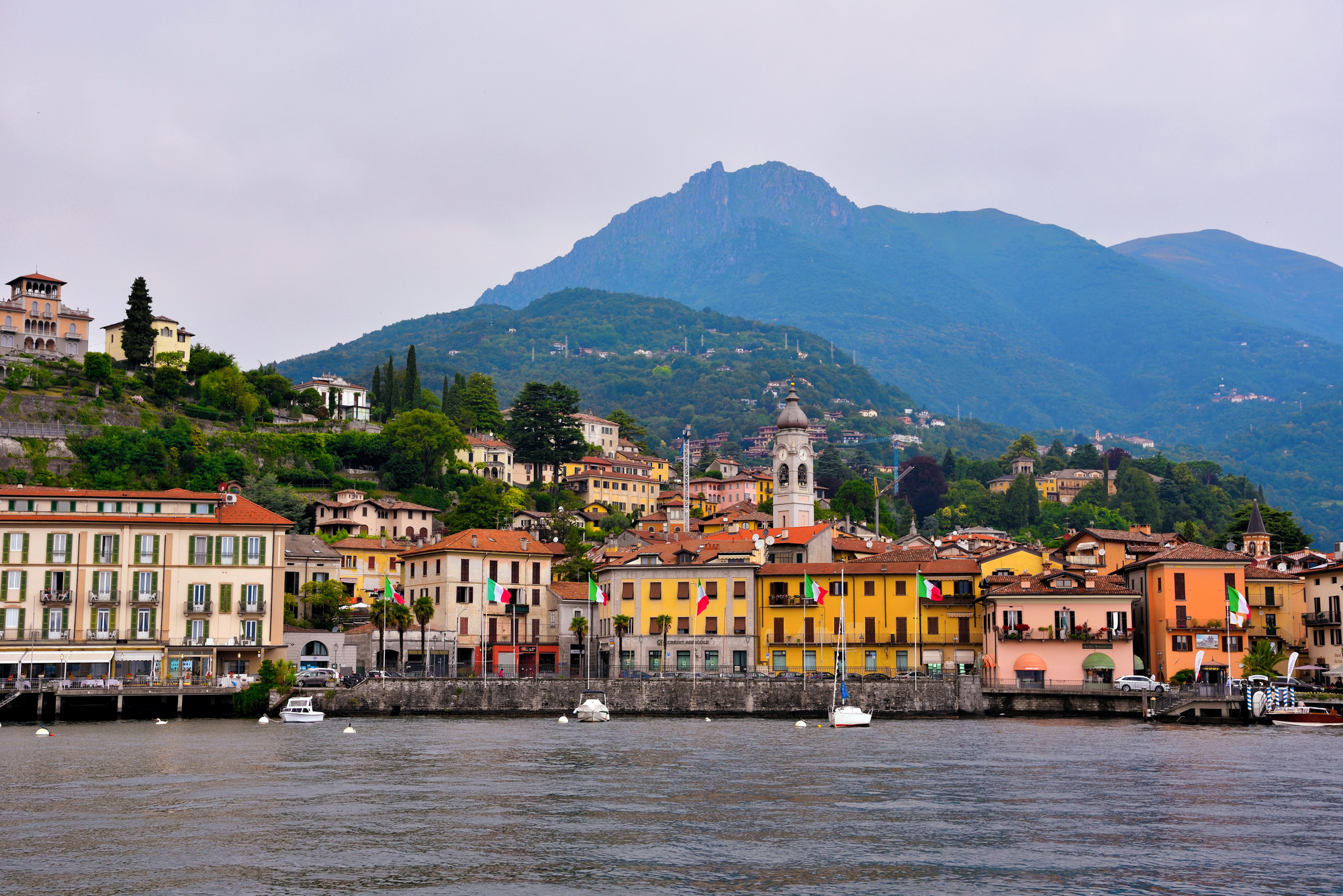
The waterfront is a row of arcaded buildings, hotels and cafes facing the ferry dock. Behind it, stepped stone lanes climb steeply up the hill, cool and shaded, lined with shutters and shopfronts and the occasional archway that opens onto a view of the water. They are the best part of the town and they reward slow walking, which is just as well because the gradient enforces it.
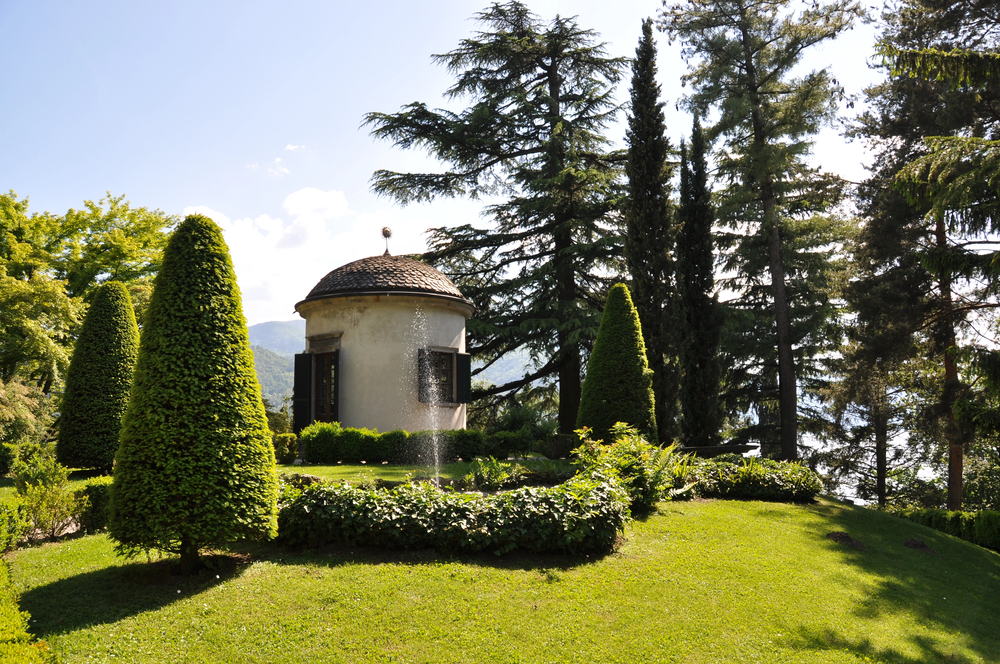
Above and beside the village are the gardens and the villa walls, some of them centuries old, most of them behind gates marked no admittance. A plaque in town credits Julius Caesar with finding the spot, a claim Sam was not entirely persuaded by. The point stands either way, people have been choosing this headland for a very long time.
Getting out on the water
Bellagio is the hub of the lake’s ferry network, with passenger boats and a car ferry connecting it to Varenna, Menaggio and Cadenabbia. Crossing the lake by boat is cheap, frequent and far more pleasant than driving around the arms, and watching the car ferry berth is entertainment in its own right.
Private boat hire is a different matter. It is popular, the number of boats is small, and slots go quickly. Sam’s group had booked and still missed out, because the party ahead of them ran late and the whole schedule slipped. If a private cruise matters to you, book it well ahead, aim for a morning slot before the day trippers arrive, and give yourself a buffer between arriving in town and stepping onto the boat.
Villas, old money and film sets
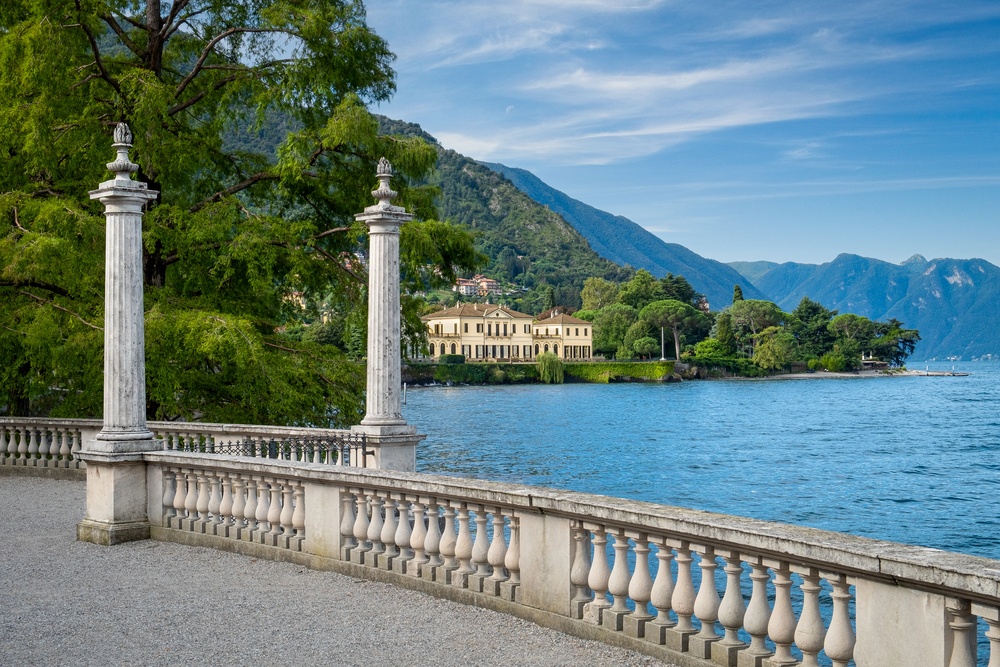
The shoreline north of Bellagio is lined with grand houses, some open to visitors and many not. Villa del Balbianello at Lenno, on its own wooded promontory across the water, is the one film crews keep returning to, having appeared in both Star Wars: Attack of the Clones and the 2006 Casino Royale. Sam’s route took him past gate after gate of the kind he described as real old money, discreet, unsigned and firmly shut.
The lesson for a visitor is simple enough. You see the lake properly from the water and from the gardens that are open, not from the road, where the trees and the walls hide almost everything.
When to go and how Bellagio fits a wider trip
Late spring and early autumn are the sweet spot. The gardens are at their best, the ferries are running a full timetable and the roads are less clogged. Midsummer brings crowds and real heat, and Sam’s visit landed in the middle of a European heatwave, which is worth remembering when you are climbing stone stairs in the middle of the day. Winter is quiet and beautiful, though some villas and boat operators close for the season.
Lake Como sits comfortably in a northern Italy itinerary, an easy addition after Milan and a natural stop on the way to or from the Dolomites, Verona or across into Switzerland. Two or three nights on the lake is enough to see Bellagio properly, cross to Varenna and Menaggio, and give one full day to the water.
Our advice: stay on the lake rather than day tripping from Milan, keep the driving days short, and lock in your boat and your ferry crossings before you arrive. That is the difference between a beautiful day and one spent looking for a park.