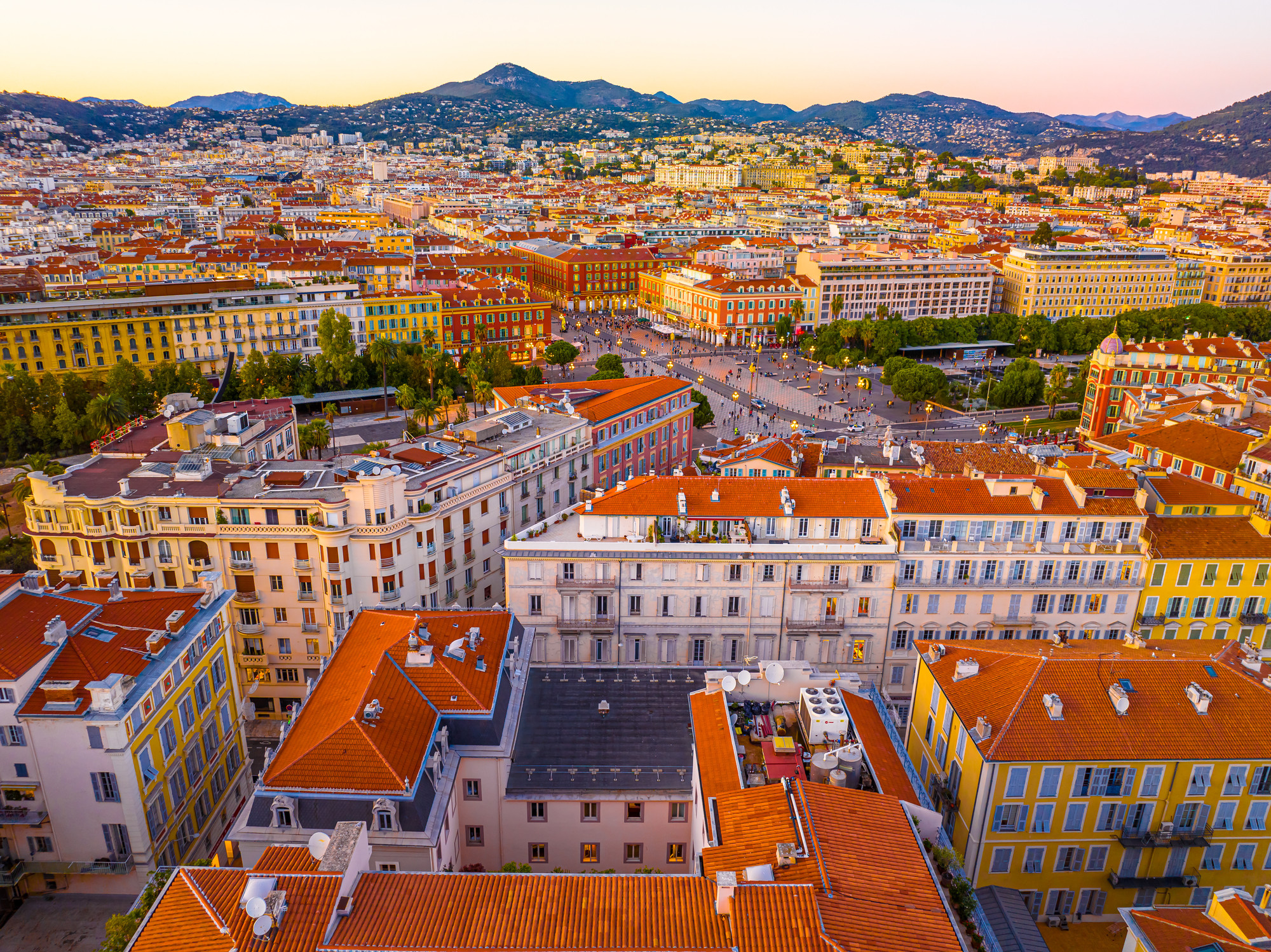
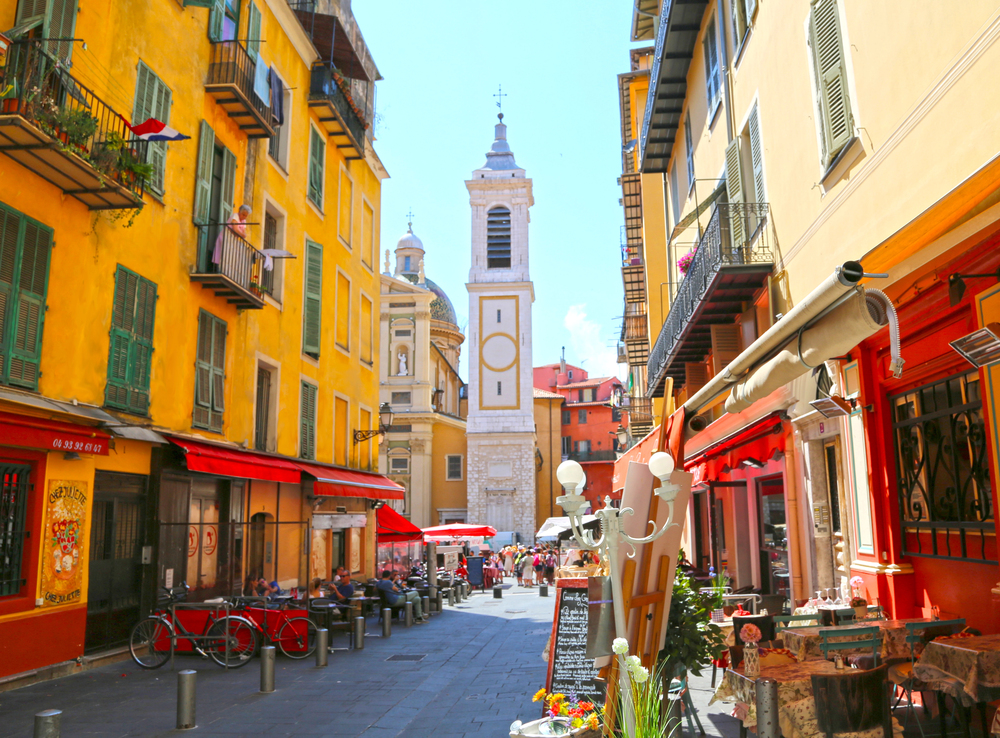
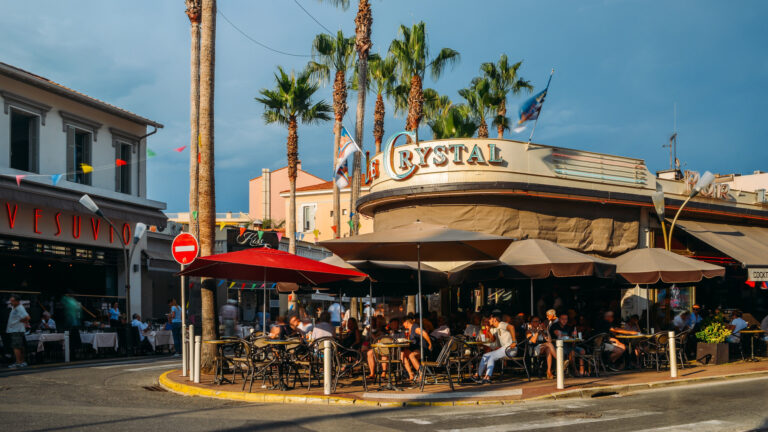
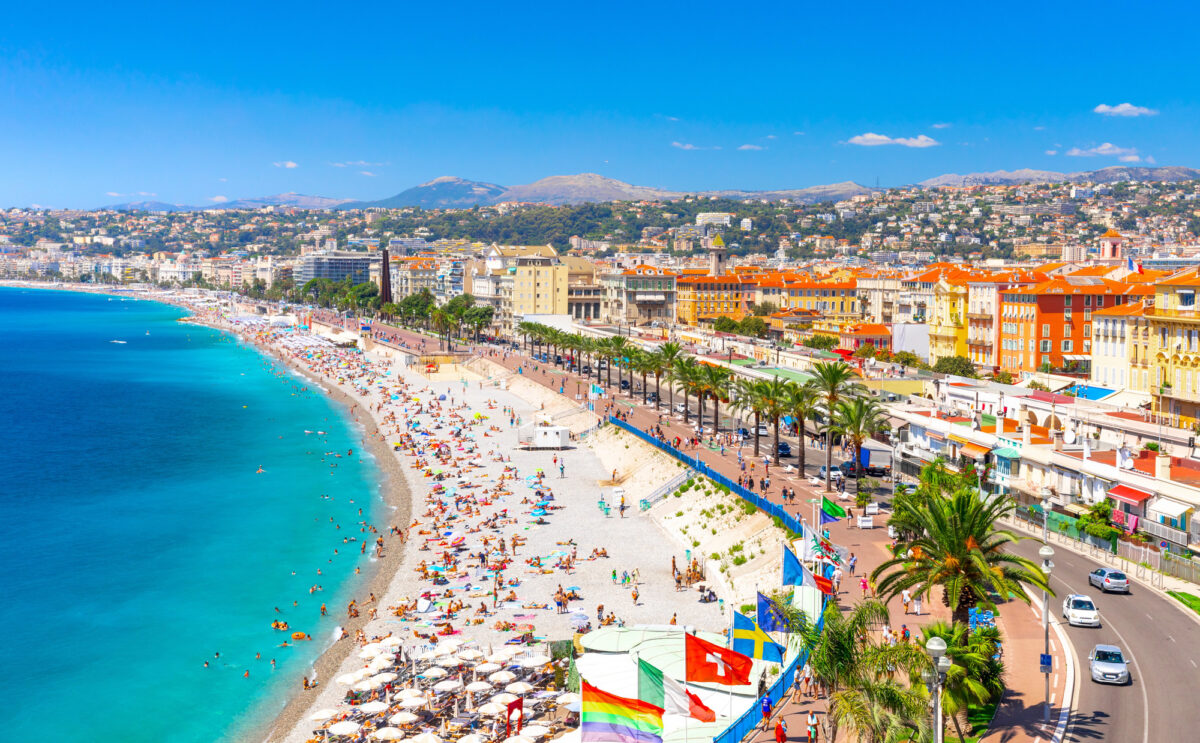
Hiring a car in Nice is one of the most quietly satisfying ways to begin a European holiday. You land on the Cote d’Azur, walk a short distance to a rental desk, and within the hour you have the whole of southern France in front of you. The airport sits right on the water at the western end of the city, the motorway is minutes away, and the country that unfolds from there, coast road one way, hill villages the other, is the sort of place that rewards having your own boot and your own timetable. Sam Newman collected a brand new Peugeot at Nice airport for a six month drive through Europe, and the way that pickup works is worth understanding before you get there.
Why hiring a car in Nice works so well
Nice Cote d’Azur is the main gateway to the south of France and one of the busiest airports in the country outside Paris, which means good long-haul connections through the Gulf, Singapore or a European hub, and a full spread of car companies on site. Unlike a city pickup, you are not fighting your way out of a medieval street grid on your first morning. The A8 autoroute runs east towards Monaco, Menton and the Italian border, and west past Cannes and Frejus towards Aix-en-Provence, so whichever direction your trip leans, the first hour is straightforward driving.
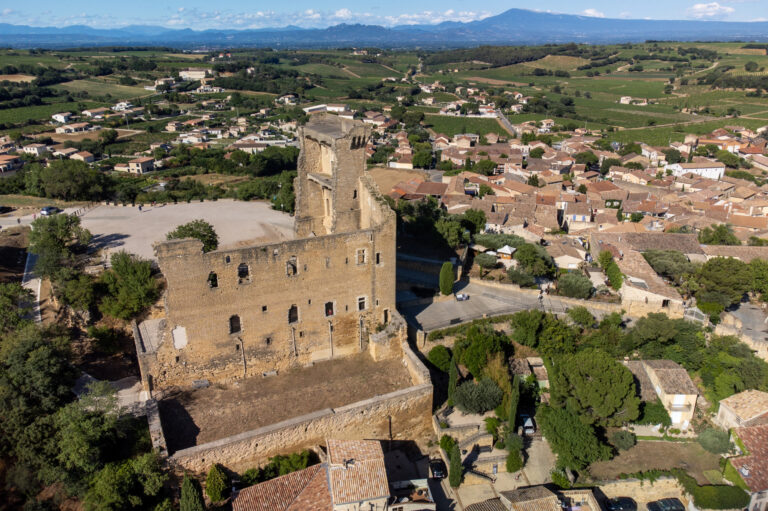
The other reason it works is what surrounds it. Within a morning’s drive you can be in the perched villages behind the coast, in the vineyards of the Var, in the lavender country of the Luberon, or up in the alpine backroads north of the city. Very few airports in Europe put that much variety inside such a short radius.
Buying to sell back: the long-stay alternative
Australians travelling for longer than a few weeks often find standard rental costs climb sharply, and this is where the French lease-buy schemes come in. Rather than renting, you technically take delivery of a brand new French-built car, drive it for the term of your trip, and hand it back at the end. It is designed for non-residents staying beyond the usual short hire window, and delivery and collection at Nice airport is a normal arrangement.
That is the deal Sam picked up at Nice: a brand new car, his for six months, going back to the same people at the end of it. It is worth having the paperwork and the handback conditions explained slowly at the counter, because the person walking you through it is often working in their second or third language and you will be living with that car for months.
French tolls, and what to do at the barrier
The single thing that unsettles first-time drivers in France is the autoroute toll, and it is worth knowing the shape of it before you are sitting at a barrier with a queue behind you. There are two systems. On some stretches you take a ticket as you join and pay when you leave, with the fee based on the distance travelled. On others, particularly shorter sections and some coastal runs, you simply pay as you pass through the barrier. Both exist on the same trip, which is why the answer to do I take a ticket or pay now is genuinely sometimes one and sometimes the other.
The lanes matter too. The ones marked with an orange t are for vehicles carrying an electronic telepeage tag on the windscreen, and if you do not have one you should not be in them. Lanes marked with a green arrow or a card symbol take a bank card, and these are the ones most visitors want. Have the card out and ready before you reach the barrier rather than digging for it at the window, and if you are travelling in convoy, agree in advance on where you will regroup on the far side.
Leaving the airport on your first day
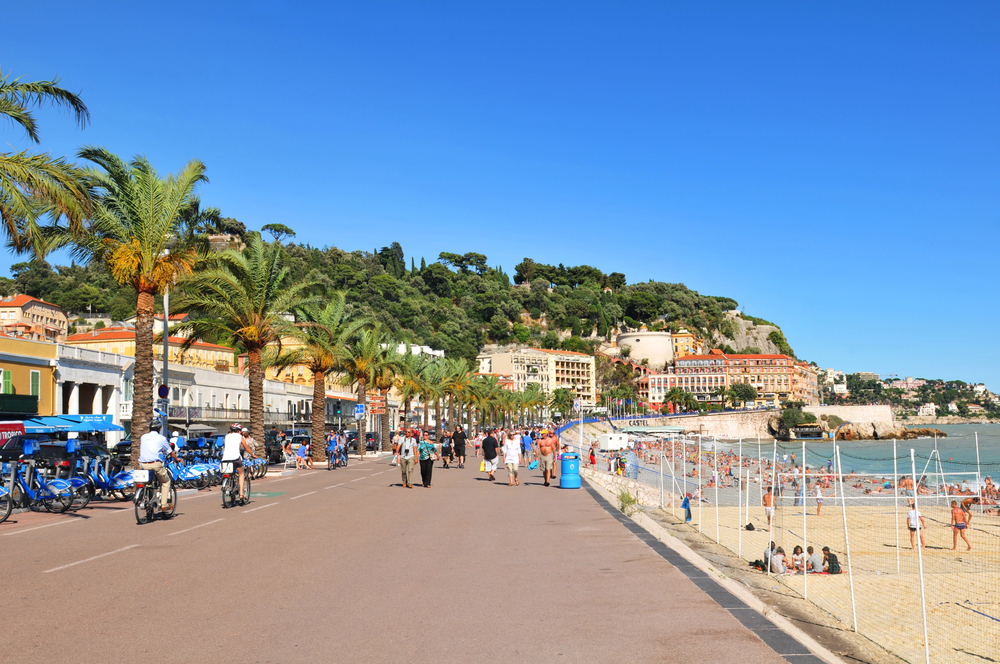
Nice traffic is busy rather than difficult, but there is a run of roundabouts and turnoffs between the terminals and the open road, and doing that on no sleep after a flight from Australia is asking a lot of yourself. If your schedule allows, a night in Nice before you collect the car is money well spent. You arrive, you walk along the Promenade des Anglais, you sleep, and you take delivery the following morning with a clear head and a route already loaded into the phone.
A few habits make the first drive easier. Note the fuel type before you leave the car park. Set the navigation before you move rather than at the first roundabout. Decide whether you want the motorway or the slower coastal and inland roads, because the difference in journey time is real. And if there is a second car in your party, work out who leads and who follows before either of you starts the engine.
Where the drive goes from here
Head east and you are in Monaco and Menton within half an hour, with the three corniches climbing above the coast and Italy just over the border. Head west and the Cote d’Azur gradually gives way to the Var, where the coast towns thin out and the country turns to cork oak, vines and stone villages. Sam’s convoy pointed inland from the airport towards La Garde-Freinet, which is exactly the sort of place a car makes possible and a train timetable does not.
Push a little further and Provence proper opens up: Aix, the Alpilles, the Luberon, the Gorges du Verdon. Go north instead and the roads climb quickly into the Alpes-Maritimes. The point of collecting a car here is that you are never committed to one direction, and you can change your mind at breakfast.
When to go, and how it fits a longer trip
Late spring and early autumn are the sweet spots for driving in the south of France. The days are long, the light is at its best, the coast roads are not solid with summer traffic, and accommodation in the villages is easier to secure. Midsummer is beautiful but busy, particularly between Nice and Saint-Tropez, and July and August driving takes patience. Winter is quiet and often bright, though some higher mountain routes will be closed.
A Nice pickup slots neatly into a wider European itinerary. Fly in from Australia, spend a few days on the coast without the car, then collect it and work west through Provence, or east into Liguria and Tuscany, dropping the car in another city at the end if the terms allow. For longer stays, the lease-buy route changes the maths entirely and lets you keep the same vehicle across several countries.
Cartier World Travel arranged parts of Sam Newman’s European trip, including the transport that got him to the airport counter, and this is the kind of detail we like to have sorted before you land: which pickup point, which product for the length of your stay, what happens at the tolls, and where you are sleeping on night one. Tell us how long you have and which direction you feel like pointing the car, and we will build the rest around it.