
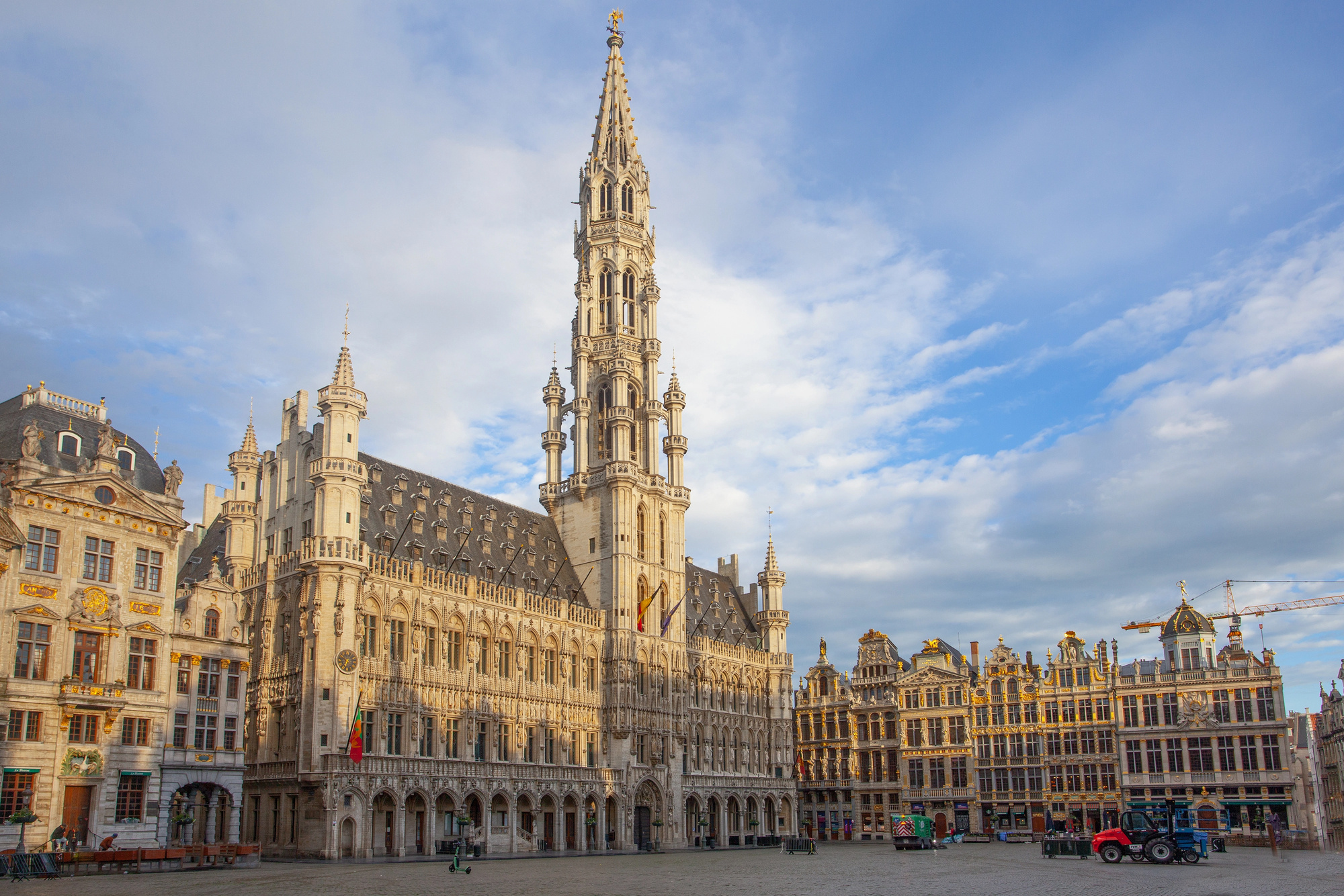
Planning a Trip to Brussels: Squares, Flags and Beer. Brussels rewards travellers who give it more than a morning. Set aside two or three days and you find several cities at once: a medieval merchant town, a nineteenth century royal showpiece and the working headquarters of the European Union, all within a short walk of each other.
It is an easy place to be comfortable in. The city is officially bilingual, French and Dutch, English is widely spoken in the centre, and distances are small enough to cover on foot with a tram ride at either end.
Planning a Trip to Brussels Around the Grand Place
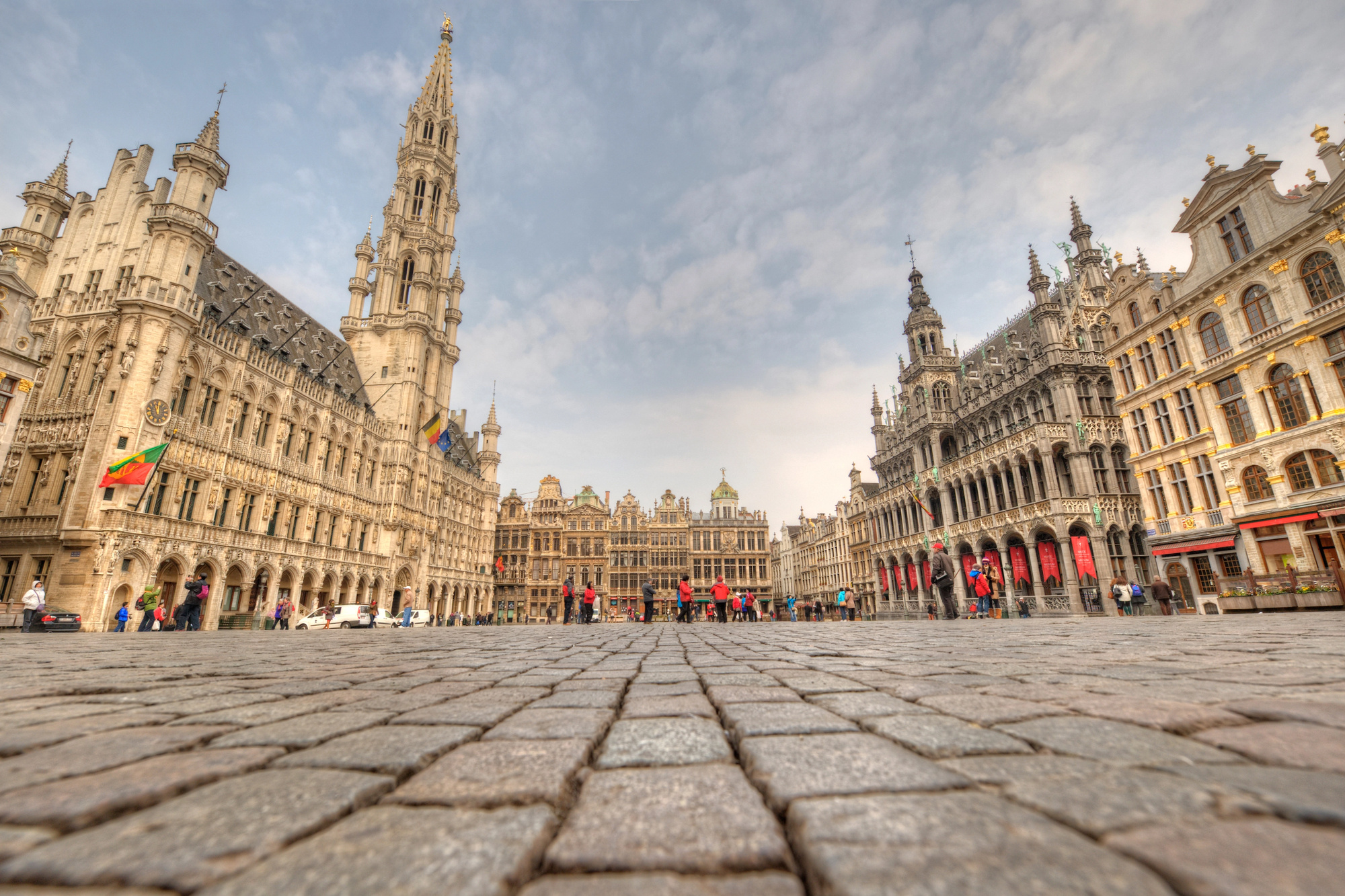
The Grand Place, or Grote Markt, is the obvious starting point and still the best one. Guildhalls of the old trades close it on every side, their facades layered with gold leaf and carved emblems, with the Gothic Town Hall and its spire on one flank. It does not open onto a view, which is exactly why it works: you turn out of a narrow lane and the whole square arrives at once. The lanes of the lower town run off in every direction, past glass roofed arcades and smaller squares that deserve more than a glance.
The statue everyone comes to see
A few streets away is Manneken Pis. The scale catches people out, as he is genuinely tiny and perched above head height, and the crowd photographing him is usually larger than the statue. He is also dressed in costume regularly, so visitors often find him clothed rather than bare bronze. Sam came away unconvinced, which puts him in good company.
The European Quarter and the Upper Town
East of the centre, the Commission and Parliament buildings sit among offices, missions and lobbying houses, with the member state flags in a long row outside. Demonstrations are a regular feature, and on the day Sam visited, supporters of a jailed Romanian political figure were out in strong voice. The Parliament’s visitor centre and nearby Cinquantenaire park, with its triumphal arch, make an easy half day.
Up on the ridge, the upper town turns grand, with broad avenues, royal buildings and long views over the rooftops. The Congress Column stands here, raised to commemorate the constitution adopted after Belgian independence in 1831, with a statue of the first king on top and the Tomb of the Unknown Soldier at its base.
Art Nouveau, Chocolate and Beer
- Brussels was a birthplace of Art Nouveau. Several Victor Horta houses survive in the districts south of the centre and the best are open to visitors.
- Chocolate shops are serious operations, and pralines are made to be eaten the same week rather than carried home in a suitcase.
- The beer culture runs deeper, built on abbey and Trappist brewing and the sour lambics of the surrounding region, served in old wood panelled cafes where staff will steer you if you ask.
When to Go and How It Fits
Late spring and early autumn are the most reliable, with mild days and long light. Summer brings crowds and terraces; winter is grey and wet, though the lower town is at its most atmospheric under lights. Rain is possible in any season, so pack for it.
Brussels sits within a couple of hours of Paris, London, Amsterdam and Cologne by fast rail, making it an easy stop on a wider northern European itinerary. Two nights covers the essentials, three if you want the Art Nouveau houses and the European Quarter without rushing.
Places to explore
Serres Royales de Laeken (Royal Greenhouses of Laeken)
Historic glasshouse complex, seasonal openingBalat and Horta's crystal palace in the grounds of the royal estate opens to the public for only a few weeks each spring, so most visitors never see it. A kilometre of iron and glass galleries runs beneath camellias, fuchsias and an avenue of palms.
The opening window falls roughly between mid April and early May, with dates announced a few months ahead.
Musees royaux des Beaux-Arts de Belgique, Musee Magritte (Royal Museums of Fine Arts, Magritte Museum)
Art museumOne ticket covers the Old Masters wing, with Bruegel, Van der Weyden and Rubens, alongside the largest Magritte collection anywhere. Seeing both in a single visit makes the Belgian thread of deadpan strangeness clear, and the Fin de Siecle rooms fill in the Art Nouveau story.
Start with Magritte on the top floor at opening, and allow about three hours for both wings.
What Sam said
If you're going to have a protest, what better place to do it, outside the seat of government for the European Union here in Brussels. Sam Newman, on the ground
Sam Newman in Brussels
Filmed on Sam's own trip through Europe, parts of which Cartier World Travel arranged.
Other stops on Sam's journey
Brussels
Tell us roughly when and for how long. We build the rest around you, the way we built Sam's.