
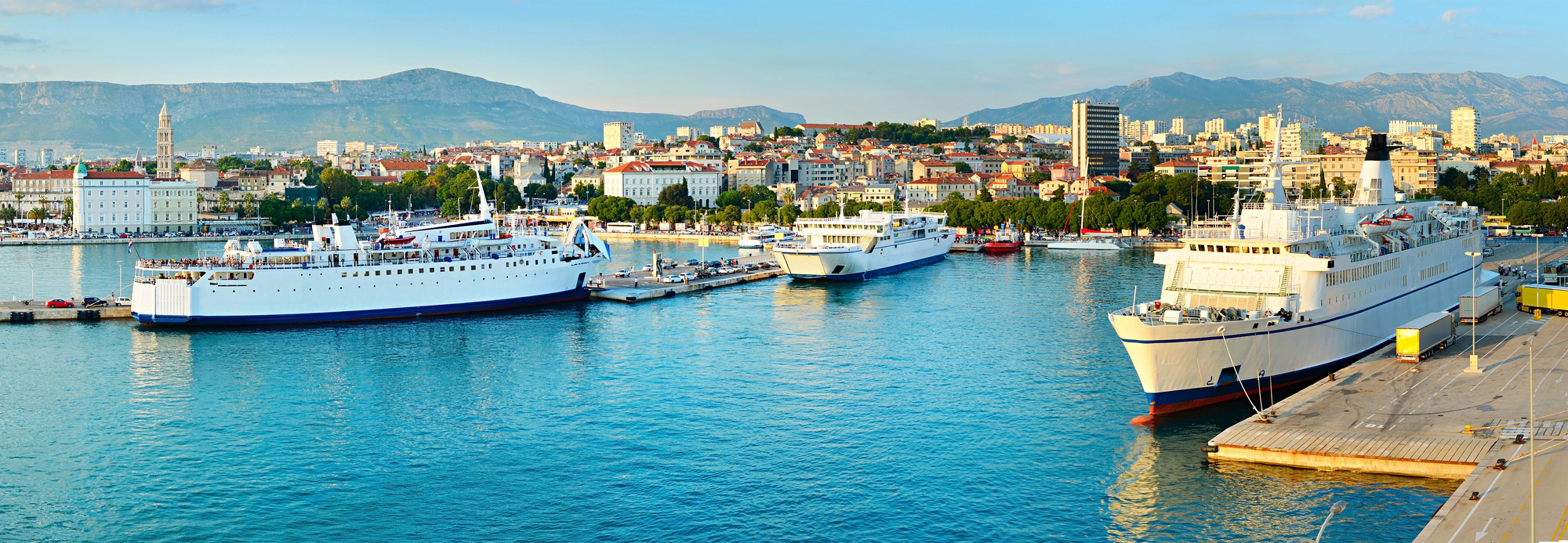
The Split to Ancona ferry quietly makes a whole itinerary work. Instead of driving the long way around the head of the Adriatic through Slovenia and Trieste, you board in Croatia in the evening and wake tied to a wharf in Italy. It is a working sea route between two coasts, and for travellers stitching together Dalmatia and Italy it is the most elegant connection there is.
Sam Newman took it after his time in Split, and his night on board is a useful lesson in the one decision that matters most.
Why the crossing is worth building a trip around
Split sits roughly opposite Ancona, and the sea between them is narrow enough to cross while you sleep. Driving the equivalent distance means a full day and a half of motorways, tolls and border queues. The ferry turns that into a single night and delivers you to a part of Italy many Australians skip.
It also changes the shape of a holiday. Rather than two separate trips bolted together, you finish the Dalmatian coast, sleep, and begin Italy from the Adriatic side instead of flying back into Rome or Milan and starting again.
The night on board
The ships are large car and passenger ferries with restaurants, bars, open decks and several classes of accommodation. Boarding is in the evening, there is a slow slide out past the islands as the light goes, then open water until the Italian coast appears.
Accommodation is where people come unstuck. There are deck fares, reclining seats and cabins with bunks and a bathroom, and the descriptions do not always survive translation. Sam booked expecting a bed and found what he described as a recliner that only goes about three-quarters flat, fine for a couple of hours and hopeless for a night. He spent part of it looking for a bench long enough to stretch out on.
So the advice is simple. Book a cabin. Cabins are limited and sell out first in the busy months, so book early rather than at the port.
Travelling with a car
The vehicle decks mean a self-drive trip does not have to end at the water, which avoids dropping a hire car in one country and collecting another elsewhere. Check with the hire company first, as cross-border and cross-water rules vary.
Arriving in Ancona
Ancona is a working port city on a headland in Le Marche, with a Roman arch on the waterfront and a cathedral on the hill above. The surrounding region rewards anyone who lingers: hill towns, a quieter coastline and good regional food. From here the roads run inland to Umbria and Tuscany, south down the Adriatic, or across to Rome.
Practical notes
- Board earlier rather than later to avoid the last-call queue.
- Eat before you sail or plan on the ship’s restaurant, as choice on board is limited.
- Pack what you need for the night in a small bag, since vehicle decks close once under way.
- Sailings are most frequent in the warmer months; the shoulder seasons bring fewer people and easier cabins, while winter timetables thin out considerably.
If you are planning a trip taking in both sides of the Adriatic, we can build the route around crossings like this one, with the cabin booked and the driving days either side sensibly spaced.
What Sam said
I spent most of the night walking around the boat trying to find an empty bench seat. Eventually I found one, but it wasn't quite wide enough, so every time I turned over, I nearly rolled off. Sam Newman, on the ground
Sam Newman in Split
Filmed on Sam's own trip through Europe, parts of which Cartier World Travel arranged.
Other stops on Sam's journey
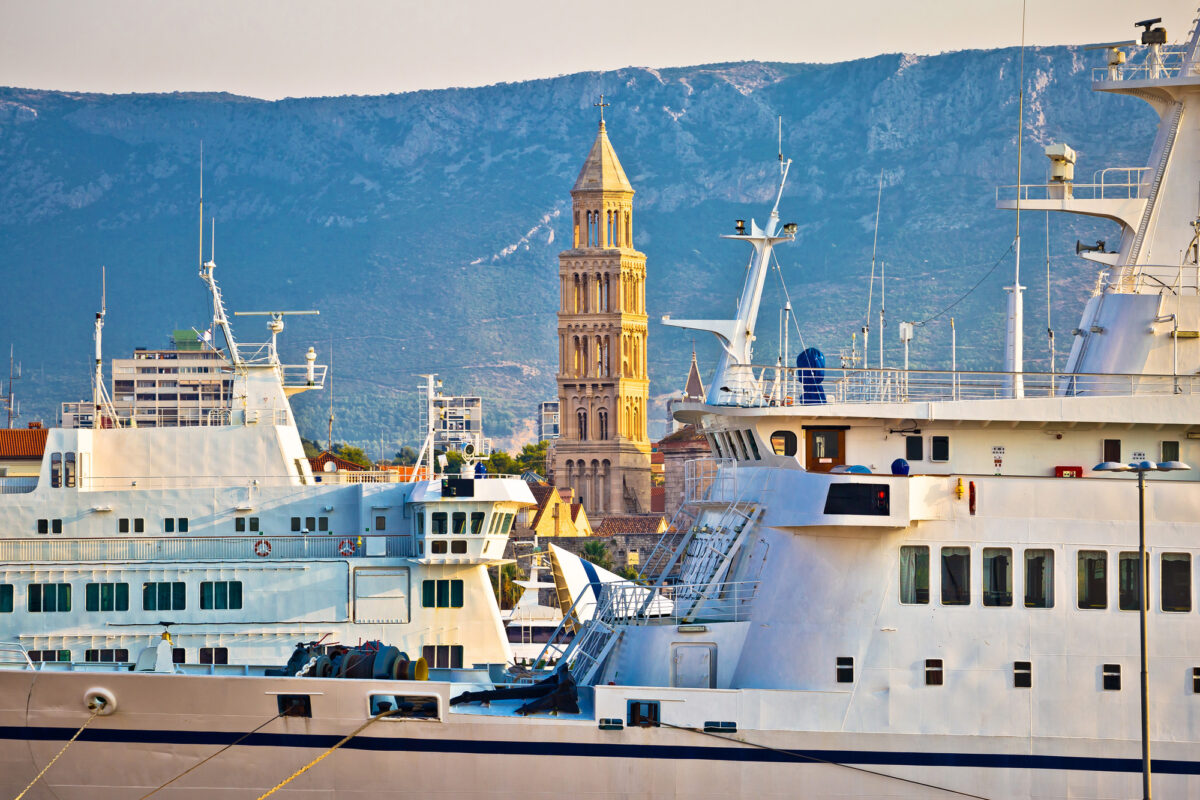
Split
Tell us roughly when and for how long. We build the rest around you, the way we built Sam's.