Most people meet Corinth at speed, through a car window on the way to somewhere else. That is a pity, because visiting Corinth in Greece properly gives you one of the most concentrated pieces of history in the country: a canal sliced clean through solid rock, a ruined classical city with its temple still standing, a fortress on the mountain above it, and a place written into the New Testament. It sits where the Peloponnese joins the rest of Greece, which is exactly why so much has happened here.
Why visiting Corinth in Greece is worth more than a pit stop
Geography made this town important long before anyone thought to build a resort on an island. The Isthmus of Corinth is the narrow land bridge between the Peloponnese and mainland Greece, with the Gulf of Corinth on one side and the Saronic Gulf on the other. Everything moving by land had to cross it, and everything moving by sea wanted to avoid the long haul around the peninsula. Control of that pinch point made ancient Corinth wealthy, cosmopolitan and, by the standards of its neighbours, famously worldly.
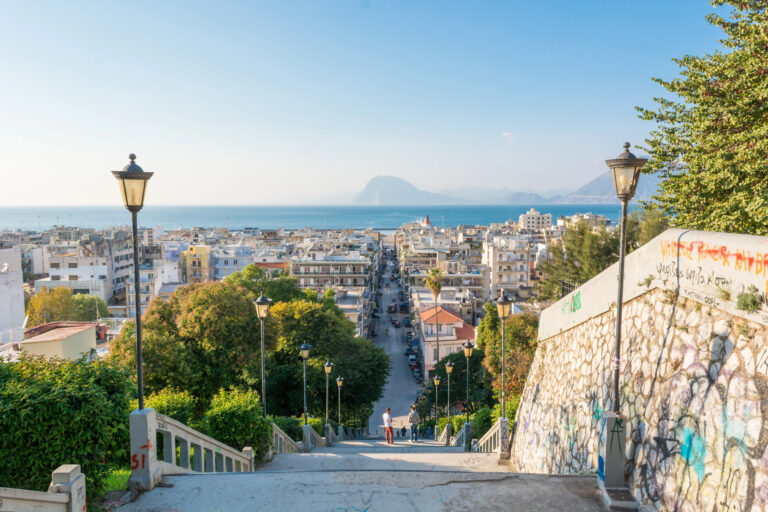
Sam Newman stopped here on his drive through Greece, arriving from Patras on the motorway that runs along the Gulf of Corinth. It is a good road and a genuinely beautiful stretch of coast, with tolls along the way, and it puts the whole northern Peloponnese within comfortable reach of a single base.
The canal that cuts the isthmus
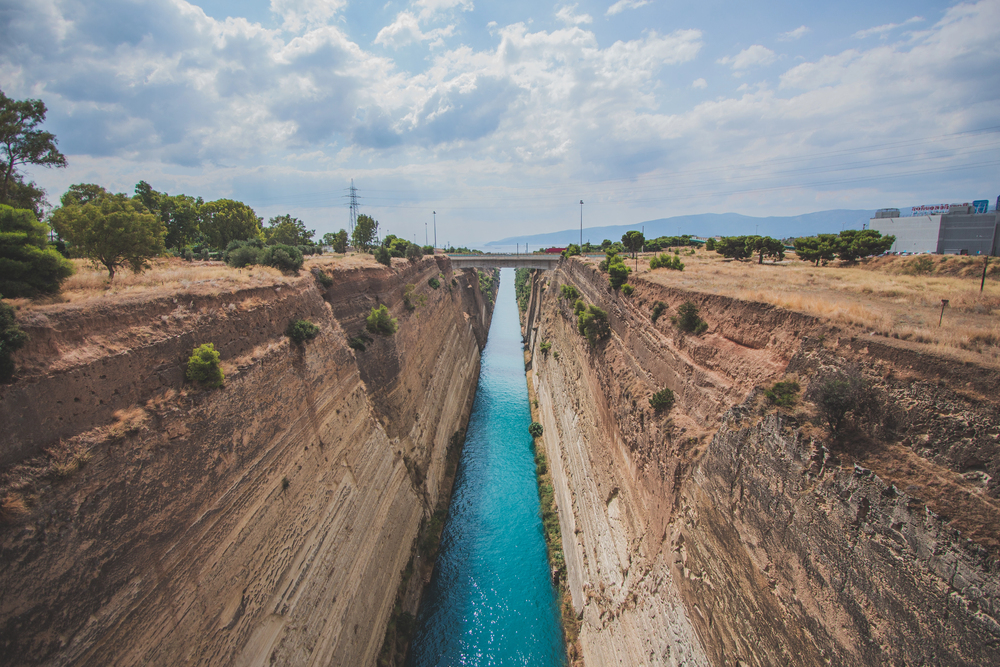
The Corinth Canal is the thing everyone knows, and it still surprises people in person. Rather than tunnelling, the engineers cut a channel straight down through the rock of the isthmus, leaving sheer walls rising on either side and a ribbon of water far below. Roman emperors thought about digging it, the ancients instead dragged ships overland on a paved trackway, and it was finally completed in the late nineteenth century. Because it is so narrow, most modern commercial shipping is too wide for it, so what passes through tends to be smaller vessels and tourist boats, which somehow makes the scale of the cutting even more striking.
Viewing it from the bridge over the canal takes ten minutes. Standing there long enough to watch something move through takes a bit of patience and is worth the wait.
Ancient Corinth and the Temple of Apollo
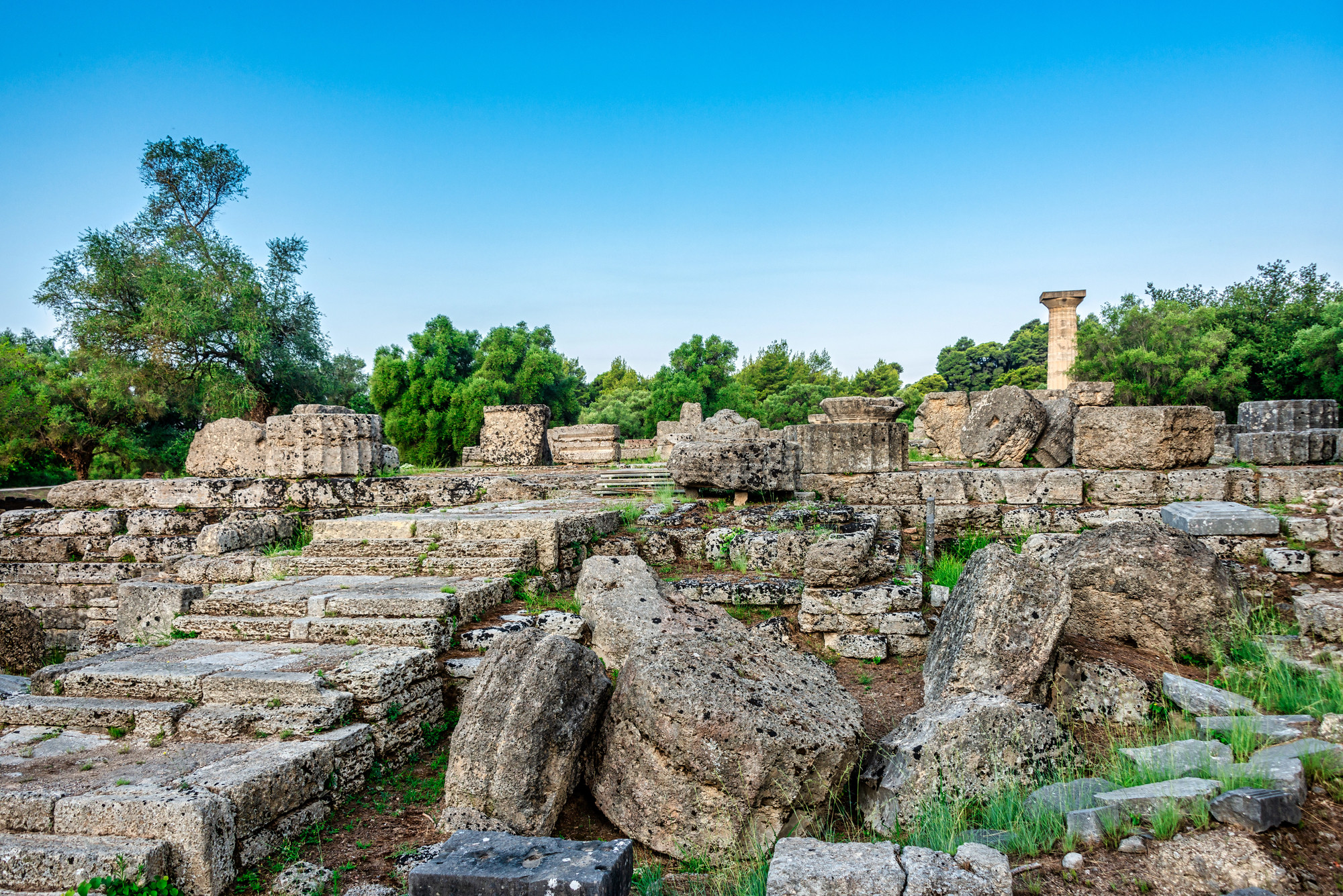
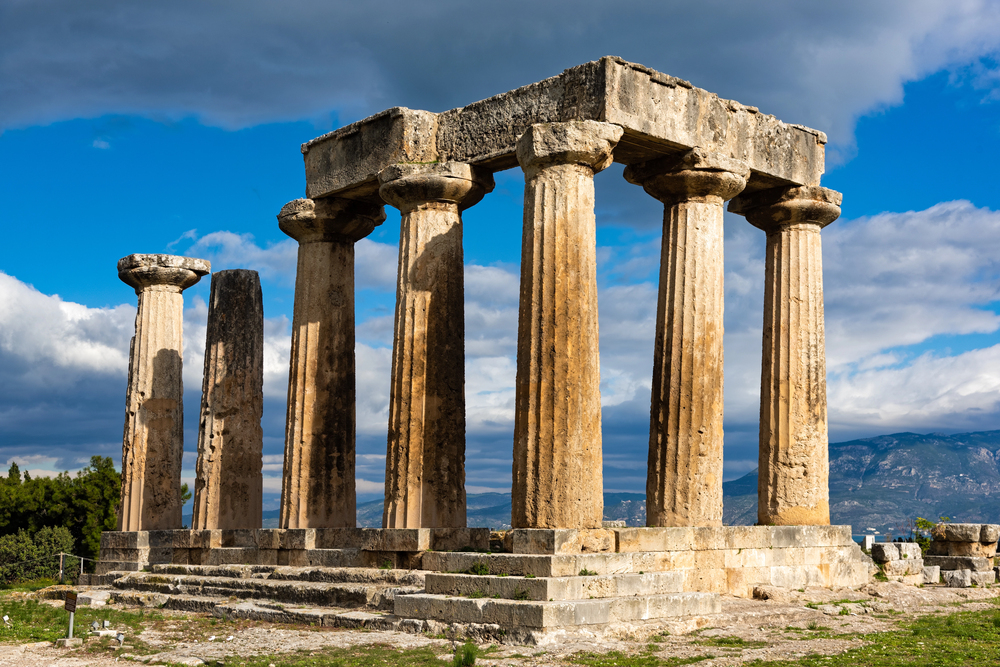
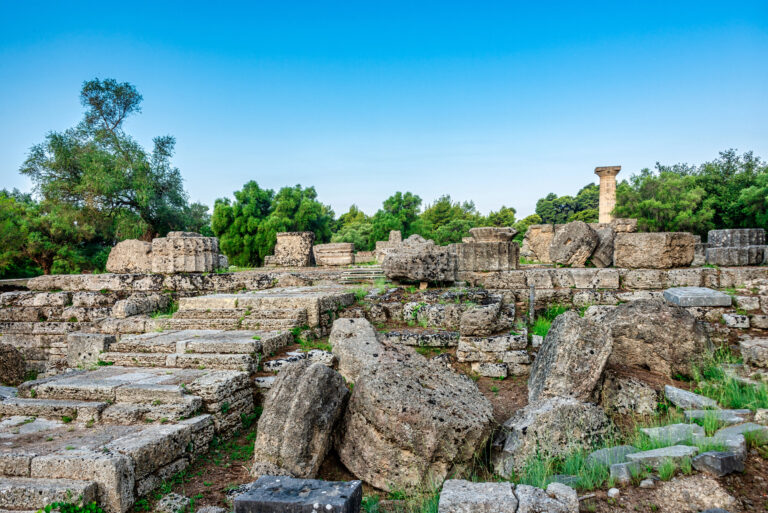
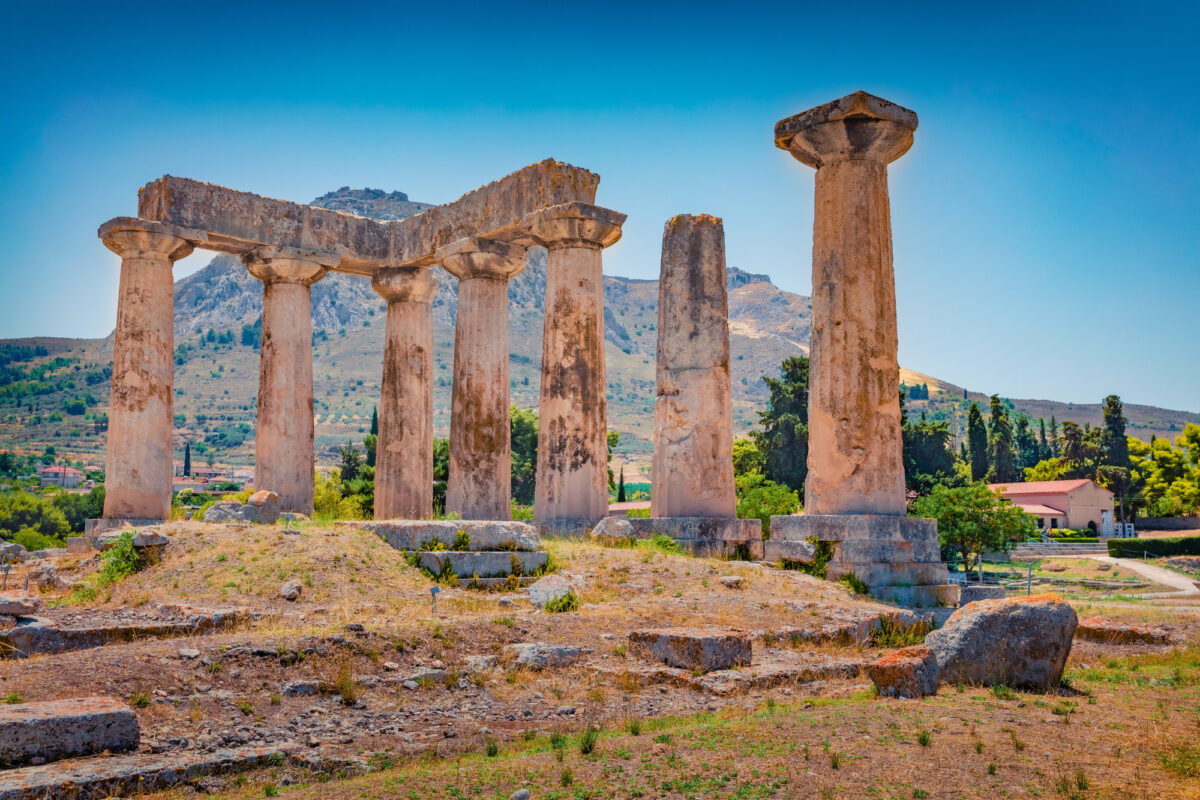
A short drive inland from the modern town, the archaeological site of Ancient Corinth is laid out across the lower slopes of the mountain. The Temple of Apollo dominates it, its heavy Doric columns among the oldest still standing anywhere in Greece, with the marketplace, fountain houses and paved streets spread out below. There is a museum on site holding sculpture, mosaics and everyday objects pulled from the ruins.
The city of the Corinthians
This is also the Corinth of the Bible. The Apostle Paul lived and preached here in the first century AD, and the letters he later wrote to the community he had founded became First and Second Corinthians. Walking the excavated main street of a city named in scripture is one of those moments that lands even for travellers who came only for the archaeology.
Acrocorinth, the fortress on the rock
Above the ancient city rises Acrocorinth, a steep limestone crag crowned by one of the largest and longest used fortresses in Greece. Greeks, Romans, Byzantines, Franks, Venetians and Ottomans all held it and all added to it, so you climb through successive gateways built by different centuries. The reward at the top is a view across the isthmus to both gulfs, which explains in one glance why anyone ever bothered fortifying it.
Wear proper shoes. The ground is uneven and there is very little shade.
The games and the wider isthmus
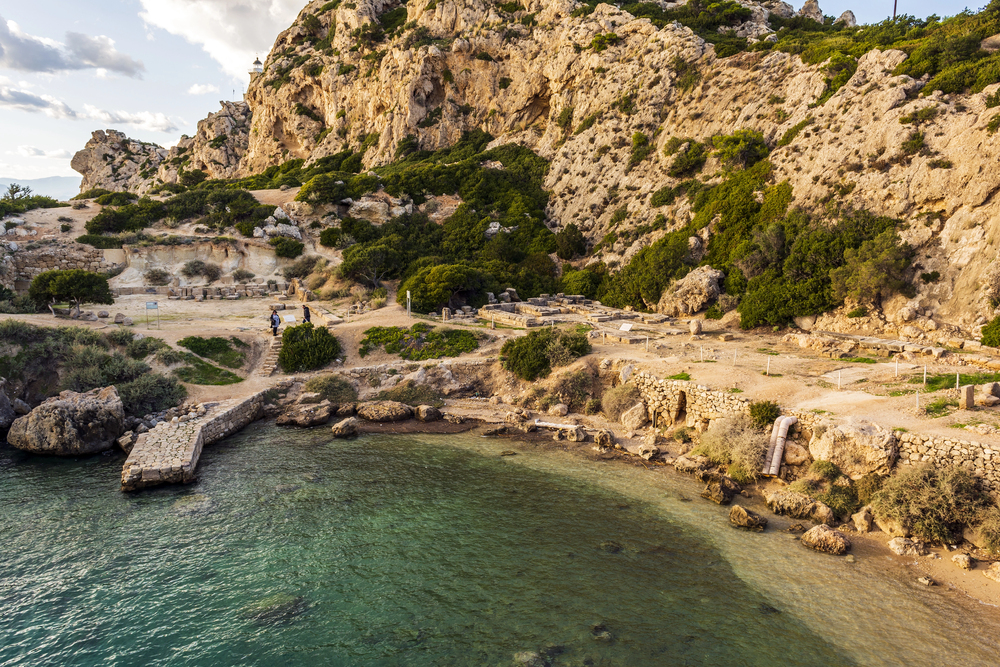
Corinth also hosted the Isthmian Games, one of the four great athletic festivals of the ancient Greek world alongside the Olympics. They were held at the sanctuary of Poseidon at Isthmia, near the eastern end of the canal, where a site and museum remain. It is a quieter stop than the main ruins and rounds out the picture of what this place was: not a village that happened to have a temple, but a major city with international traffic passing through it.
Where to stay and how to use the town
Modern Corinth is a working Greek town on the water rather than a postcard village, and that is part of its usefulness. It has supermarkets, tavernas and ordinary streets, and self-catering apartments here are straightforward and comfortable. Sam and his travelling companion based themselves in an apartment with a courtyard to sit in, which is exactly the right way to handle the middle of a long driving trip: somewhere to do the washing, cook something simple and sit outside in the evening.
One practical note from their arrival. Addresses in smaller Greek towns do not always behave on a GPS, and they spent a while circling before they found the place. Having a phone number for the host and clear written directions saves a lot of heat and temper.
When to go
Summer here is serious. The car thermometer read 40 degrees on the day Sam arrived, and the ruins and the fortress both offer almost no shelter from it. If you are set on visiting in July or August, do the archaeological sites early in the morning and keep the afternoon for the canal, the coast and a shaded courtyard.
May, early June, September and October are far kinder, with warm days, workable light for photography and thinner crowds at the ancient city. Winter is mild and green, and the sites stay open, though sea swimming is off the table.
How it fits a wider Greek trip
Corinth works best as a hinge rather than a destination in itself. It is roughly an hour from Athens, which makes it the first or last stop of a Peloponnese loop, and from here you are within easy reach of Mycenae, Nafplio, Epidaurus and the mountain roads south. Travellers coming across from Patras, as Sam did, arrive on good motorway with the gulf on one side the whole way.
Give it a night rather than an hour. Two nights lets you take in the canal, Ancient Corinth, Acrocorinth and Isthmia without rushing any of them, and it gives you a base for a day trip deeper into the Peloponnese before you move on.
If a self-drive through Greece appeals, the detail that makes or breaks it is the sequence: how far you drive between stops, where you sleep, and which sites you see before the heat of the day. That is the sort of planning we do at Cartier World Travel, shaped around the way you actually like to travel.