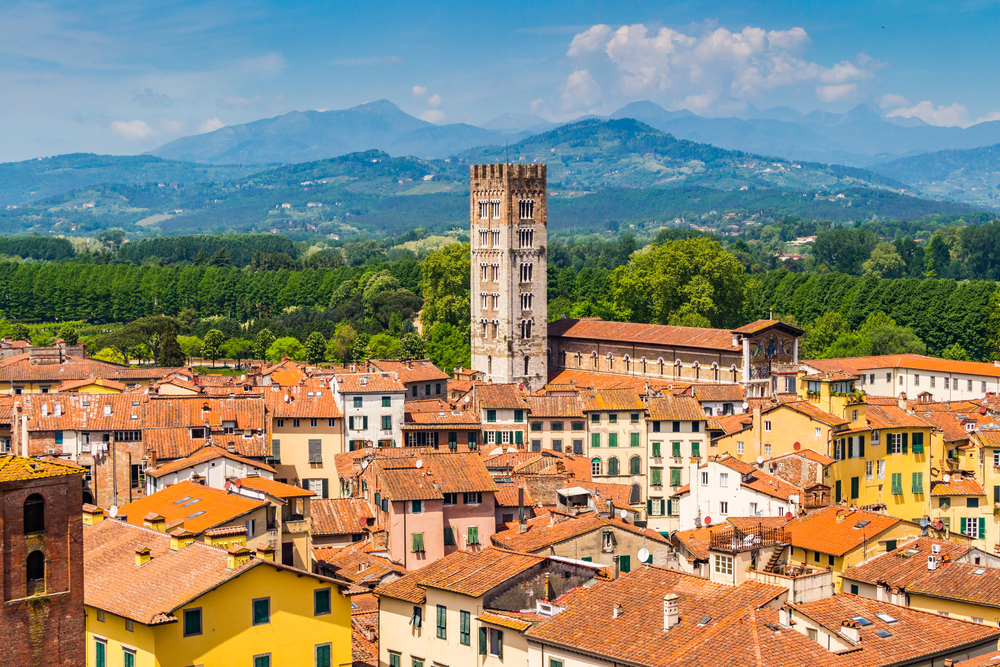
Tuscany is full of towns that ask you to climb, queue and keep moving. Visiting Lucca in Tuscany is the opposite proposition: a flat, walled, unhurried city where the best thing you can do is put the itinerary down for a day. It sits on the plain between Florence and the Ligurian Sea, close enough to Pisa that many travellers pass straight by it, which is precisely why those who stop tend to remember it more fondly than anywhere else in the region.
Sam Newman spent a morning here on his European trip, working out the pronunciation of the name and then circling the ramparts in a small electric cart rather than walking them. His verdict on the walls, delivered with the usual restraint, was that they are Italy’s answer to the Great Wall of China.
The walls that made the city
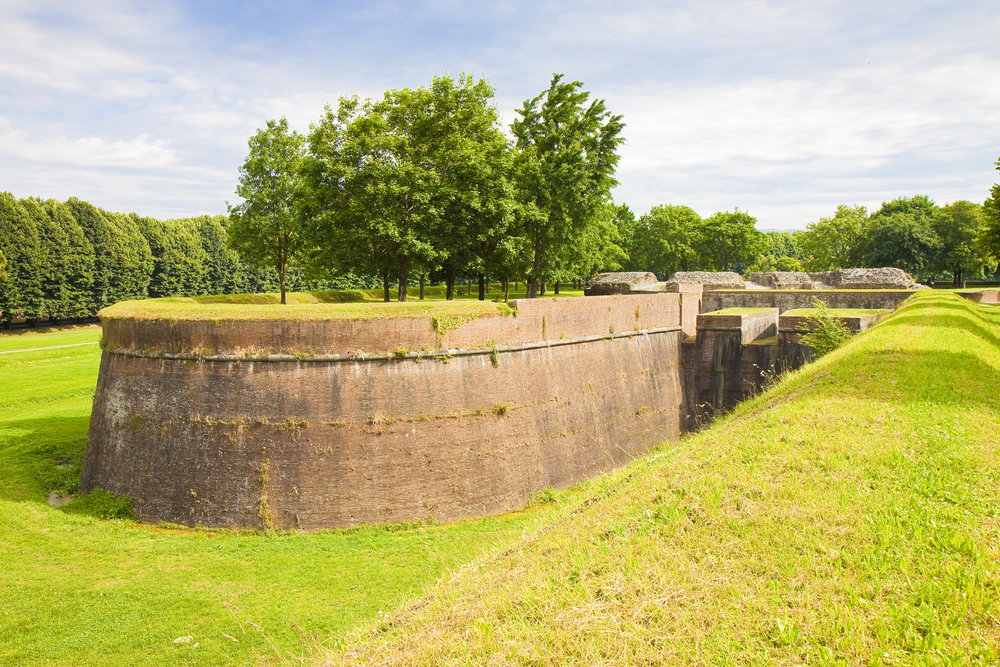
Lucca began as a Roman colony in 180 BC, and two and a bit thousand years later the shape of that settlement is still there in the dead-straight streets of the centre. The defences you see today are much younger than the city itself: broad Renaissance ramparts, built when Lucca was an independent republic with money and enemies, thick enough to carry cannon and wide enough on top to carry a road.
They were never stormed, and so they were never destroyed. Instead they were planted with trees and turned into a promenade, and that is what they remain: a little over four kilometres of shaded avenue running in a loop above the rooftops, with the city on one side and the plain and the mountains on the other. Locals use it as a park. Walk it, cycle it or ride it, but do the full circuit, because the view changes completely between the northern and southern stretches.
Visiting Lucca in Tuscany: what to see inside the walls
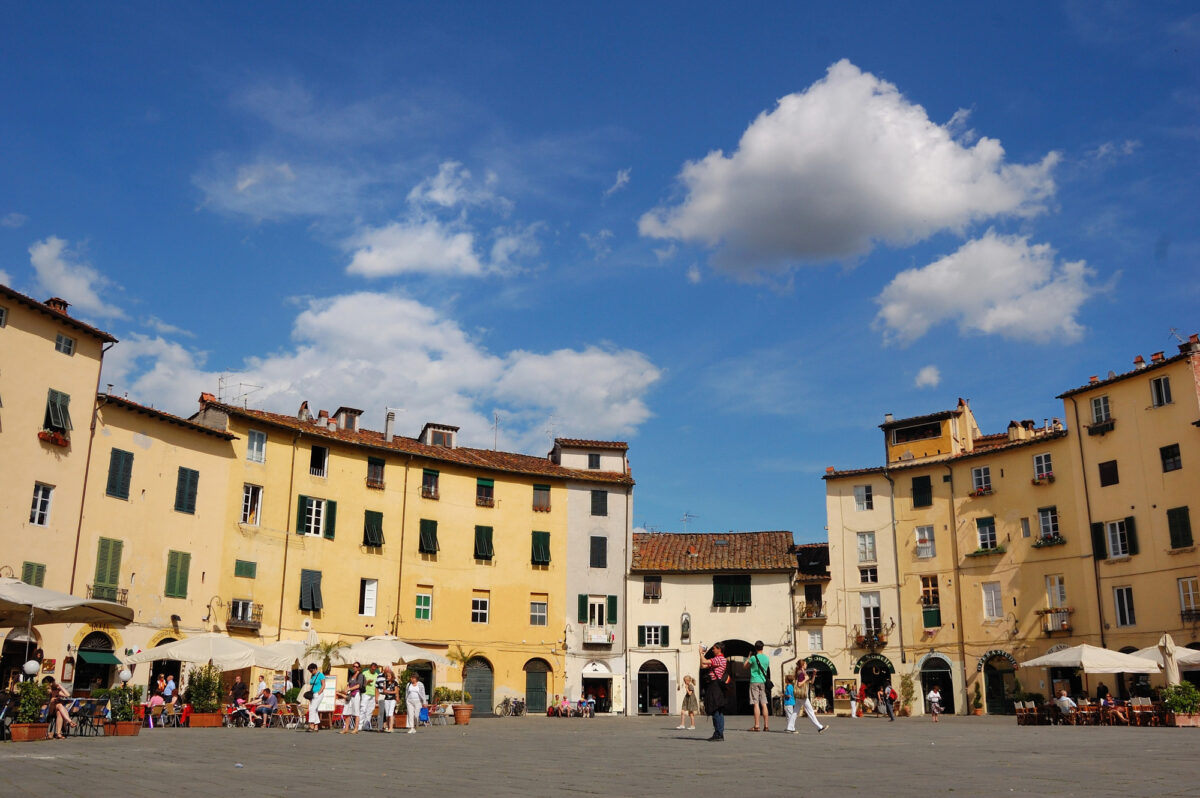
Piazza dell’Anfiteatro
The most photographed space in the city is an oval of pastel houses built directly onto the footprint of the Roman amphitheatre. The arena is long gone, but its shape survives in the curve of the buildings and in the low archways that let you slip in from the surrounding lanes. Arrive from a side street rather than the main approach and the reveal is much better.
Via Fillungo and the shopping streets
Lucca’s main artery is a narrow stone canyon of a street, and as Sam noted, the international labels have very much come over the wall: Gucci, Prada and the rest now trade behind medieval frontages alongside long-established Lucchese shops. It makes for an odd and rather good contrast, and the lanes running off it are where the smaller, more interesting places hide.
Churches and towers
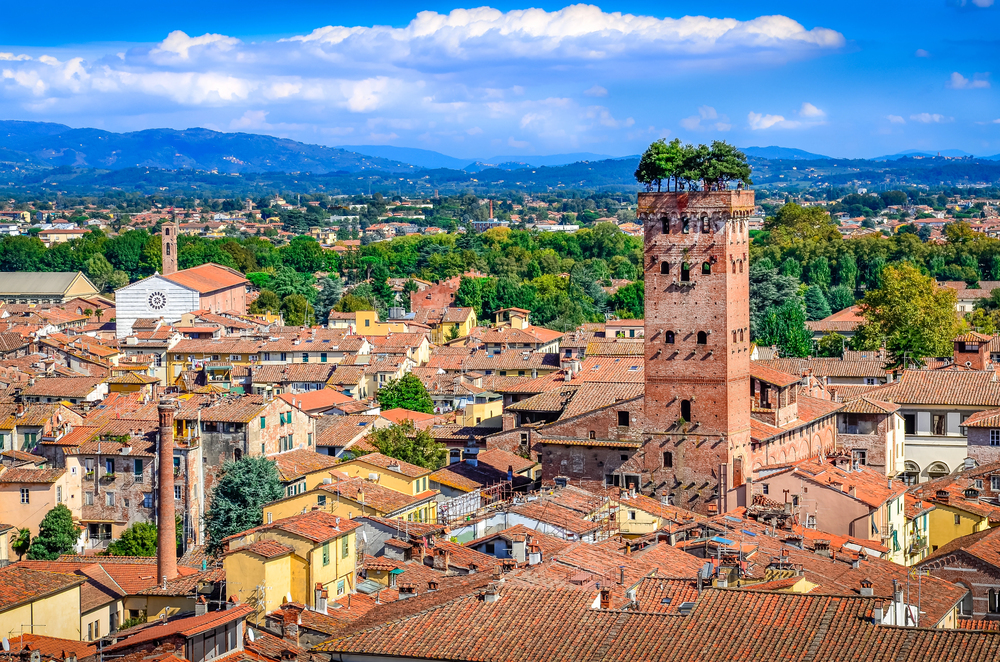
San Michele in Foro stands on the old Roman forum with a facade so tall and elaborate it outgrew the church behind it. The Cathedral of San Martino is the city’s other great set piece. And the Torre Guinigi is the one everybody remembers, a brick tower with a small grove of oak trees growing out of the top of it and a rooftop view straight down onto the terracotta.
Puccini’s home town
Giacomo Puccini was born in Lucca, and the city has never let the fact go. His name turns up on squares, plaques and posters, and music is part of the ordinary texture of the place rather than a seasonal add-on. Even if opera is not your thing, it is worth understanding that the composer of La Bohème and Tosca grew up in these streets, because it explains a good deal about how seriously Lucca takes itself.
Getting around a car-free centre
The historic centre is largely closed to through traffic, and this is the single most important practical thing to know. Do not attempt to drive into the middle of it. Park outside the walls and come in on foot, or hire a bicycle, which is what most of the city seems to do. Small electric carts also work the lanes, as Sam found, although the streets are tight and pedestrians have the run of them.
The upside of all this is atmosphere. With the cars kept out, you hear bicycle bells and conversation instead of engines, and a city that would otherwise feel crowded feels civilised.
When to go and how Lucca fits a wider trip
Late spring and early autumn are the sweet spots: warm enough to sit outside, mild enough to walk the full ring of walls without suffering for it. High summer on the Tuscan plain is hot and busy. Winter is quiet, damp and rather lovely if you do not mind short days.
Lucca is an easy short hop from Pisa and Florence, which makes it a natural base for travellers who would rather sleep somewhere calm and day-trip into the crowds than the other way around. It also sits at the doorway to two very different landscapes: the beaches of the Versilia coast to the west, and the mountains and chestnut forests of the Garfagnana to the north. Two nights is the minimum. Three lets you use it properly.
Sam reckoned Lucca was exactly the sort of place Cartier World Travel ought to have a hand in, and we would agree. We helped organise parts of his European trip, and this is the kind of stop we like to build into an Italian itinerary: a town that rewards an extra night rather than a fast pass, slotted between the bigger names so the whole trip breathes. Talk to us about where it fits in yours.