Visiting Matera is one of the few experiences in Italy that still catches seasoned travellers off guard. Tucked into the arch of the Italian boot in Basilicata, well away from the Rome, Florence and Venice line, it is a city of houses, churches and staircases carved directly into a limestone ridge above a gorge. Plenty of Australians have never heard the name until it appears on their itinerary, and then they spend the rest of the trip talking about it. Sam Newman had exactly that reaction after crossing from Sicily to the mainland and driving down into town, calling it striking before he had even parked the car.
Why visiting Matera is worth the detour
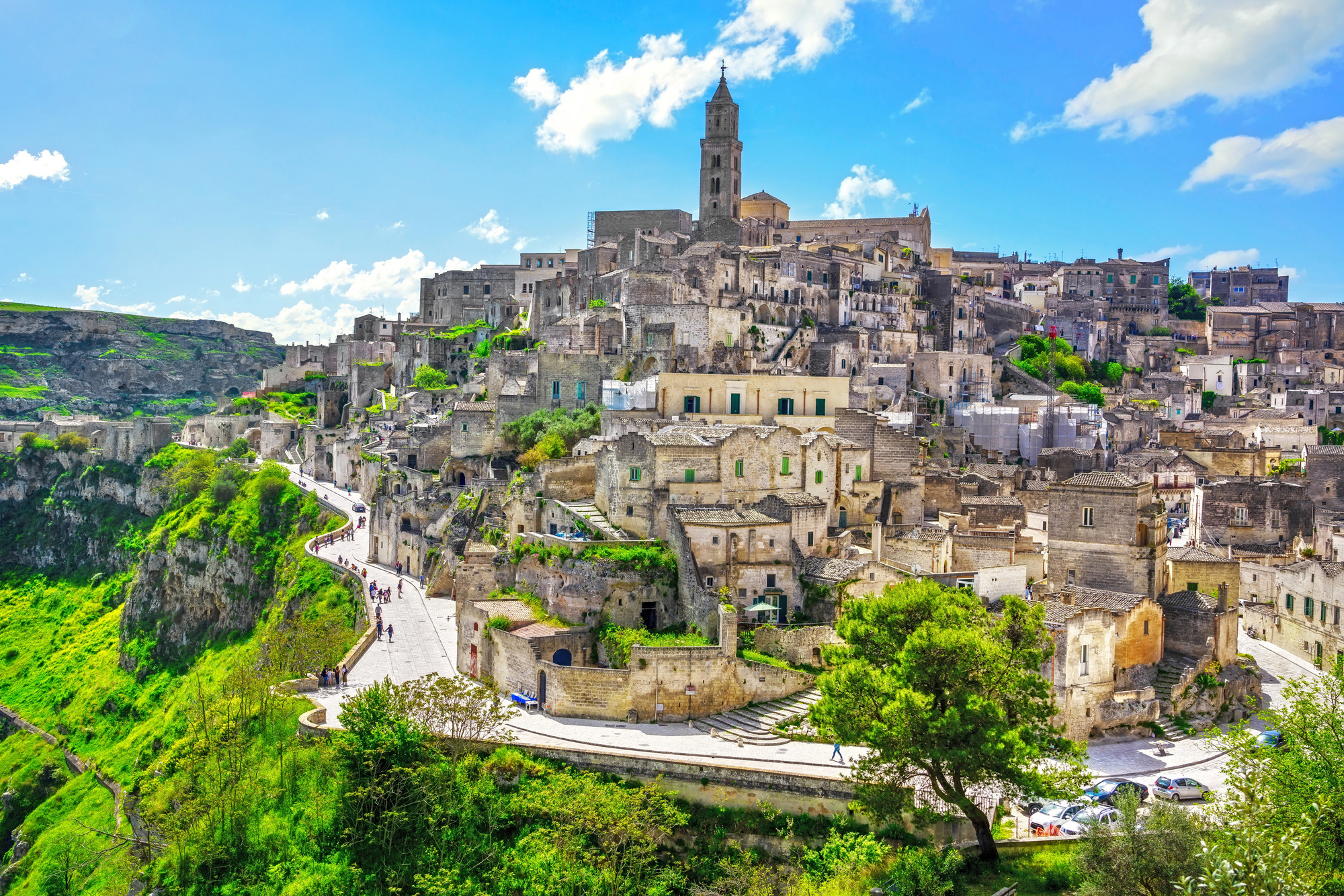
Matera is among the oldest continuously inhabited settlements in the world. People sheltered in the natural caves of the ravine long before anything resembling a town existed, then cut deeper, adding rooms, cisterns, stables and chapels until the hillside became a city. The result is a place with no obvious front or back. From a lookout across the ravine you see the whole thing at once, the old and the new stacked together, church towers rising out of a mass of pale stone roofs that are also somebody’s floor.
The two ancient districts, known as the Sassi, are UNESCO World Heritage listed, and the story behind that listing is part of the appeal. By the mid twentieth century the caves were overcrowded and unsanitary, and their residents were relocated to new housing. For decades the Sassi sat largely empty. What has happened since is a slow, careful restoration, and it is why you can now walk past a rough rock face and notice a window frame set into solid stone with lights on behind it, and a modern apartment on the other side.
The Sassi, the gorge and the rock churches
Walking is the only way to understand the layout. Lanes turn into staircases, staircases run across other people’s rooftops, and the drop to the gorge is never far away. Below the town, the Gravina ravine cuts a deep line through the rock, and the plateau on the far side, the Murgia, is pocked with cave openings that were inhabited for thousands of years. Walking tracks run down and across, and from up close you can see straight into the caves.
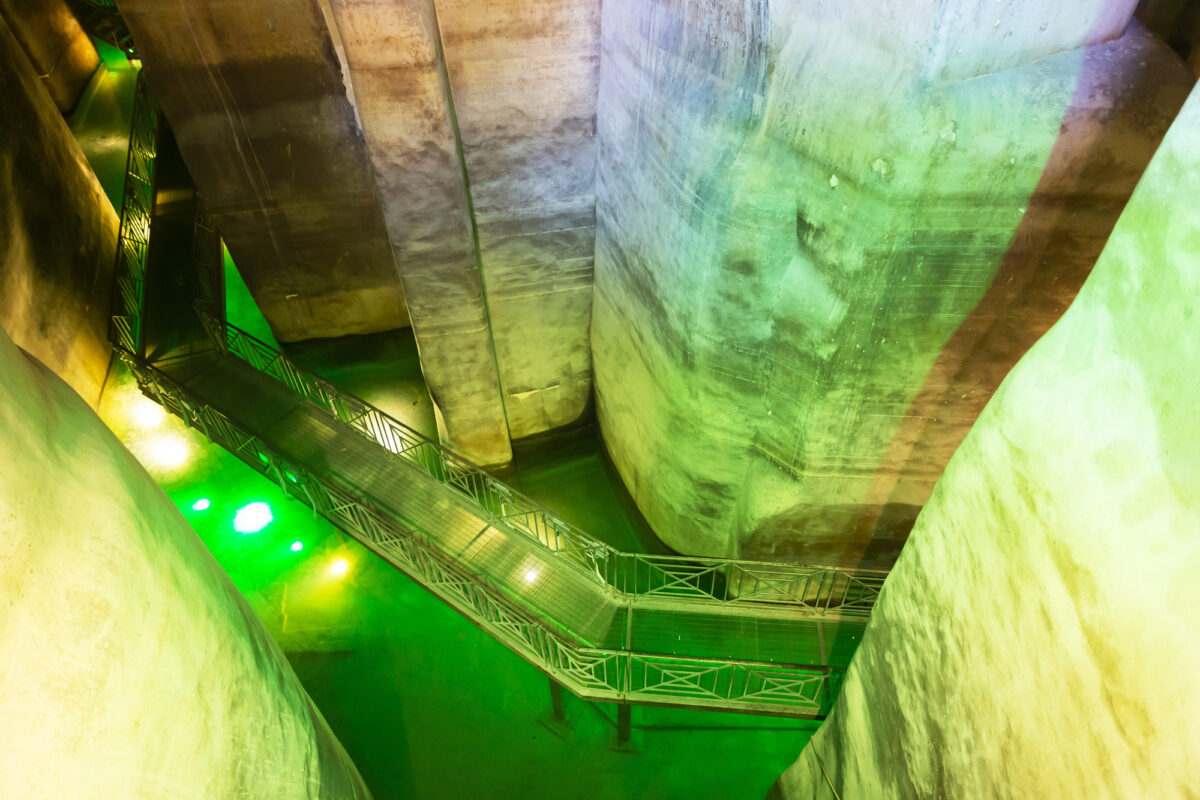
Scattered through both the Sassi and the plateau are the rock churches, chapels hollowed out of the cliff, some still holding faded frescoes. The other engineering marvel is underground. Matera’s survival on a dry limestone ridge depended on an elaborate system of channels and cisterns that collected and stored water beneath the streets, a genuinely sophisticated piece of ancient design.
See it twice
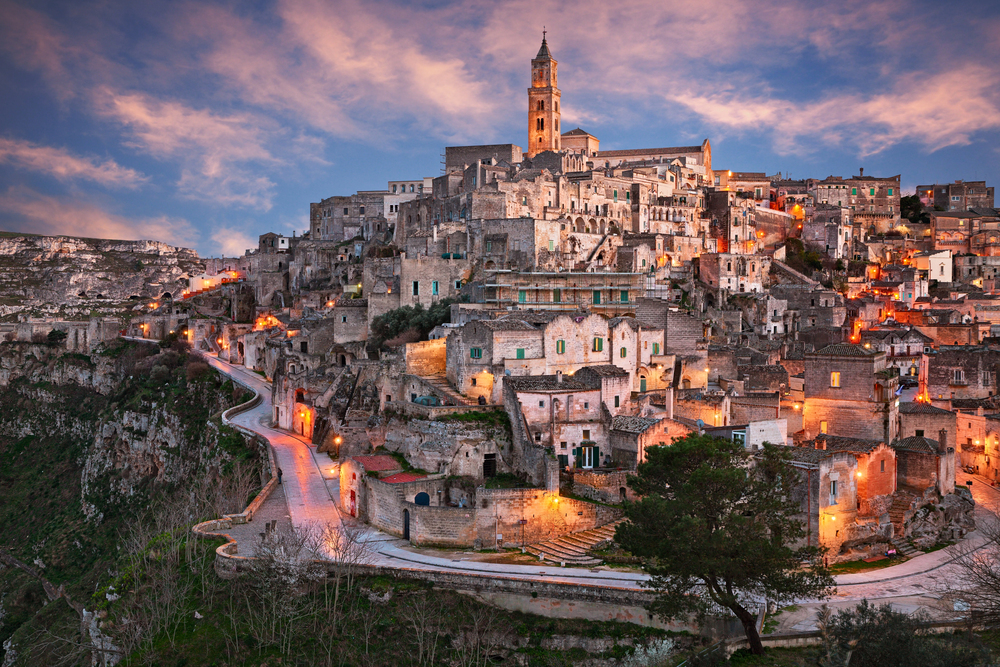
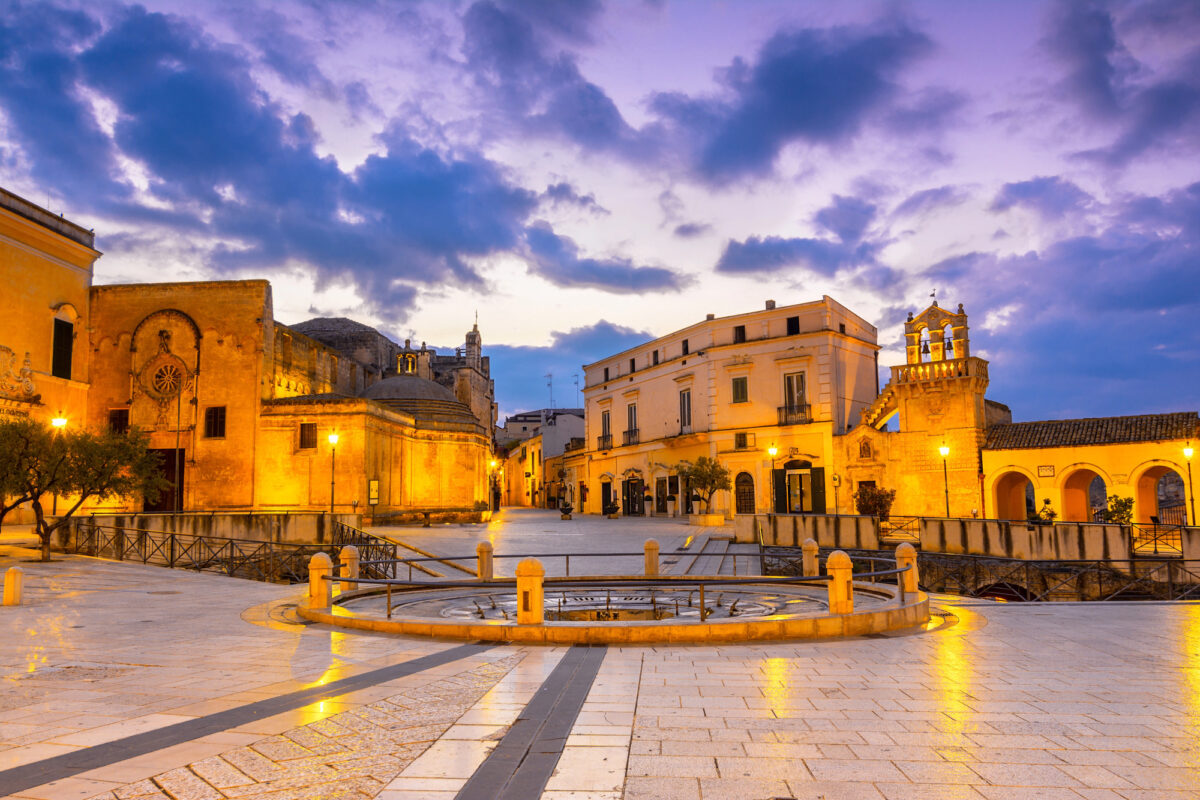
Matera by daylight and Matera after dark are two different cities. Once the sun drops and the lamps come on, the stone goes gold and the whole ridge reads as one lit sculpture. Small three-wheeled Ape tours run through the lanes and out to the viewpoints, which is what Sam had lined up for his evening, taking in the town by day and then again by night.
Eating inside the stone
Basilicata’s food is honest and pastoral rather than showy: lamb, bread, pulses, strong local cheeses, chilli. Sam ate at Grotta del Gusto, taking a small table to himself in the courtyard, with sliced beef and a lamb stew, and then went inside to find the dining room cut straight into the cave. That combination is common here. A plain doorway on a stone lane opens into vaulted rooms carved out of the cliff, cool even when the streets outside are baking.
Driving there, and where you cannot
The one practical thing worth knowing before you arrive is that Matera, like most historic Italian towns, is ringed with limited traffic zones, the ZTL. The signs are camera enforced, the permitted hours vary from one street to the next, and working out which sign applies to which lane is genuinely difficult in the moment. Sam spent a fair part of his arrival debating exactly that, which is a rite of passage for anyone driving in southern Italy.
The practical answer is to park outside the zone, unload with local help and walk the last stretch. The lanes into the Sassi are narrow, steep and often stepped, and the gorge below is unforgiving on a car with tired brakes. It is a town built for feet, not vehicles, and the trip is easier once you accept that.
When to go and how Matera fits a wider trip
Spring and autumn are the sweet spot. The Basilicata summer is fierce, and a city of bare stone and staircases holds the heat, so if you are travelling in the hottest months plan the walking for early morning and late evening. Winter is quiet and atmospheric, with fewer visitors on the lanes.
Matera also slots neatly into a southern Italian route. It sits within easy reach of Puglia, so it pairs well with the trulli country, the coastal towns and the baroque of the far south, and it works as the mainland landfall after Sicily, which is the way Sam came in. Two nights is the minimum to see it properly, one for the daylight walking and one for the town lit up.
Sam’s apartment in Matera was booked by Elsa and Dave at Cartier World Travel, who arranged parts of his European trip. That is the sort of detail that matters in a place like this: the right side of the traffic zone, a bed inside the old town, and the local knowledge to make the arrival painless. If a stone city in the arch of the boot belongs in your Italy, we can build the rest of the route around it.