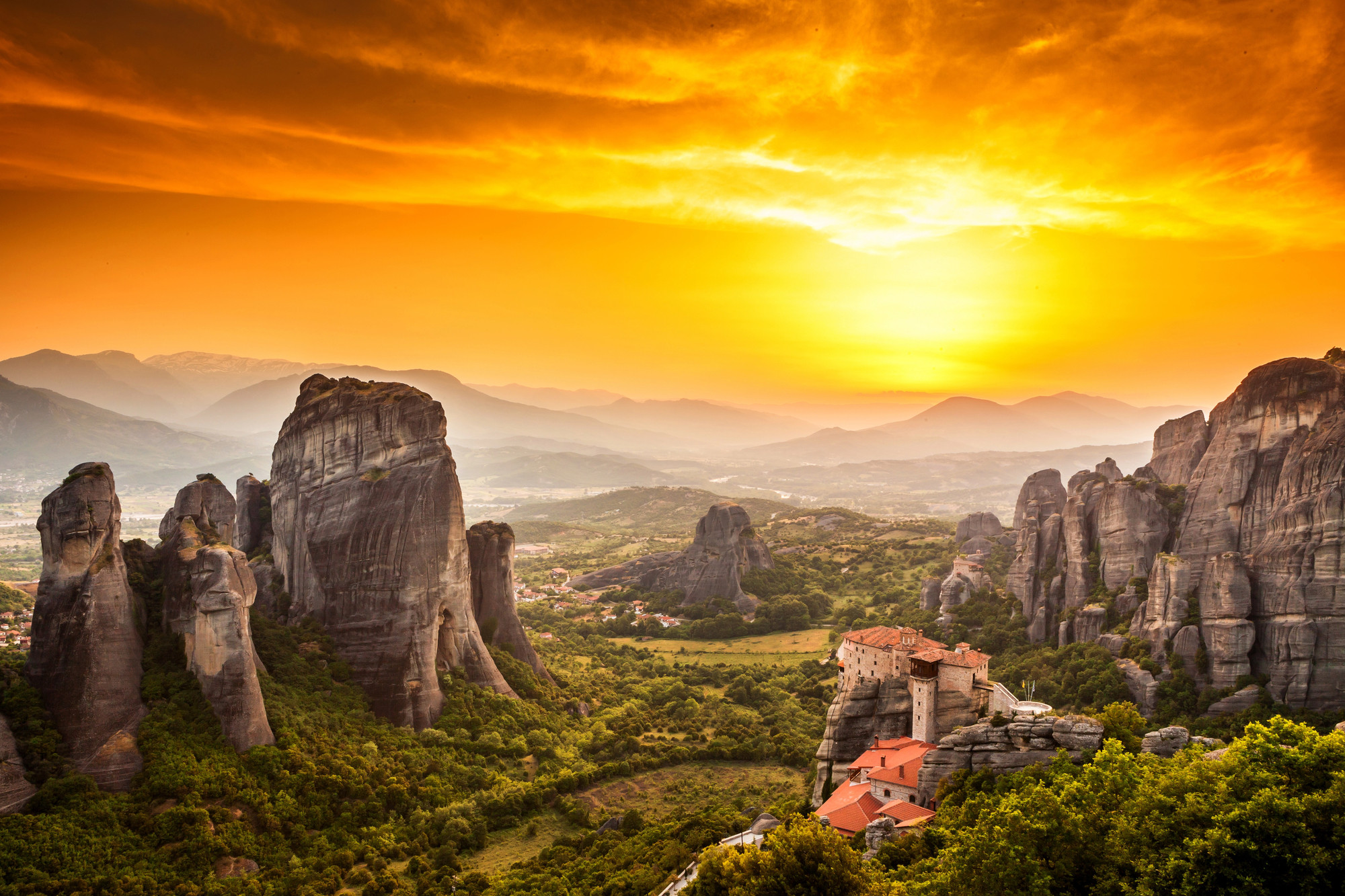
Visiting Meteora in Greece is one of the few experiences that genuinely outruns its own photographs. You drive north west from the plains of Thessaly, the road bends, and a cluster of grey stone towers simply stands up out of the farmland, hundreds of metres of it, with tiny tiled roofs and courtyard walls perched on top. Sam Newman filmed part of his European trip on this loop road, and the running joke in the car was that he had run out of words for it.
Rock towers that came first
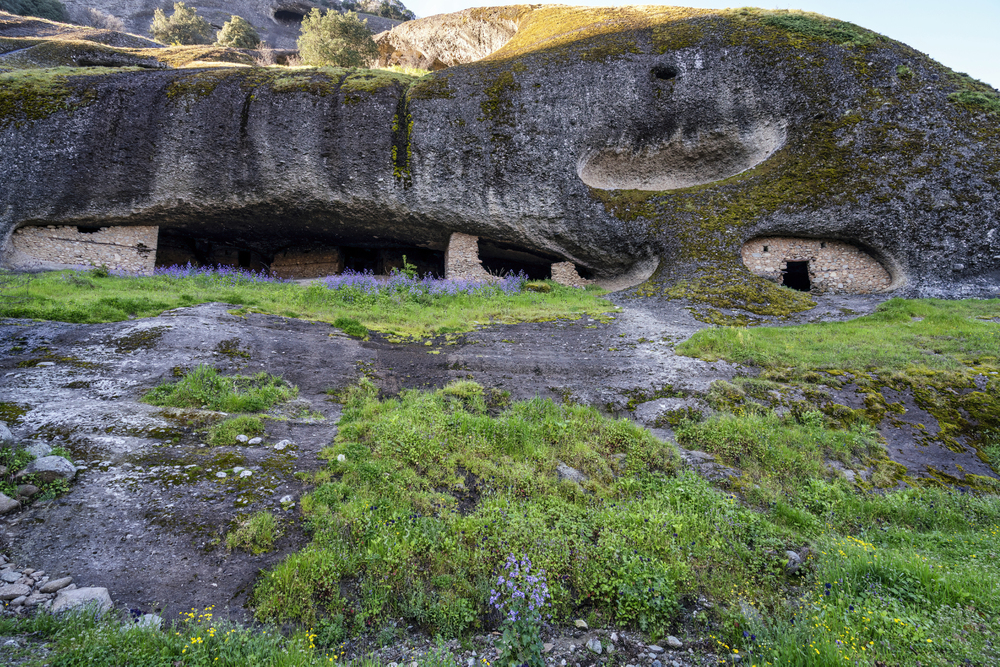
The pillars are conglomerate and sandstone, laid down and then carved out over tens of millions of years, long before anyone thought to build on them. What makes the scene so strange is the scale contrast. From the road the rocks read as one solid mass, and only when you pick out a monastery wall do you understand how far up you are looking. It is landscape on the order of the Grand Canyon or the Kimberley, compressed into an area you can drive around in a morning.
The monasteries, and why they are up there
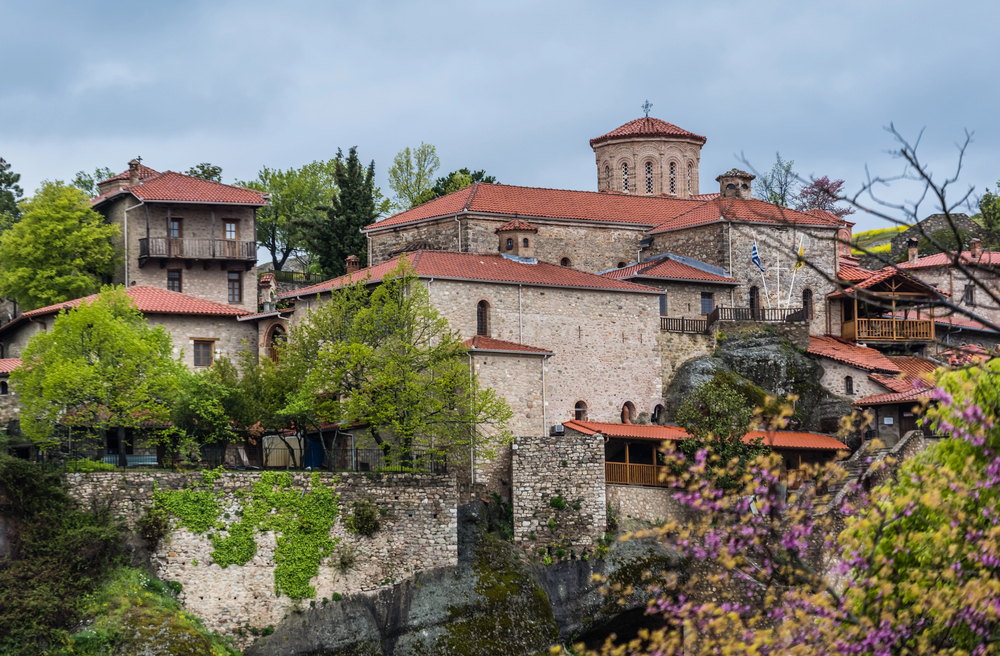
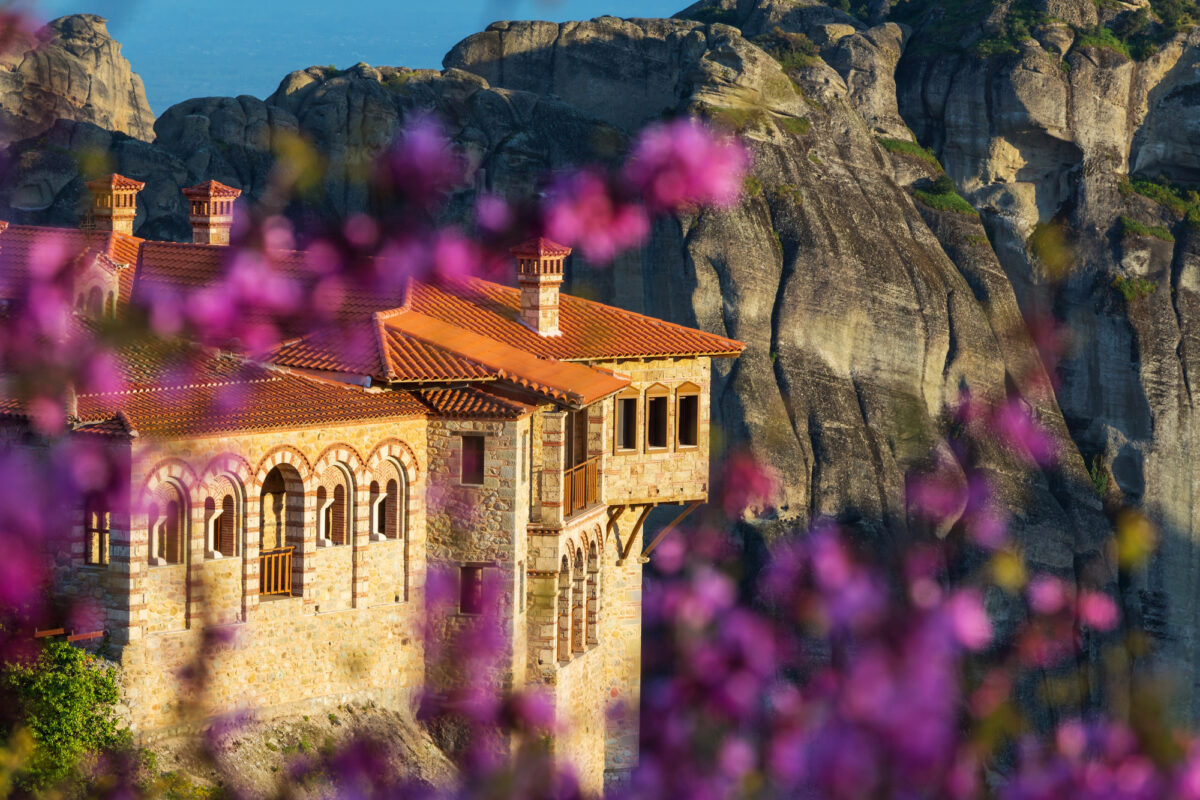
Meteora means suspended, and that is the whole idea. Monks moved onto the rocks for the remoteness, for the quiet, and because height felt like closeness to God. Twenty four monasteries were built on the pillars over the centuries. Six are still working today, and they are the ones open to visitors.
The construction story is the part people struggle with. Building materials went up by a long series of ropes and pulleys, an effort measured in years, and the buildings themselves went up quickly once everything was on top. Standing at the base and looking straight up the rock face, it is not obvious how any of it was possible.
Holy Trinity
Holy Trinity is the one that stays with most people. There is no road to it. The car park sits across the way and visitors walk a path that snakes down and then climbs back up through the rock face, which means the monastery itself is approached the way it always has been, on foot and slowly. It is also the monastery that gives you the best sense of the drops. The ledges near the viewpoints are unfenced in places, with nothing between you and a very long way down.
Visiting Meteora in Greece without the crush
This is not a secret. The loop road fills with cars, people double park and reverse where they please, and walkers spill onto the carriageway. Sam’s observation on the day was blunt: he had never seen so many people, and finding a park anywhere near the top was hopeless.
The fix is timing rather than avoidance. Early morning and late afternoon are calmer, the light is better on the stone, and the tour coaches tend to work the middle of the day. Walking helps too. Footpaths and old monk trails run between the rocks from the village of Kastraki, and twenty minutes on foot puts you somewhere the crowd is not.
What to wear
The monasteries are active religious houses. Shoulders and knees covered for everyone, and long skirts for women, with wraps usually available at the entrance. Sturdy shoes matter more than you would expect, because most visits involve stone steps, uneven ground and a fair bit of climbing.
Where to base yourself
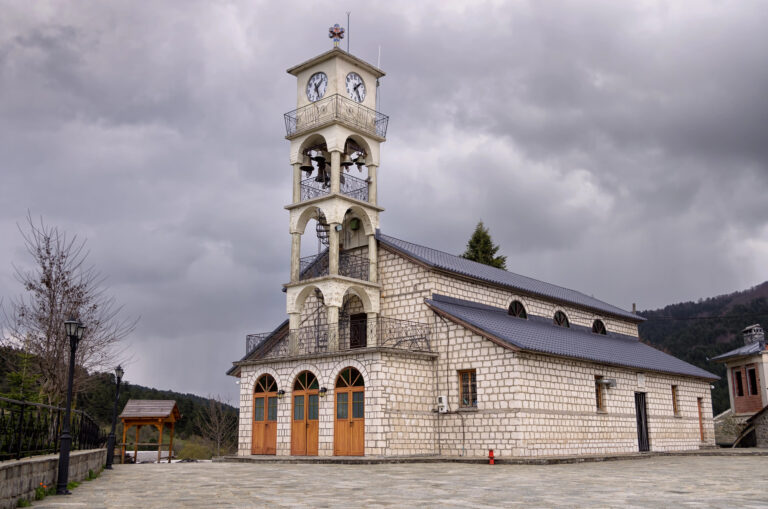
The town of Kalambaka and the smaller village of Kastraki sit directly beneath the rocks and both make sensible bases. Kalambaka has the train station, with services from Athens and from Thessaloniki, which makes Meteora one of the easier places in mainland Greece to reach without a car. If you are driving, a hire car gives you the loop road at dawn and at dusk, which is when the place is at its best.
One night is enough to see the monasteries. Two nights lets you walk between them, watch one sunset from the rocks and one sunrise, and enjoy the town rather than just sleeping in it.
When to go and how it fits a wider trip
Spring and autumn are the sweet spot. The summer heat on exposed rock is serious and the crowds are at their peak, while winter brings mist that can hide the towers completely, beautiful on the right morning and frustrating on the wrong one. April to early June, and September into October, give you comfortable walking weather and softer light.
Meteora slots neatly into a mainland Greek itinerary rather than sitting on its own. It works as a stop between Athens and Thessaloniki, it pairs well with Delphi on the way north, and it leads naturally into the mountain villages of Zagori and on to the Ionian coast. Tacked onto the front of an island holiday, it gives a Greek trip a spine of history and landscape before the sailing and the swimming start.
If you would like Meteora built into a longer European journey, with the driving, the train legs and the timing worked out so you arrive at the rocks when they are quiet, that is exactly the kind of planning we enjoy doing from our desk in Ballan.