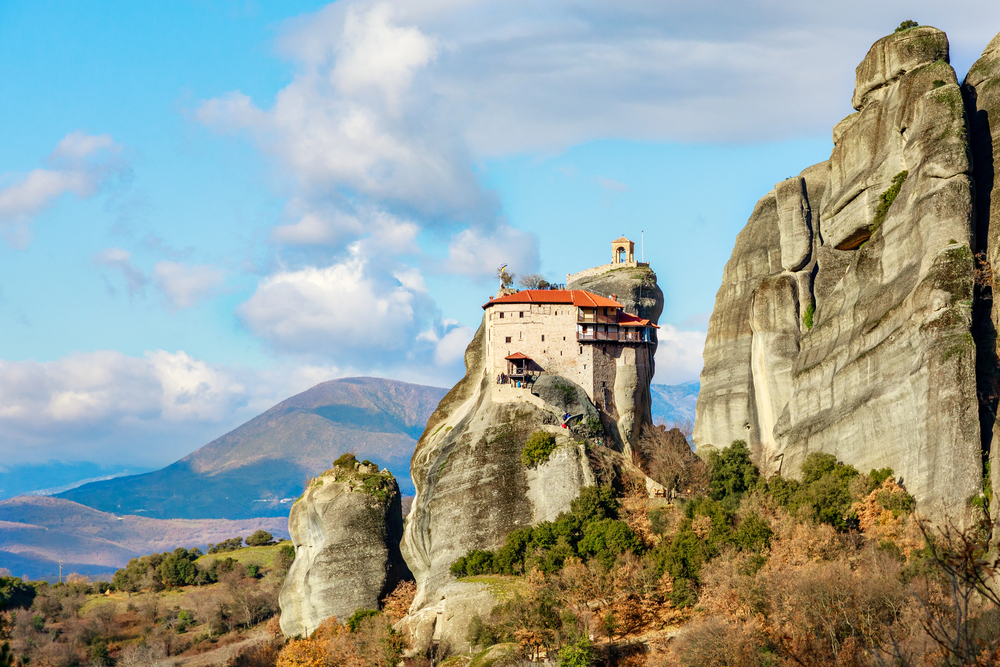
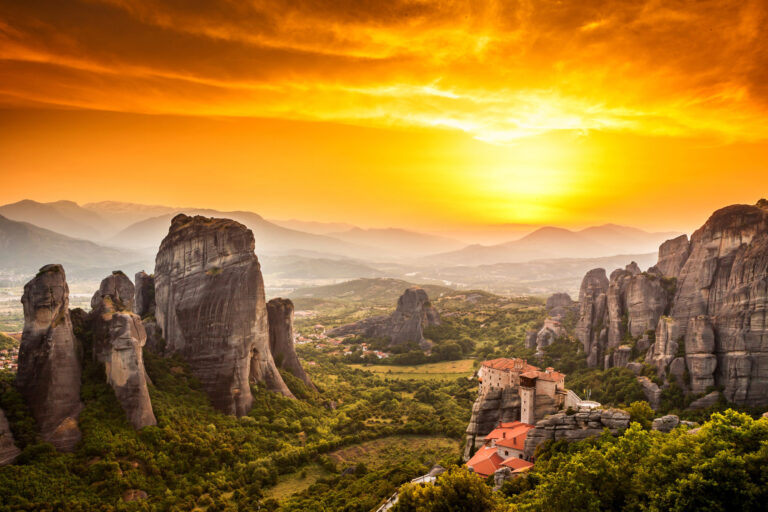
Most Australians come to Greece for the islands, which is exactly why visiting Metsovo in Greece feels like such a discovery. This is a stone town wedged into the folds of the Pindus mountains in Epirus, at an altitude where the air stays cool in August and the roofs are built to carry snow. It is not a beach, it is not a ruin, and it is not on the standard two week itinerary. It is a working mountain town that happens to be beautiful, and it sits directly on the route between north western Greece and the monasteries of Meteora, which makes it one of the easiest good decisions you can make on a Greek road trip.
Why visiting Metsovo in Greece is worth the flight time
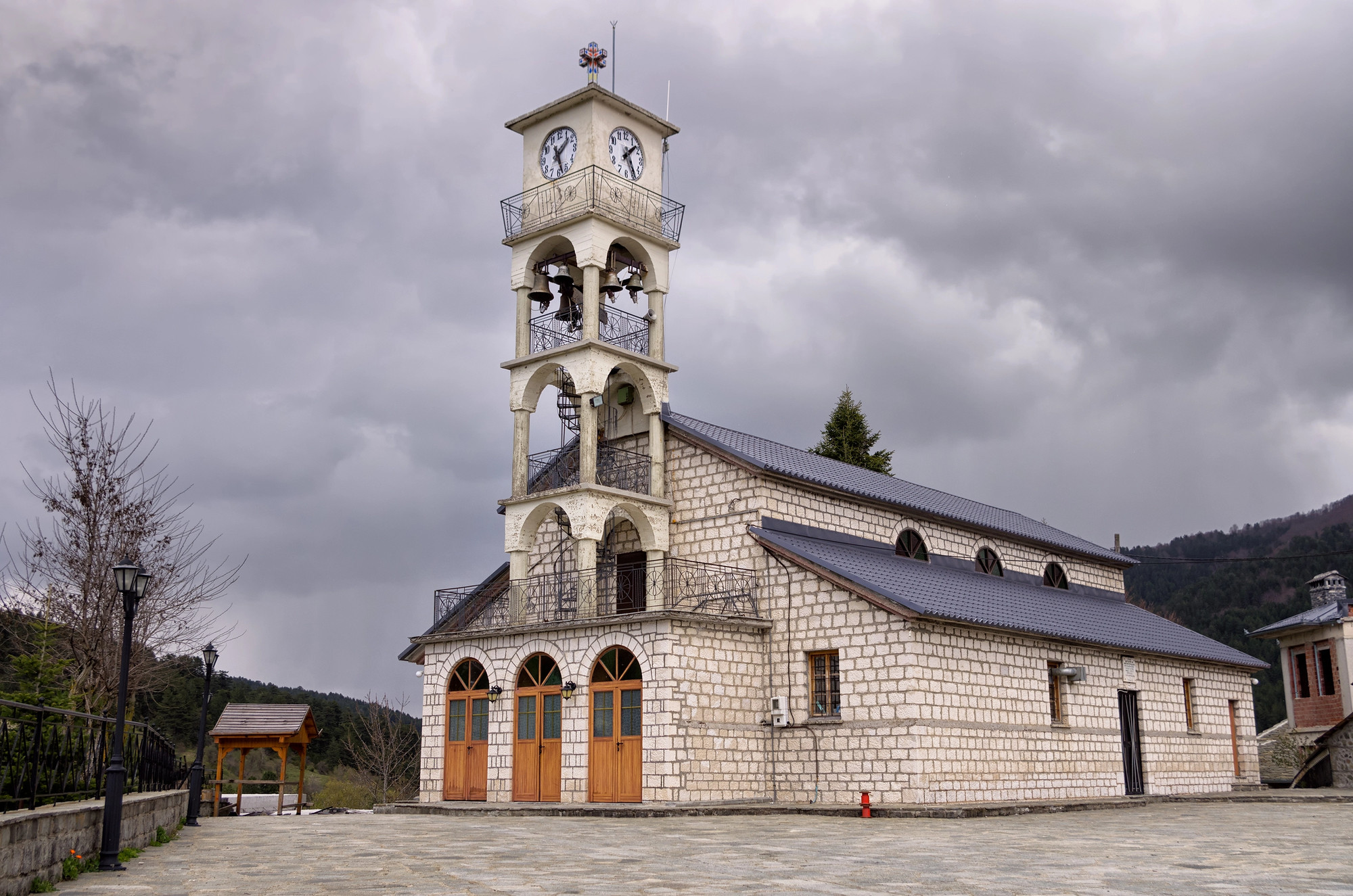
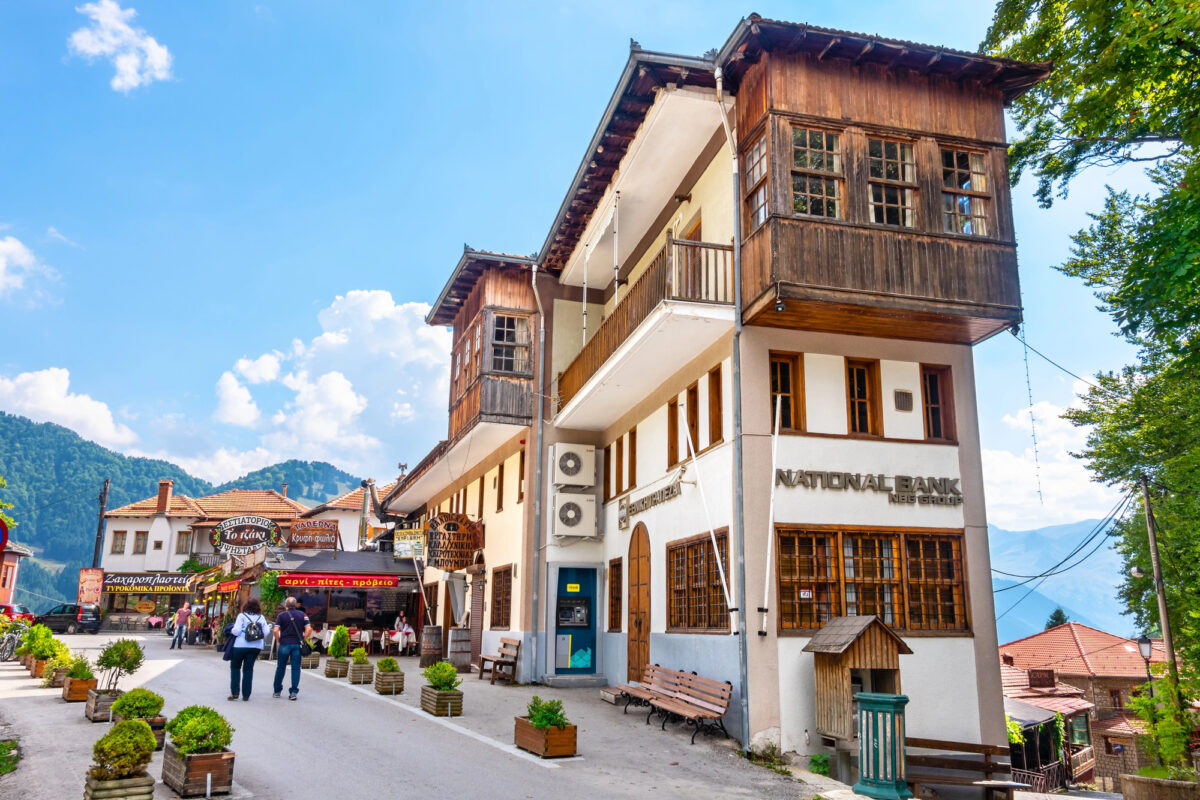
Greece at altitude is a different country. The houses in Metsovo are built of grey stone with heavy slate roofs, stacked up the sides of a steep valley so that one household’s roofline is the next one’s front step. Lanes turn into stairways. Balconies lean out over cobbles. The central square is small, shaded and busy, ringed with tavernas and cafes, and it functions as the town’s living room rather than a set piece for visitors.
What lifts it above pretty is that people actually live here. Metsovo has long been a centre of Aromanian, or Vlach, culture, with its own dialect, music and dress, and a tradition of wealthy expatriate benefactors who sent money home to build schools, churches and museums. That history is why a town of this size has the civic buildings and the confidence that it does.
What to do once you are on foot
Wander the upper lanes
The pleasure here is vertical. Walk uphill from the square and the crowds thin out within a few minutes, leaving woodsmoke, stacked firewood, kitchen gardens and views straight down the valley. Bring shoes with grip, because the cobbles are polished and the gradients are real.
Museums and galleries
For a mountain town, Metsovo punches well above its weight culturally. The Averoff Gallery holds a serious collection of nineteenth and twentieth century Greek painting and sculpture, and a restored mansion museum shows how a prosperous Metsovite household once lived, with carved timber ceilings, low divans and heavy textiles. Both are compact enough to enjoy without turning your afternoon into a schedule.
Crafts and the local table
Woodcarving and woollen goods are the traditional trades, and you will see both in the shops around the square. On the food side, Metsovo is known across Greece for its cheese, particularly the smoked metsovone, and the region does hearty mountain cooking: pies, slow cooked meat, beans, and tsipouro to finish. There is wine made locally too, which still surprises people who assume Greek wine stops at sea level.
Getting in, parking and the shape of the streets
Be realistic about the driving. The approach roads narrow as you descend into town, the main street works as a single lane in practice, and a car stopped with its hazard lights on is treated as an ordinary part of traffic rather than an emergency. Sam found it impossible to park anywhere near the square, ended up reversing back up the hill, and noted that pedestrians walk down the middle of the road as though they were a vehicle. Tooting is common and mostly means “I am here”, not “hurry up”.
The fix is simple. Park on the outskirts where the road is still wide, or in whatever formal parking you find on the way in, and walk down. Metsovo is small and the walk is short, and you will see far more of the town on foot than you ever would through a windscreen.
When to go
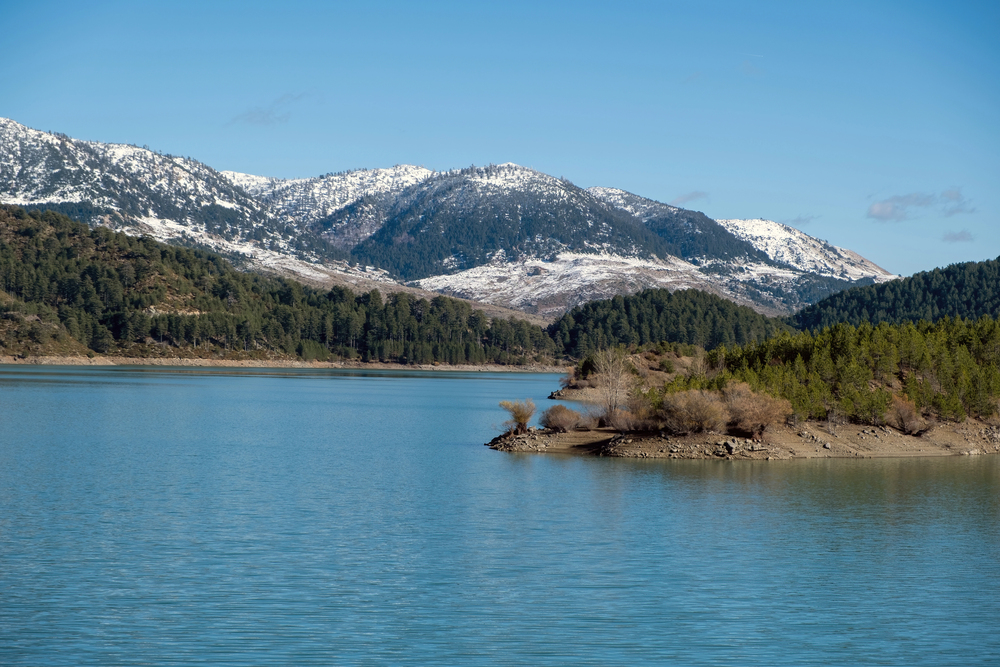
Summer is the obvious win for Australians travelling in the European high season, because the altitude keeps Metsovo comfortable while the coast bakes. Autumn brings colour to the beech and fir forests and quieter tavernas. Winter is a real winter, with snow, open fires and skiing on the slopes nearby, which is when the town fills with Greek visitors rather than international ones. Spring is green, wet and beautiful in a moody way.
How Metsovo fits a wider Greek trip
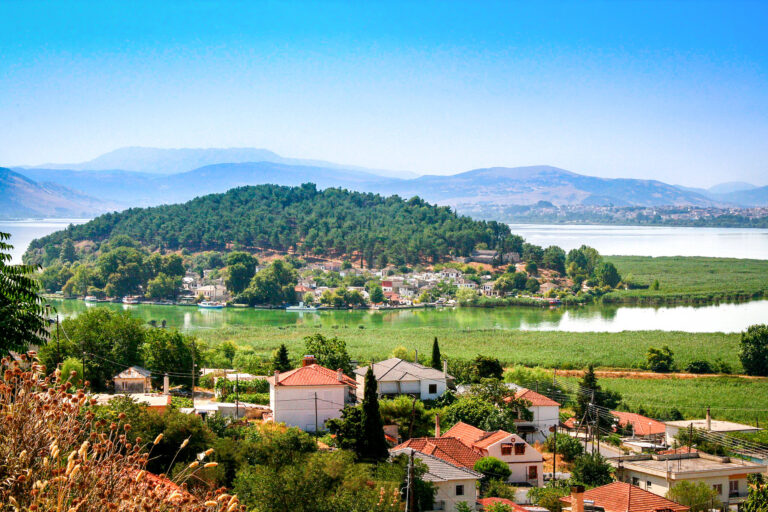
Metsovo works best as part of a mainland loop rather than a standalone destination. Pair it with Ioannina and its lake, the stone villages and gorge country of Zagori to the north, and Meteora to the east, and you have a week of northern Greece that most travellers never see. Two nights here is enough to slow down properly; one night is enough to eat well, sleep in the cool and drive on with the mountain pass ahead of you. If you are also heading for the islands, this is the part of the trip that gives the rest of it contrast.
Sam’s read on the place was that it is a genuinely lovely village of down to earth locals who are now outnumbered by visitors, and that captures the balance to plan for. Go, but go with the parking sorted, the timing thought through and a route that lets Metsovo be a stop you savour rather than one you survive. That is the kind of detail we work out for travellers before they leave home.