Visiting Mycenae in Greece is one of those rare moments where the history you half remember from school turns out to be a real hill with real walls on it. This is the citadel Homer tied to King Agamemnon, the stronghold of the Mycenaean civilisation, and the stones you walk past are roughly 3,500 years old. Athens and Santorini get the headlines, but for travellers who want to stand inside something genuinely ancient rather than look at it through glass, this corner of the Peloponnese earns its place on the itinerary.
The Lion Gate and the walls the Greeks blamed on giants
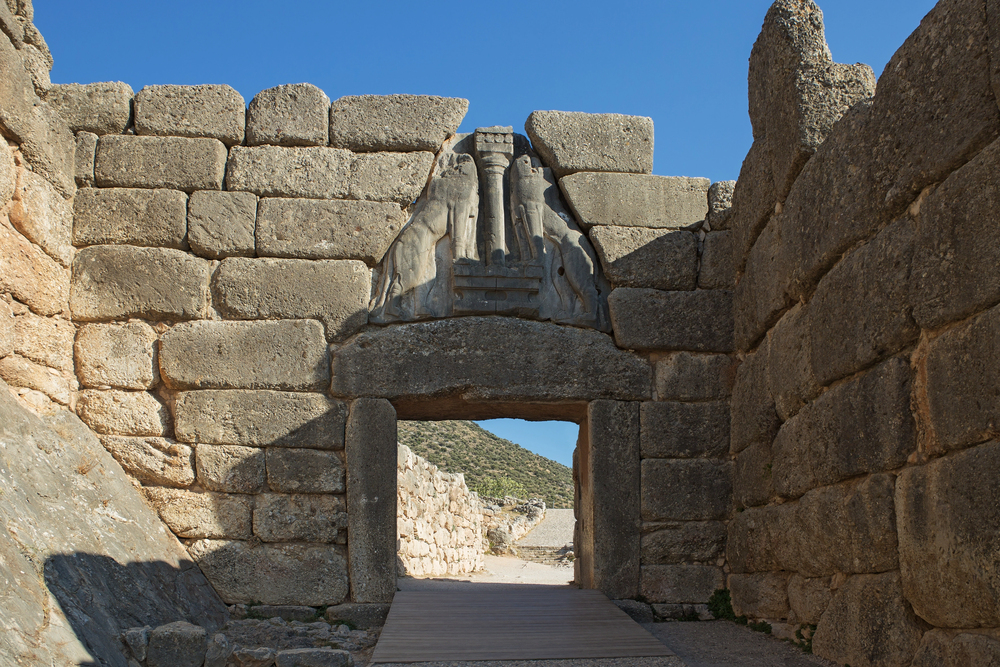
You enter the citadel the way everyone has entered it for thousands of years, through the Lion Gate. It is the only way in and out, a squared opening in the fortification wall with two carved lions standing either side of a column above the lintel. There is no fanfare and no queue barrier theatre. You simply walk through it, and the scale of the blocks does the rest.
The walls themselves are the other reason to come. They are built from boulders so enormous that later Greeks decided no ordinary person could have lifted them and put the work down to the Cyclopes, the one-eyed giants of myth. That is where the term cyclopean masonry comes from, and once you have seen the stones up close the story makes a certain sense.
Schliemann, the shaft graves and where the gold went
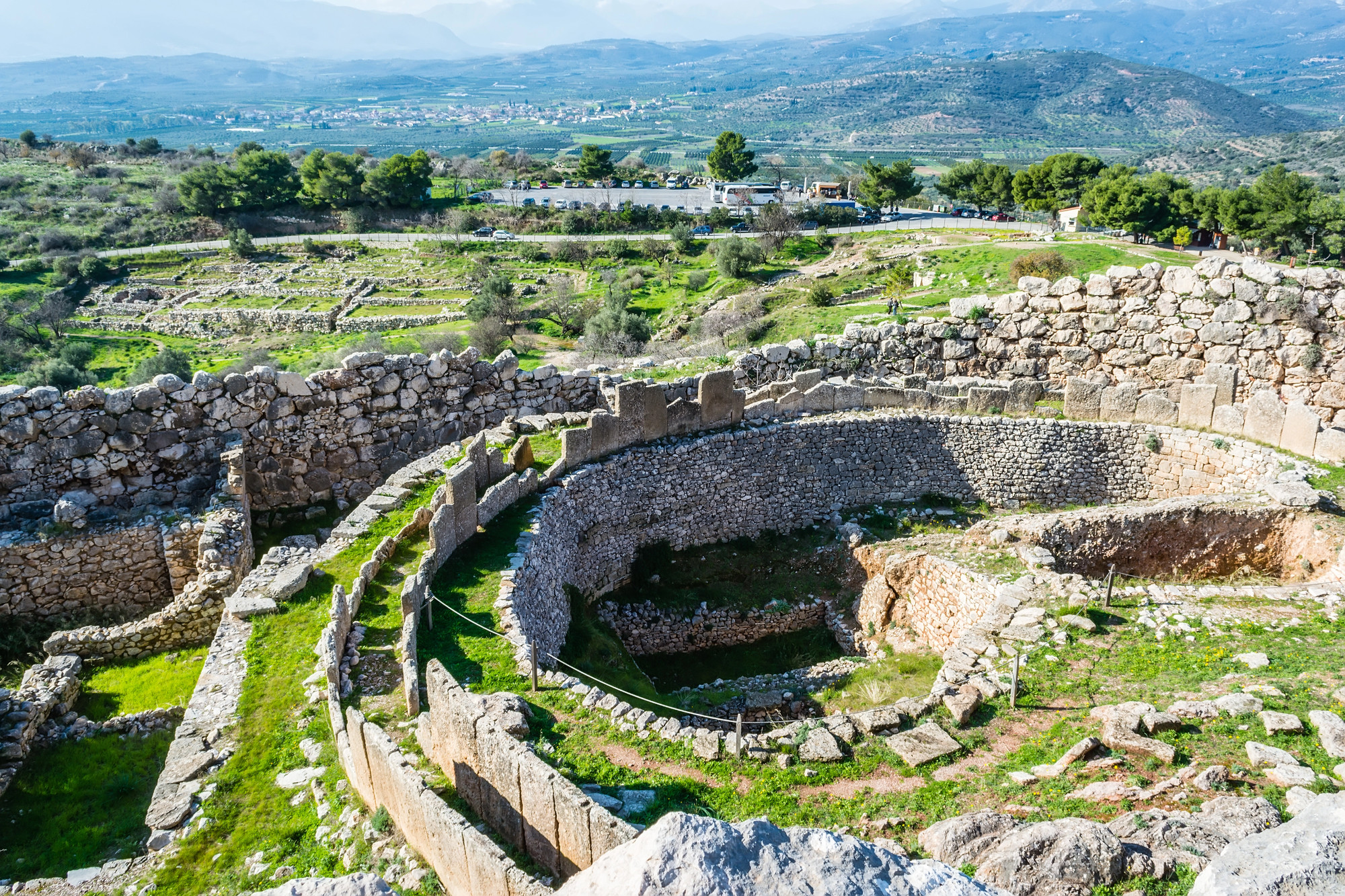
Inside the gate, a circle of upright slabs marks the grave circle, where deep shaft graves were cut into the rock and used for burials of the Mycenaean elite. Heinrich Schliemann, the German businessman turned excavator who had already dug at Troy, worked here in 1876 and found gold, including the famous funerary mask that has carried Agamemnon’s name ever since, whether or not it was ever his.
The gold is no longer at Mycenae. The finds are held in the National Archaeological Museum in Athens, which is worth knowing before you arrive expecting treasure. What the site gives you instead is the setting, the graves, the walls and the sightlines across the plain, and a small on-site museum that helps make sense of what came out of the ground.
What to expect when visiting Mycenae in Greece
The citadel sits on a ridge between two hills, and it is exposed. There is almost no shade, the paths are uneven, and the ground underfoot is worn stone and loose gravel, so proper shoes matter more than they do in a city. In summer the heat arrives early. Sam was on site by mid-morning and it was already thirty-five degrees, with the car park full and the gate busy, which tells you everything about the value of being there when it opens.
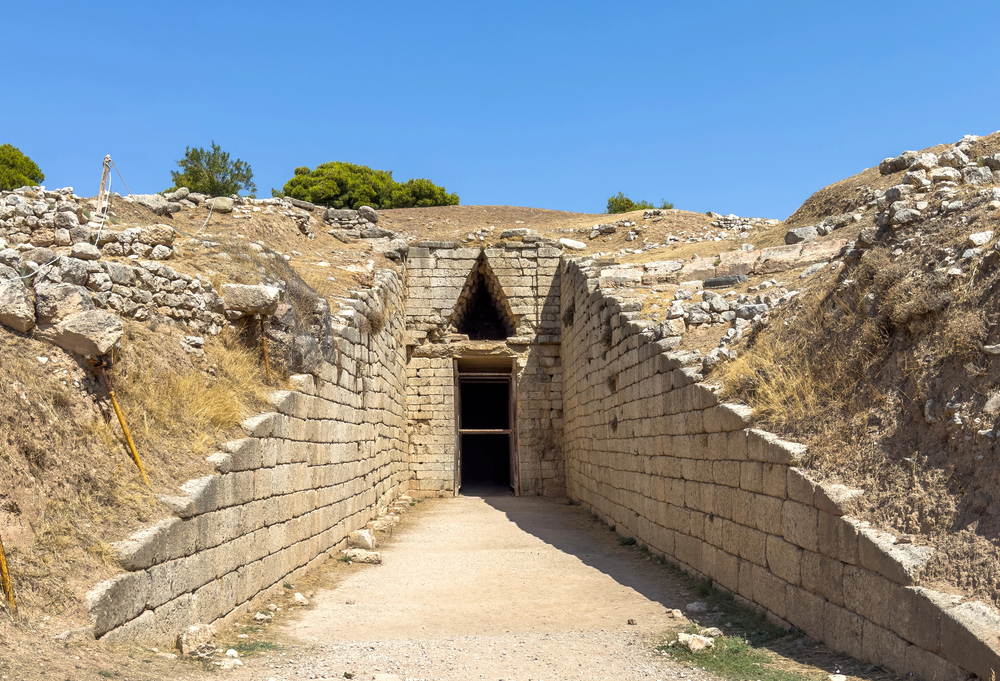
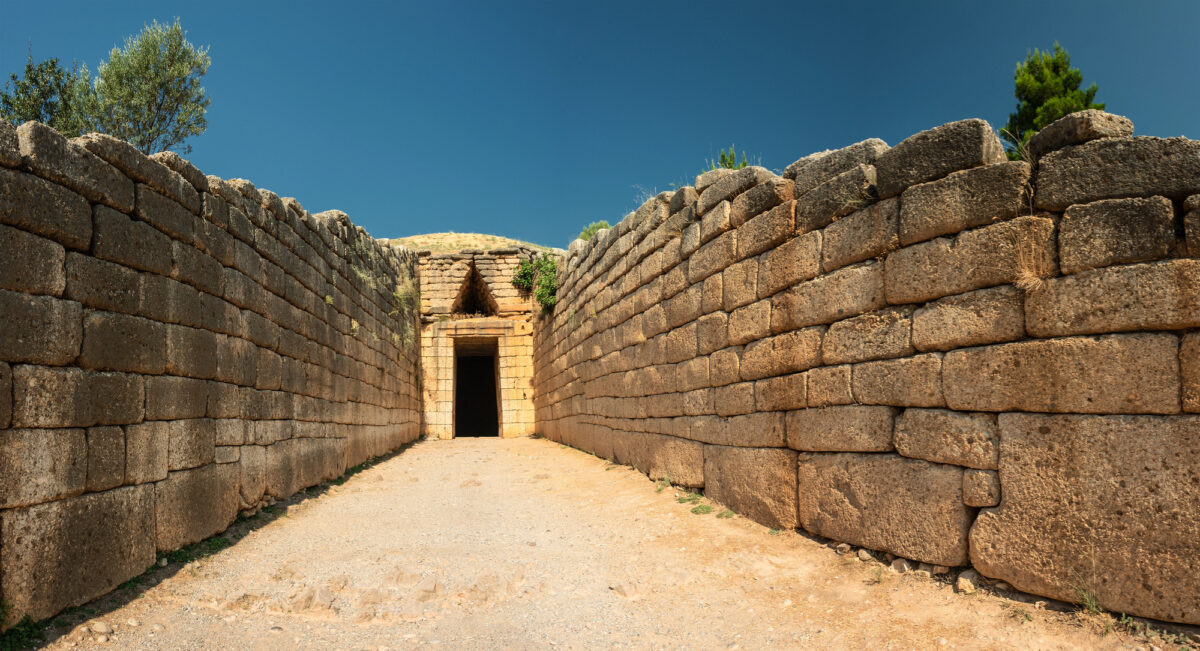
Allow more time than you think. Beyond the excavated core there are further stretches of wall and collapsed structures spreading out across the ridge, and the Treasury of Atreus, the great beehive tomb, sits a short distance from the citadel with a doorway and a corbelled dome that are worth the extra stop.
The landscape on the way in
The drive through the Argolid surprises Australians. It is dry, stony hill country with broad cultivated flats between the ranges, and more than one visitor has looked out the window and thought of the MacDonnell Ranges and the outback rather than a Greek postcard. Olive groves and citrus orchards fill the plain below the citadel, which is a reminder that this was always a place people farmed as well as fortified.
How Mycenae fits a wider Peloponnese trip
Mycenae is an easy drive from Corinth, and it pairs naturally with the harbour town of Nafplio, with its Venetian fortresses and waterfront, and with the ancient theatre at Epidaurus, whose acoustics are still demonstrated to visitors daily. Most travellers base themselves in Nafplio for two or three nights and take the sites at a civilised pace rather than trying to see the Argolid as a day trip from Athens. A hire car or a private driver makes far more sense here than public transport.
When to go
Spring and autumn are the sweet spot. April to early June gives you wildflowers, green hills and temperatures you can walk in, while September and October bring warm sea and thinner crowds after the European summer. July and August are hot and busy, and if that is when you travel, plan Mycenae for the first hour of the day and keep the afternoon for shade and a swim. Winter is quiet and often clear, with cold mornings and the occasional wet day.
For a trip planned from Australia, the Argolid slots neatly between Athens and the deeper Peloponnese, and it works just as well as the opening act before island time or the calm stretch after it. The right order, the right base and the right time of day are what turn a famous name into a morning you remember, and that is exactly the kind of detail worth sorting out before you leave home.