Visiting Pristina is not like arriving anywhere else in Europe. Kosovo’s capital is younger than a lot of the travellers who walk through it, a city that declared itself a country in 2008 and has been assembling the furniture of nationhood ever since. There are no great medieval set pieces and no queue for a ticket office. What there is instead is a capital in the middle of becoming itself, and for anyone who has already spent a few weeks in the polished parts of Italy or on the Split waterfront, that is a genuinely refreshing thing to walk into.
A capital born in 2008
The clearest statement of what this place is sits right in the centre, in the form of the Newborn monument, a run of large letters put up to mark independence. Sam summed it up plainly on his visit as a sign to say we’ve been newly born. Kosovo’s independence is still not recognised by every country around it, and that tension is part of the fabric here rather than something hidden away from visitors. You feel it in the flags, in the monuments, in how recent the memory is for the people serving your coffee.
Pristina rewards travellers who are curious about how a country actually gets made. It is a place to read a little before you arrive, and then to ask questions once you are there.
Bill Clinton Boulevard and the American connection
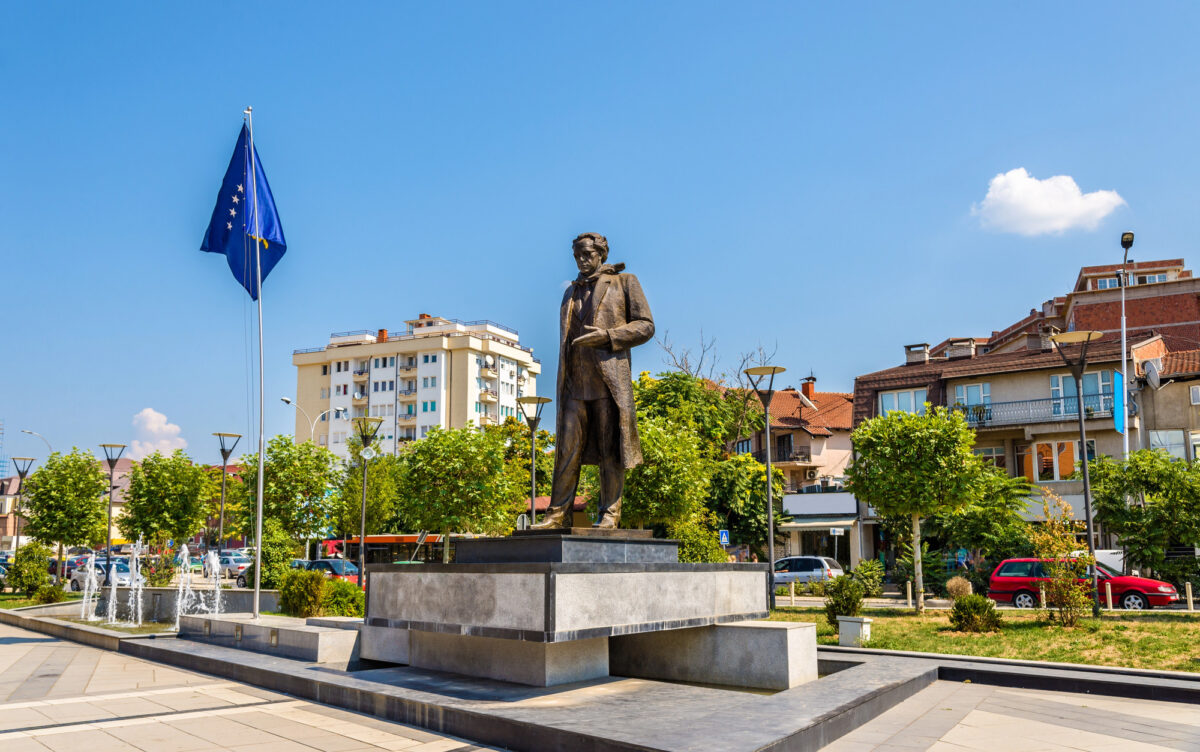
Few European capitals have a main road named after an American president, and fewer still have a statue of one. Pristina has both. Bill Clinton Boulevard runs through the city and carries a bronze likeness of the former president, in recognition of the American role in the events that led to Kosovo’s independence. Sam also found a mural of Donald Trump nearby, which he took as a sign the city was playing no favourites.
It takes ten minutes to look at, and it tells you more about how Kosovo sees the wider world than any museum label could. Walk the boulevard slowly and read the shopfronts as you go.
Three faiths within a few blocks
The centre of Pristina puts churches and mosques within easy walking distance of each other, and both welcome respectful visitors. The Cathedral of Saint Mother Teresa is the landmark, a large modern church named for the Nobel Peace Prize winner who was canonised as a saint and who is deeply revered among Albanians across the region. It is quiet, spacious and worth the detour even if you are not religious.
Visiting a mosque as a traveller
Sam and his travelling companion were let into a mosque in the centre of town on the condition that their legs were covered, which is the standard expectation. Dress modestly, take your shoes off at the door, keep your voice down and stay out of the way of anyone praying. Time your visit between prayer times rather than during them. The call to prayer carries across the rooftops here and is one of the sounds that tells you which part of Europe you are standing in.
What visiting Pristina is actually like day to day
This is the part of the story most guides leave out. On Sam’s day in the city the power went out, and the man at the accommodation told him it would be off for about eight hours, adding that it happens quite often. The same accommodation was taking cash only, and had been for weeks, with a suggestion to walk to an ATM.
None of that should put you off, but it does shape how you plan. Kosovo uses the euro, so no currency swap is needed if you are coming from the eurozone, and carrying a reasonable amount of cash is simply sensible. Assume some places will not take a card. Charge your phone and camera whenever you have power. Build a little slack into the day rather than running a tight schedule of timed bookings.
In return you get a capital where a coffee costs very little, where the cafes are full in the middle of the afternoon, and where nobody is trying to sell you a fridge magnet. The central sights sit close enough together to cover on foot in a day.
When to go and how Pristina fits a wider trip
Late spring and early autumn are the kindest seasons. Pristina sits inland on a plateau, so summers run hot and dry and winters can be genuinely cold, with grey air settling over the city. May, June, September and October give you comfortable walking weather and long evenings.
Pristina works best as part of a wider Balkans loop rather than a standalone destination. It pairs naturally with the Adriatic coast on one side and with Skopje, Tirana and Belgrade on the other, and two nights is enough to see the centre properly and still have time for a day trip out of the city. For Australian travellers with a long European itinerary already built around Italy or Croatia, adding a few days in Kosovo turns a well-trodden route into something far more interesting.
If that sounds like your kind of detour, this is exactly the sort of trip we enjoy building. We plan the logistics, the accommodation and the border crossings around the way you actually want to travel, so the surprises you get are the good ones.