
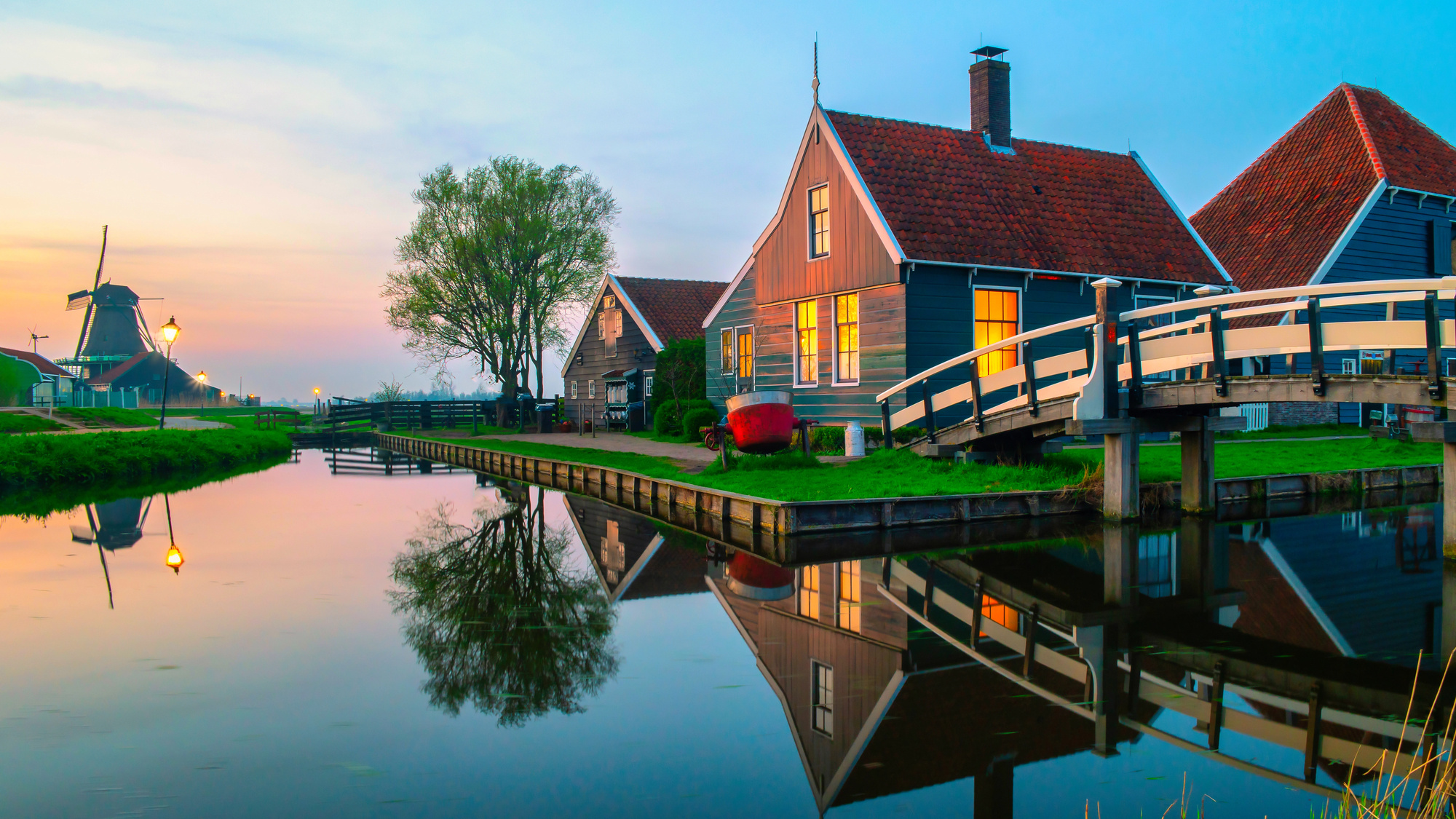
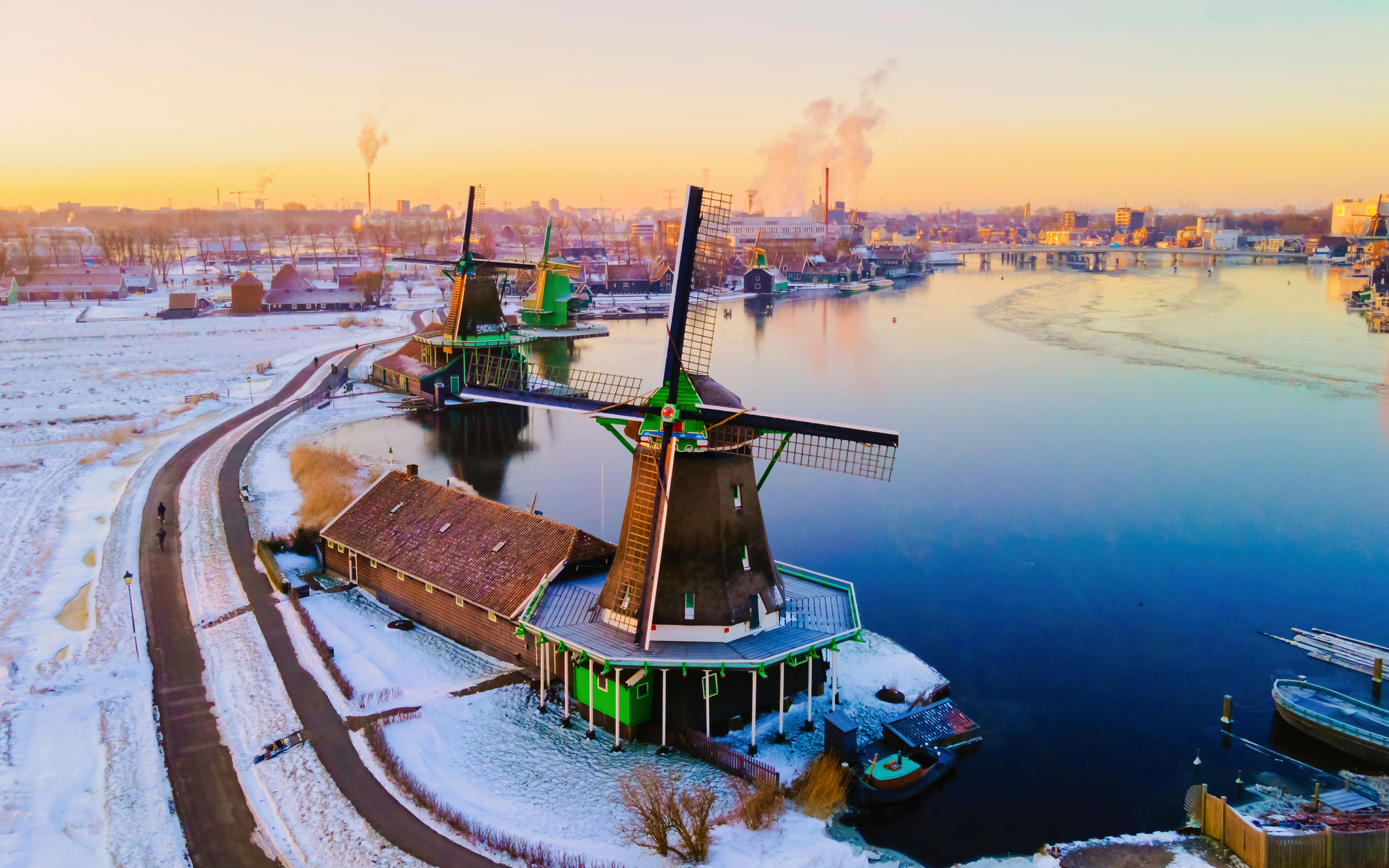
Visiting Zaanse Schans from Amsterdam: Windmills and Clogs. Zaanse Schans sits on the banks of the Zaan, north west of Amsterdam and less than half an hour from the city. It is a riverside village of dark green timber houses and turning windmills, where the sails are not decoration but drive real machinery.
The Zaan region was once one of the most heavily industrialised corners of Europe, with hundreds of mills grinding, sawing and pressing along the river. Zaanse Schans is what survives of that, gathered into one walkable stretch of riverbank.
Why it is worth the detour
The appeal is that the place still does a job. Mills here crush spices and mustard seed, saw timber and grind pigment using power taken straight off the wind. Long before anyone used the word renewable, the Dutch had built an economy on it.
The setting helps. The Zaan is a working waterway, so bridges on the approach lift for passing vessels and traffic waits. Behind the mills sit wooden houses, footbridges and flat green polder. It is compact enough to see properly in a few hours, which makes it an easy half day rather than an expedition.
Inside the mills, cheese and clogs
Several mills can be entered, and it is worth paying to go inside at least one. The interiors are a tangle of beams, gears and shafts turning together, and the climb to the outdoor gallery puts the sails close overhead. Looking at a windmill from the path tells you very little.
- Cheese workshop: barrels, a demonstration and a tasting counter. Round Edam takes its name from a separate town further north, but the Zaan has its own dairy tradition and you can try several styles side by side.
- Clog workshop: clogs, klompen in Dutch, began as working footwear for farm labourers who could not afford leather. A single block of wood was cut and hollowed to the shape of the foot. A craftsman turns a fresh pair on a lathe while you watch.
Timing and getting there
This is one of the best known day trips in the Netherlands and the coaches know it. Through the middle of the day the lanes fill with tour groups. Come early in the morning or late in the afternoon and the same village feels like a quiet riverside hamlet.
Trains run from Amsterdam to the nearby station, and from there it is a short walk over the river. Walking the grounds and paths costs nothing, with charges only for individual mills and attractions, so it suits a loose plan. Spring and early autumn bring long light and fewer visitors, though the mills turn year round and a grey day arguably suits them better.
Fitting it into a wider trip
Zaanse Schans works best paired with Amsterdam rather than treated as a destination of its own. It also sits naturally on a broader northern European route, between the Dutch capital and the towns of North Holland, or heading on towards Scandinavia or Germany. Deciding the timing and which mill to enter is worth sorting before you leave home.
Places to explore
The Cat
Working windmillThe last wind powered paint mill still working, grinding chalk, Brazilwood and lapis into pigment as Zaandam once supplied Dutch painters. You climb past the turning runner stones, then step onto the open stage deck for views along the Zaan.
Allow about 40 minutes, including time on the outside deck.
Kalverringdijk
Riverside windmill walkA green dyke path running north from the village past De Gekroonde Poelenburg, De Zoeker, Het Jonge Schaap, De Bonte Hen and De Os. Het Jonge Schaap, a reconstruction of a 1680 paltrok sawmill, still cuts logs when the wind is up.
Allow roughly 90 minutes return at a slow pace.
What Sam said
When you come to Amsterdam, you've got to go and see the Dutch windmills. They're famous, legendary. Sam Newman, on the ground
Sam Newman in Zaanse Schans
Filmed on Sam's own trip through Europe, parts of which Cartier World Travel arranged.
Other stops on Sam's journey
Zaanse Schans
Tell us roughly when and for how long. We build the rest around you, the way we built Sam's.