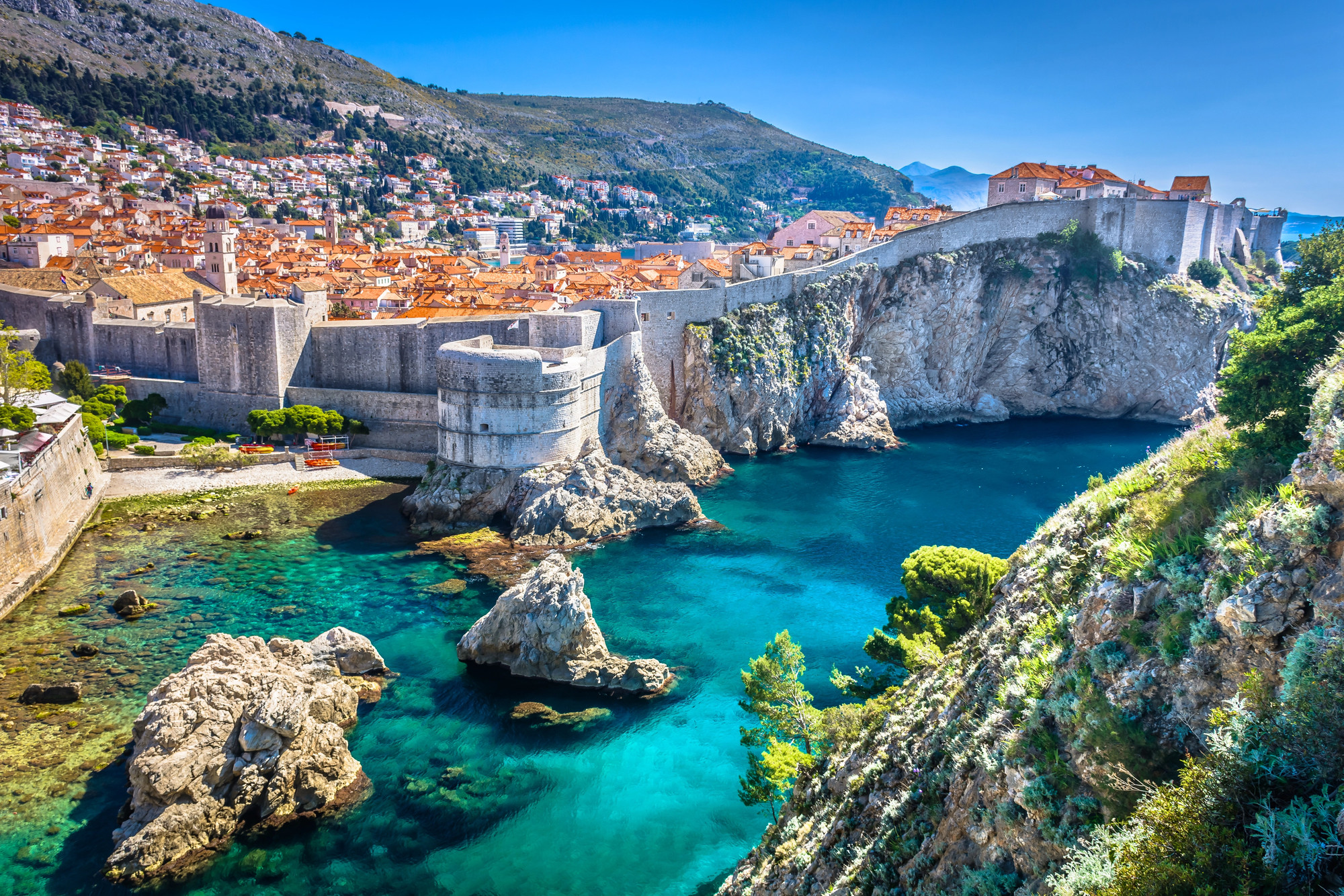
Visiting Dubrovnik Old Town is one of those rare travel experiences that lives up to every photograph you have ever seen of it. A compact medieval city of pale limestone, sealed inside its walls and dropped onto a rocky headland in the Adriatic, it looks improbable from the water and even better once you are standing in it. For Australians putting together a European itinerary, it is worth the detour south, and it rewards travellers who think carefully about when they walk through the gates.
Arriving by sea, the way the city was built to be seen
Dubrovnik was a maritime republic for centuries, and it still reads best from the water. Coming in by ferry or catamaran, the walls and towers appear as a single mass of stone before the individual bastions separate out. Sam Newman came into the city by boat on his European trip, and the first sight of the old walls from the deck is the sort of arrival that no airport transfer can match.
From the road above, the Old Town sits well below you, and the way down is a long series of staircases and switchbacks. It is a beautiful descent and a genuinely steep one. If mobility is a consideration, this is the detail to get right at the planning stage rather than at the top of the hill.
Timing matters when visiting Dubrovnik Old Town
The Old Town is small, and the numbers inside it swing wildly across the day. When cruise ships are berthed, the main thoroughfare and the walls fill quickly. Sam noticed it straight away, putting the crush down to the ships being in, and he was not wrong about the pattern.
The answer is not to avoid the city, it is to be there at the right hours. Early morning, before the tour groups form up, and the long evening after the day visitors have gone back to their cabins are when Dubrovnik becomes a place people actually live in. Staying inside or just outside the walls, rather than day-tripping in, is what buys you those hours.
Stone, water and fortifications
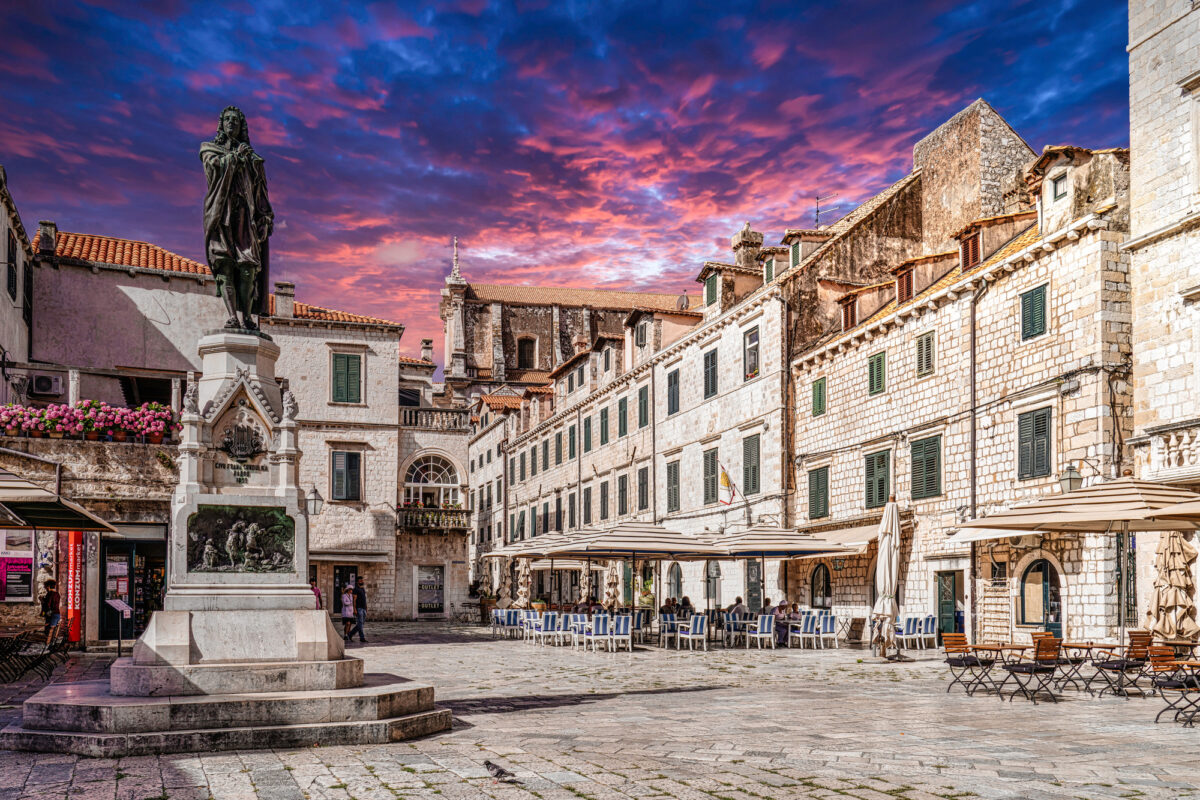
The walled city is UNESCO World Heritage listed, and the pleasure of it is in the texture: polished limestone underfoot on the main street, narrow lanes climbing away on either side, shuttered houses, small squares that open up without warning. Come out at the harbour end and you get the whole picture at once, boats moored along the flank of the walls, swimmers on the rocks, and a fortress jutting out over the sea on its own outcrop.
Beyond the walls, the modern city carries on up the slopes behind. The contrast is part of the appeal. Dubrovnik is not a museum piece, it is an old core with a working town wrapped around it.
Eating in the Old Town
Dalmatian cooking is Adriatic seafood, olive oil, and a strong Italian accent. The dish to try is black risotto, coloured and flavoured with cuttlefish or squid ink, which Sam ordered and duly wore. It is rich, salty and unlike anything you will eat at home.
One thing worth knowing before you sit down: whole fish is generally priced by weight rather than per plate, and in the prime tourist squares it can climb fast. Sam and his travelling companion looked at one whole fish, decided it was more than they wanted to spend, and ate very happily somewhere else on the same square. Read the menu properly, ask what the fish will actually come to, and choose accordingly.
A word of Croatian goes a long way
English is widely spoken across the Old Town, but hvala, thank you, is easy to learn and always well received. Sam asked his waiter for it and used it for the rest of the meal.
Come prepared for the stairs
Dubrovnik is a city of steps. Between the descent into the Old Town, the lanes climbing off the main street and the walk back up to accommodation on the hillside, the day adds up quickly. Sam reckoned on a thousand steps up and down in a single evening, and that was without walking the city walls. Bring shoes with grip, because the limestone is worn smooth and can be slippery, and allow more time than the distance on the map suggests.
When to go, and how it fits a wider trip
Late spring and early autumn are the sweet spot: warm enough for swimming, calmer than the peak of summer, and easier on the walls and stairs than the height of the heat. Midsummer is hot and busy. The shoulder months give you the same light and far more room.
Dubrovnik works well as the southern anchor of an Adriatic run. It pairs naturally with Split and the Dalmatian islands to the north, with the bay of Kotor and the Montenegrin coast just down the road, and with a hop across the water to Italy for travellers linking Croatia into a longer European itinerary. Because the Old Town is best appreciated outside the middle of the day, two nights is a far better plan than one, and the difference between a rushed visit and a memorable one is usually a matter of scheduling rather than budget.
That is exactly the sort of detail we like to get right when we build a trip: the arrival, the accommodation that puts you inside the walls at the right hour, and the transfers that spare you the worst of the stairs with luggage in hand. Tell us how you like to travel and we will shape the Adriatic around it.