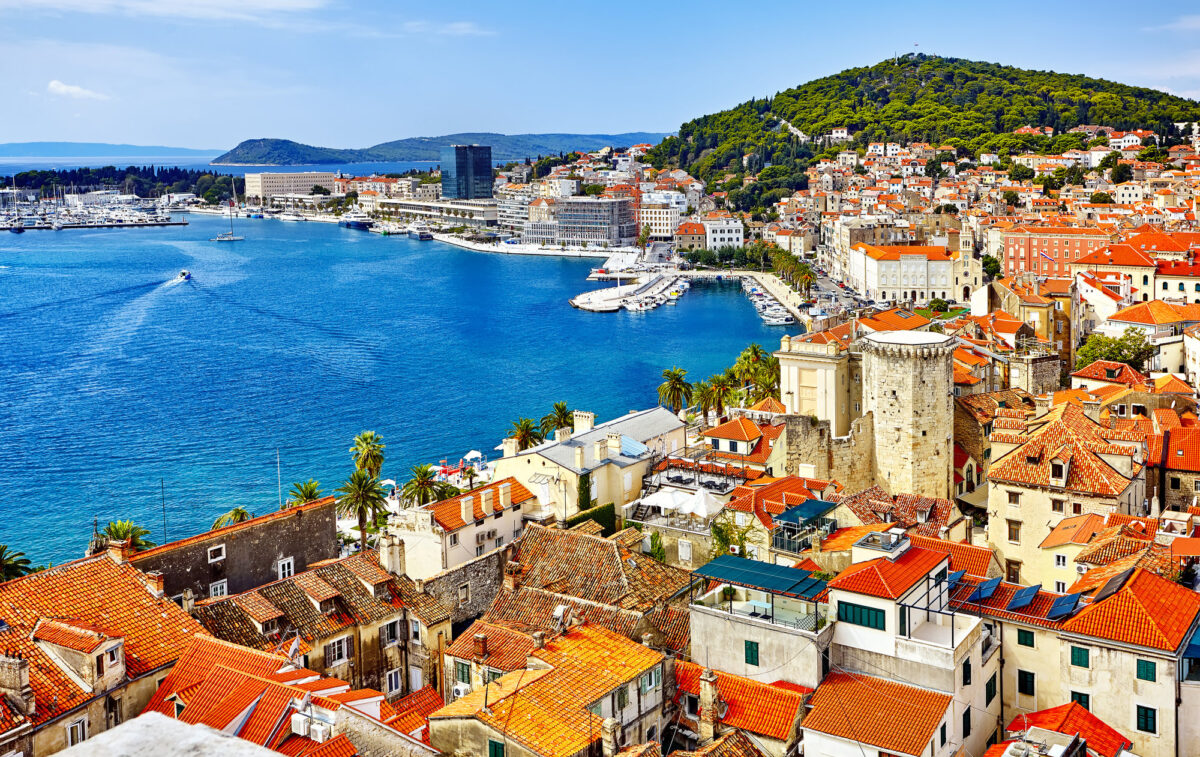
Most Roman ruins are something you look at from behind a rope. Diocletian’s Palace in Split is something you walk through on your way to buy a coffee. The palace was built for the emperor Diocletian around the turn of the fourth century, and rather than being abandoned it was simply moved into. Today its walls hold apartments, bars, shops, laundry lines and a cathedral, all threaded through with lanes barely wide enough for two people to pass. For Australian travellers who like their history alive rather than curated, this is one of the best reasons to put Croatia in a European itinerary.
Split sits on the Dalmatian coast with mountains at its back and the Adriatic at its feet, and it does two jobs at once. It is a genuine city with a long afternoon rhythm, and it is the gateway to the Croatian islands. Sam Newman, whose European travels Cartier World Travel helped put together, spent part of his run down the coast here before boarding an overnight ferry.
Walking into Diocletian’s Palace in Split
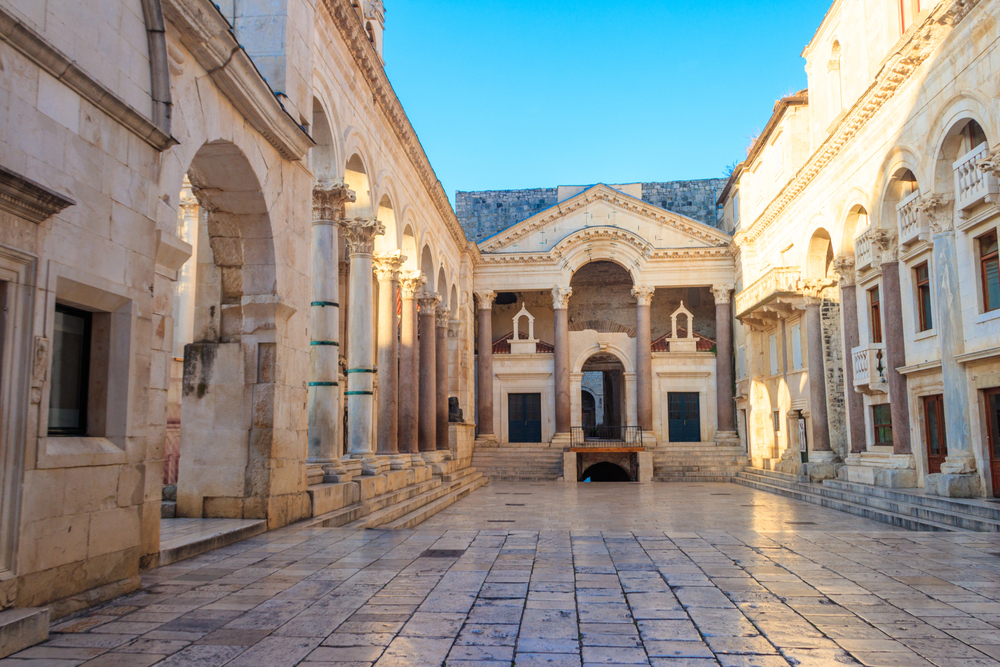
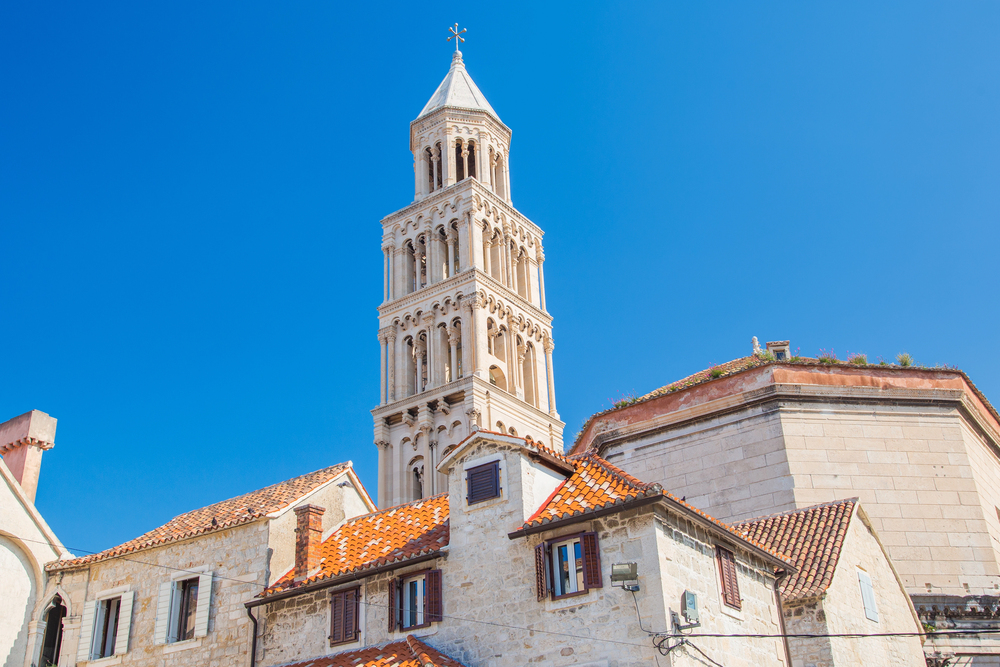
The palace is not a single building so much as a walled quarter, and there is no ticket gate at the edge of it. You arrive through one of the old gates and find yourself in the Peristyle, the columned courtyard at the heart of the complex, where the original columns are still holding up the sky. Above it rises the cathedral bell tower, and the cathedral itself occupies what was built as Diocletian’s mausoleum, which is a piece of historical irony worth pausing over.
The lanes running off the Peristyle are the pleasure of the place. Stone worn shiny underfoot, sudden small squares, a medieval passageway that opens onto a shopfront, then another that opens onto someone’s front door. Sam’s group noted a McDonald’s tucked into the old stone near the Golden Gate, which tells you exactly how ordinary daily life is inside these walls.
A note on driving
The old town is for feet, not vehicles, and the restricted zones are signposted with fines attached. Sam’s party found that out by driving up somewhere they should not have, past a sign promising a substantial penalty. Park outside the walls and walk in. It is a better arrival anyway.
Gregory of Nin and the Golden Gate
Just outside the northern wall stands Ivan Mestrovic’s enormous bronze of Gregory of Nin, the medieval Croatian bishop, and the tradition is to rub his big toe for luck. It has been touched by so many hands that the bronze is polished smooth and bright while the rest of the statue stays dark. Behind him is the Golden Gate, the palace’s ceremonial northern entrance, and the two are usually busy with visitors, souvenir stalls and men dressed as Roman legionaries posing for photographs.
The climb up Marjan
West of the old town, the Marjan peninsula rises straight out of the city, and the way up is by stone stairway. It is a long haul, and Sam’s group counted their way up in the heat before reaching the top. The reward is what the rest of the coast largely lacks: open grassland and pine forest with nobody on it, and long views back over the terracotta roofs of the palace quarter to the sea and the islands beyond.
Along the way there are churches, lookouts and public drinking fountains, which matter more than you would think in summer. There is also the site of the old city zoo near the top, which has been reworked and, as Sam’s party discovered, holds very few animals these days. Go for the walk and the views rather than the wildlife.
The waterfront and the ferries
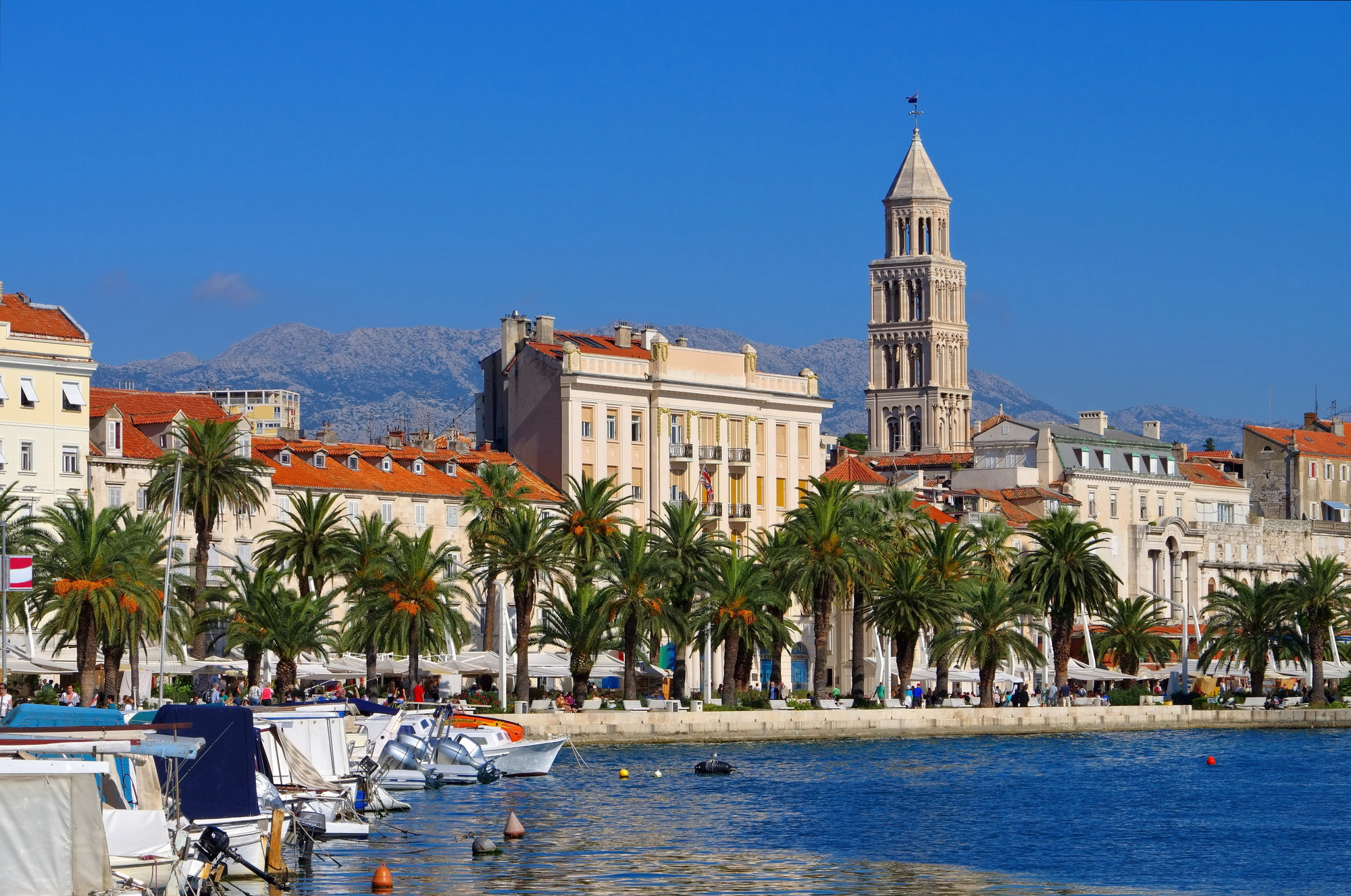
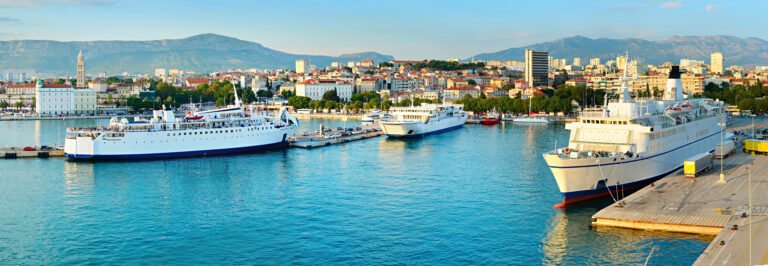
Split’s harbour is unusual in that the ferry terminal sits within easy walking distance of the Roman walls, so the palace and the port share the same air. Cruise ships, catamarans and car ferries come and go all day, and the passenger lists are full of people bound for Hvar, Brac, Korcula and the rest of the Dalmatian chain. There are also longer sailings across the Adriatic to Ancona in Italy, with overnight cabins, which is a neat way to move between two countries while you sleep. Sam took exactly that crossing on his way south. The palm-lined Riva promenade in front of the old town is where the city walks in the evening, and it is the natural place to sit and watch the boats sort themselves out.
When to go, and how Split fits a wider trip
High summer on the Dalmatian coast is genuinely hot. Sam recorded 38 degrees in Split and said it had not dropped below 35 on any day since he arrived in Croatia, which even Australians find hard going on a stone staircase. Late spring and early autumn give you warm water, workable walking weather and a city that still belongs partly to the people who live in it.
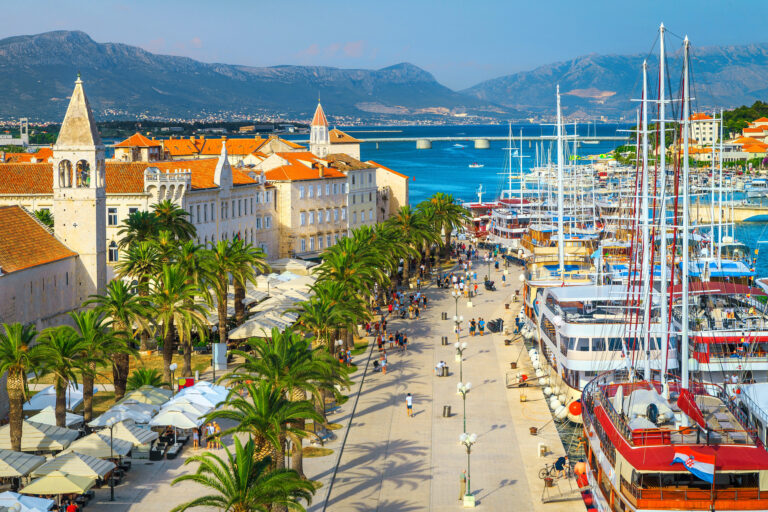
Split works best as a base rather than a single stop. Trogir, another walled old town, sits just up the coast, the islands are a short hop from the harbour, and the ferry links make it easy to continue on to Italy or down towards Greece rather than doubling back. Building that sort of run, where the ferry berths, the car and the nights ashore all line up without wasted days, is the part worth handing to someone else. Sam credited his overnight crossing and the pace of his coastal leg to the planning behind it, and that is precisely the kind of itinerary our team in Ballan puts together, tailored to how you like to travel rather than to a fixed departure list.