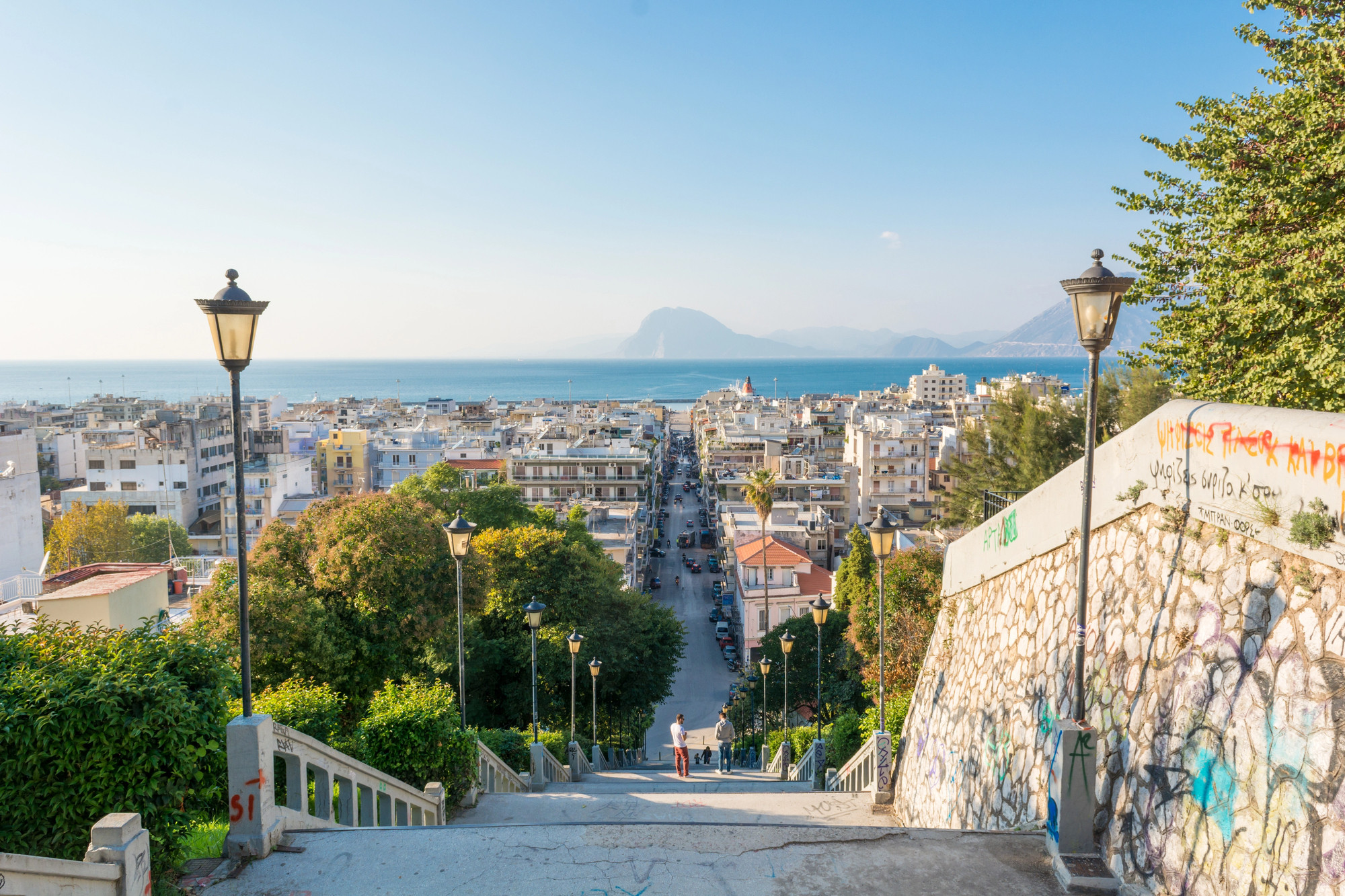
Visiting Patras Castle is the quickest way to understand a city that most travellers only pass through. Patras is Greece’s third city and the great western doorway of the Peloponnese, a working port where ferries come and go to Italy and the road east runs along the Gulf of Corinth towards Athens. From the walls above the old town, the whole arrangement makes sense at a glance: the grid of the lower town, the sweep of water, and the mountains standing behind it all.
Sam Newman stopped here on his way through Greece and came back a second time, having first found the gates closed on a Tuesday. It is worth checking before you climb, because the reward is one of the best free-standing views in the northern Peloponnese.
Visiting Patras Castle, the city’s high point
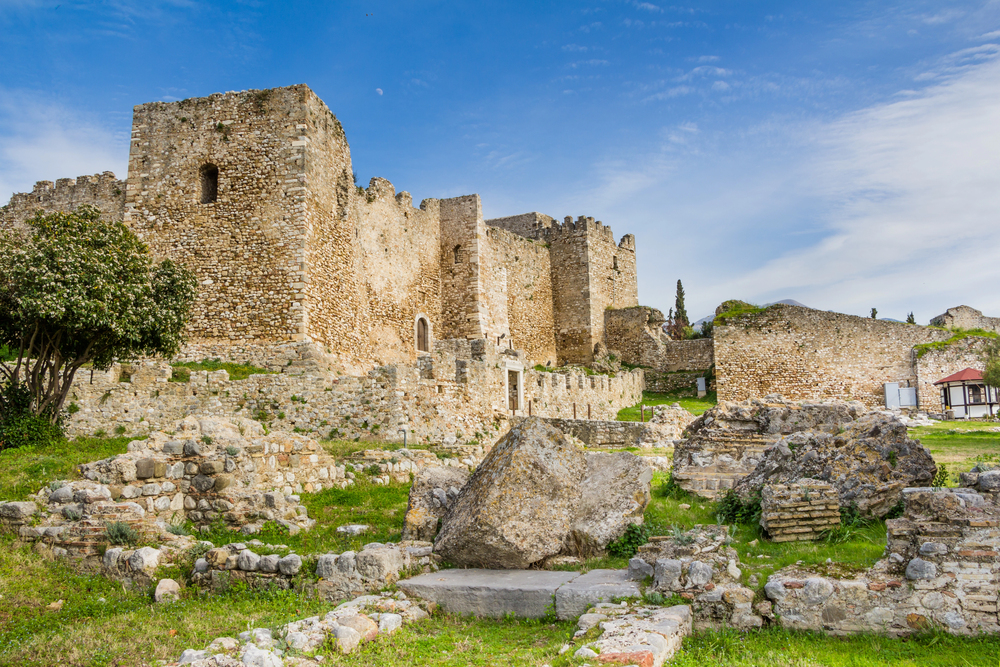
The castle sits on the hill above the old town, on ground that has been fortified for a very long time. What you walk through today is a mix of eras and a good deal of careful restoration, and the site is upfront about that. Sam made the same point from the walls, and it is a useful frame of mind for Greece generally: much of what visitors admire has been stabilised, rebuilt or reassembled so that the shape of the thing can be read at all.
Take the ruins as an outline rather than a relic, and the place still does its work. The curtain walls and turrets give you the logic of a fortress built to watch a strait, the interior is open and grassy, and there is shade and somewhere to sit when the climb catches up with you. Sam was told at the desk that entry was free on the day he visited.
A view that is described as well as seen
One detail at the castle says a lot about it. Alongside the lookout there is a panel in braille, so that a visitor who cannot see the view can still be told what is in front of them. Sam noticed it and took the sensible view that the atmosphere of a place like this is not only visual.
The Saint Nicholas steps and the two halves of town
Patras is built on two levels. The lower town is flat, commercial and close to the water, all arcades, squares and ferry traffic. The upper town is older and quieter, and the link between them is a long flight of stairs known as the Saint Nicholas steps, which climbs straight up from the main street below. Sam walked them once and was not tempted to repeat the exercise on a hot day, and there is no shame in that: you can drive or take a taxi up to the castle side and walk down the steps instead, which is by far the better direction.
The upper town rewards a slow wander. Neoclassical facades, small churches, cats on doorsteps, and the occasional gap between buildings that opens onto the gulf. Nearby sits the Roman odeon, a reminder that the Romans thought this a city worth investing in long before anyone built walls on the hill.
Port, cathedral and the mountains behind
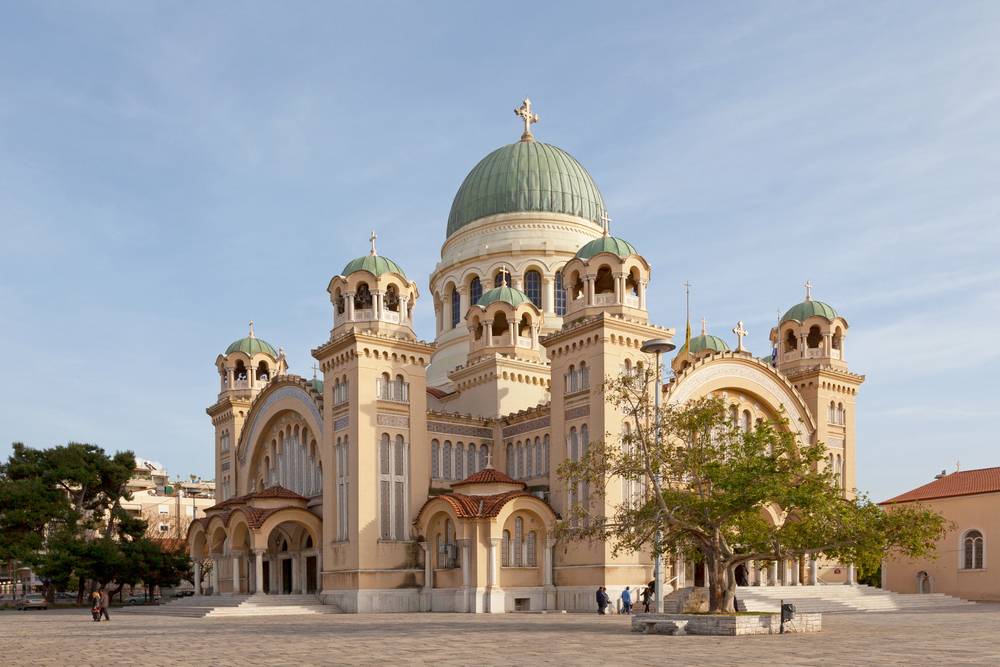
Down at sea level, Patras is a proper port city rather than a resort, and that is part of its appeal. Ferries link it with Italy, and the waterfront is where the town actually lives. At the western end stands the church of Saint Andrew, an enormous Orthodox cathedral that draws pilgrims from across Greece.
Look inland and the landscape takes over. Mount Panachaiko rises behind the city, the long spine of the Pindus range runs away to the north, and on the ridges above the gulf you can pick out lines of wind turbines turning. Sam spent a good part of his visit simply looking at the topography, which is the correct response to this part of Greece.
When to go, and how Patras fits a wider trip
Late spring and September to October are the kindest times for the stairs and the walls. Sam was travelling through a long run of hot weather, and in high summer the upper town is best kept for early morning or the last hours of light. Winter is mild and green, and the city is also known for its carnival in the weeks before Lent, when the streets fill with parades.
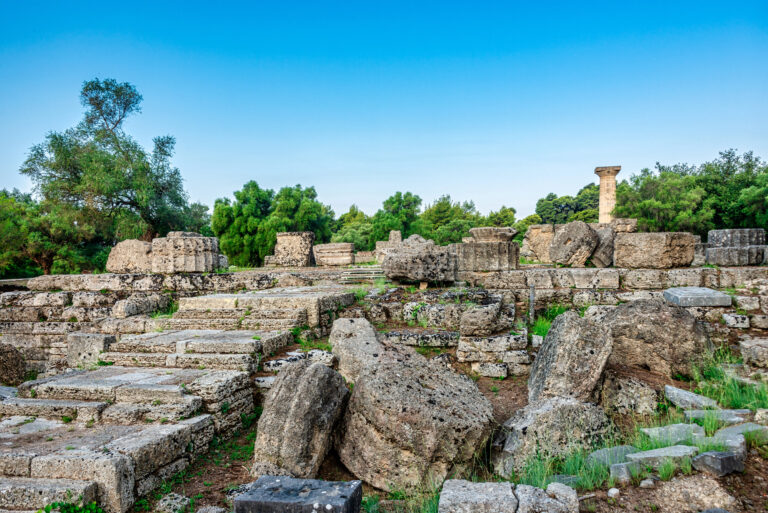
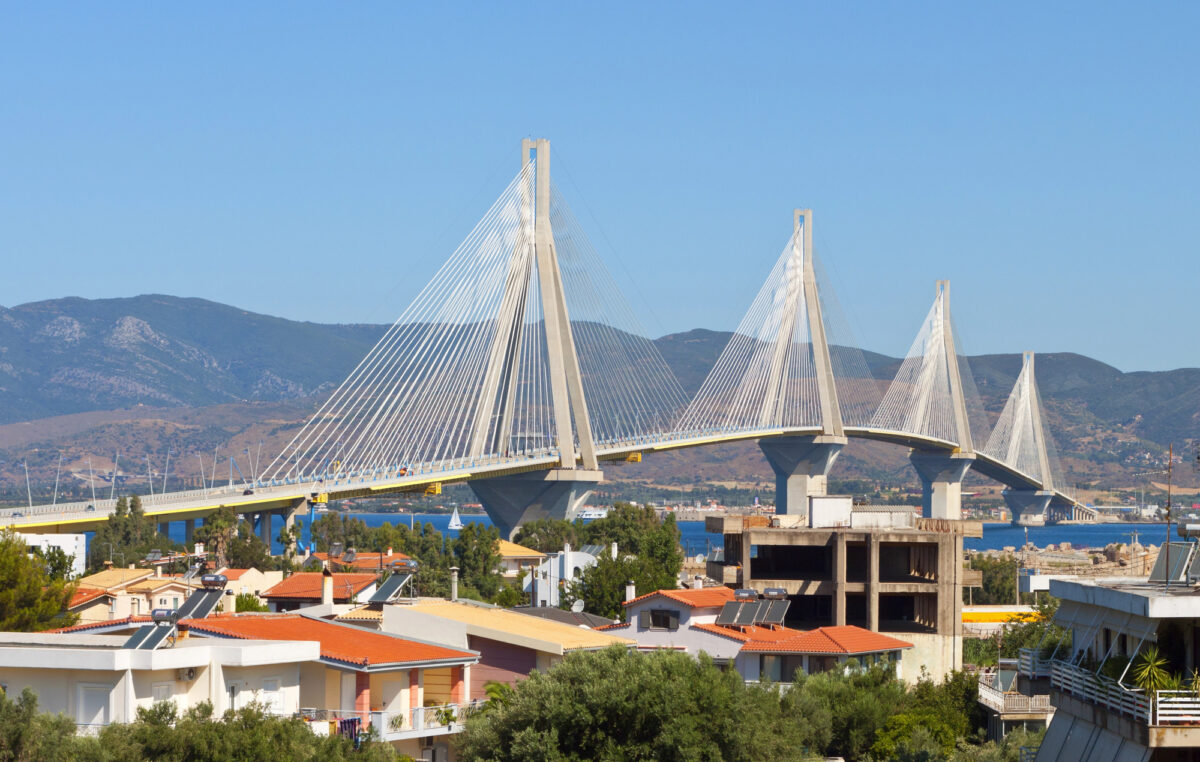
Few people should treat Patras as a single-destination holiday, and it does not need to be. It works beautifully as an arrival or departure point, whether you are crossing from Italy by ferry or driving over the bridge from the mainland, and it sits at the start of a very good Peloponnese loop. From here the road runs east towards Corinth, as Sam’s did, with the canal and the ancient city beyond, or south into the mountains and down to Olympia, Nafplio and Monemvasia. One or two nights in Patras, a climb to the castle and a slow evening on the waterfront, then onward: that is the right shape for it.
If a Greece itinerary like this appeals, we build them around the way you actually travel, including the small practicalities such as which day a hilltop site is closed and whether you would rather walk up or walk down.