
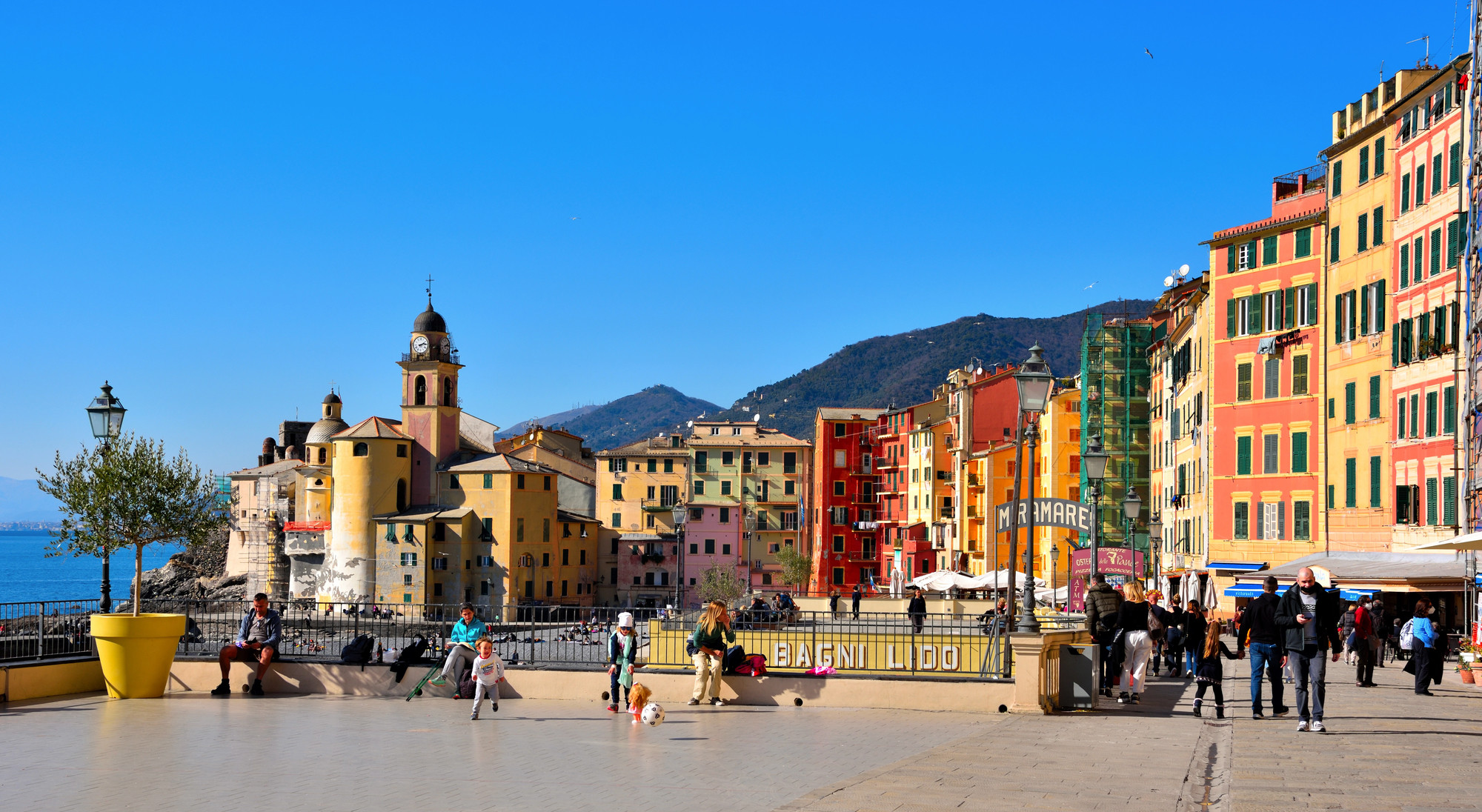
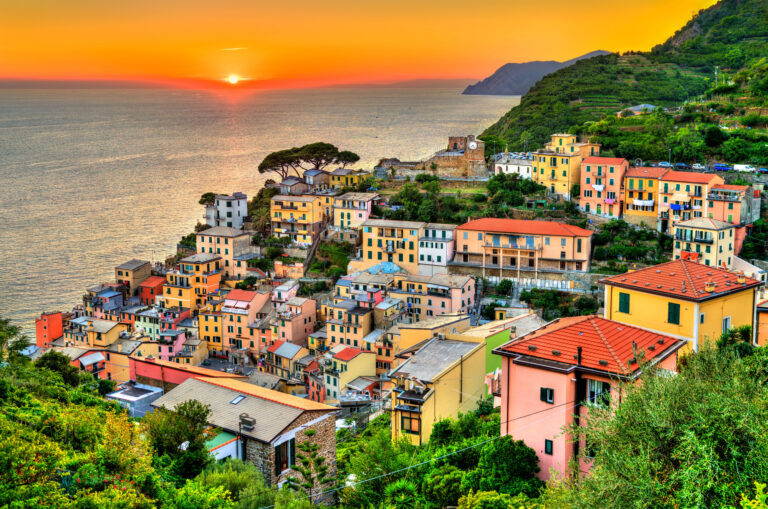
Most Australians see Rome, Florence and Venice and fly out without ever reaching the coast that made Genoa rich. Yet driving the Italian Riviera between Genoa and the Portofino peninsula gives you mountains falling straight into the sea, villages painted ochre and rose, and some of the best food in Italy, all within an hour of coastline.
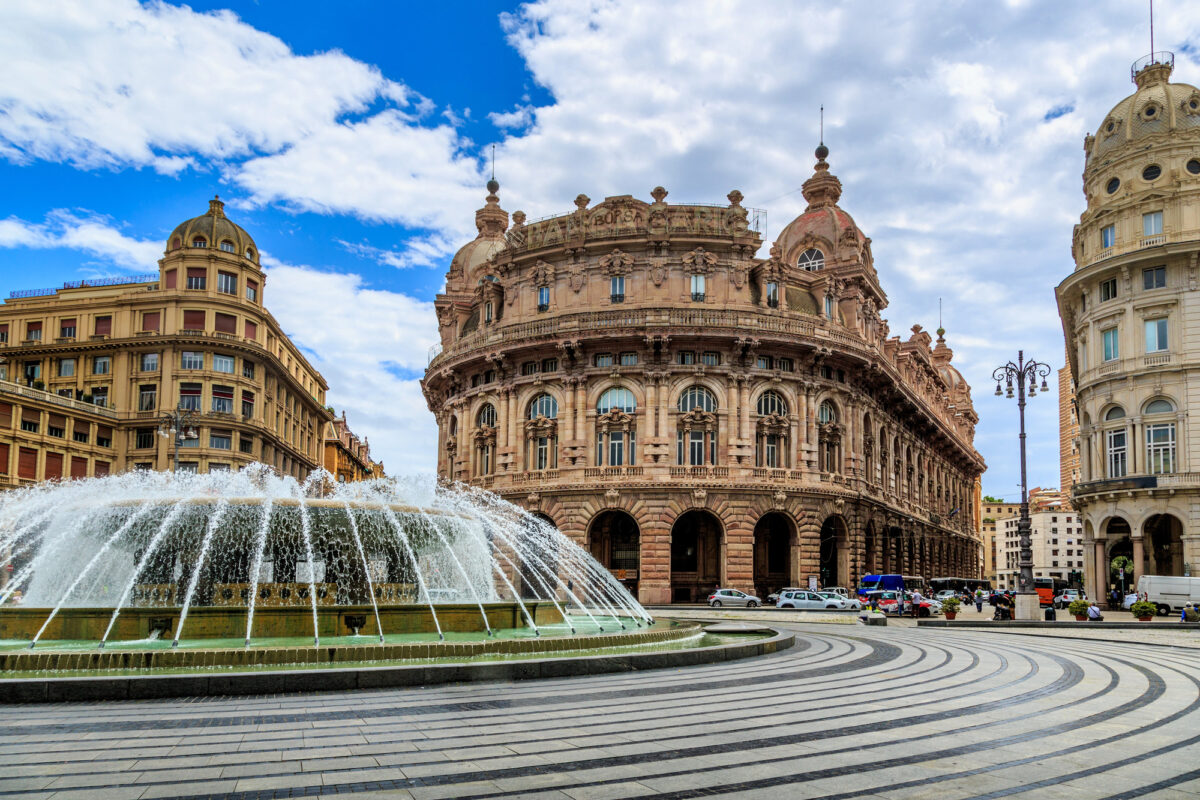
Genoa is a working port with one of the largest medieval old towns in Europe folded behind it. Focaccia here is a local institution rather than a tourist prop, and pesto was invented in these hills.
What the coast road is actually like
There are two roads. The autostrada crosses the valleys on viaducts and vanishes into tunnels: quick, efficient, and you see almost nothing. Below it, the old coast road threads through every village, hugs the cliff and narrows to a width that feels optimistic when a bus is coming the other way.
Sam described the lower road as beautiful and tricky in the same breath, with cars and motorbikes rounding blind bends at speed. Distances deceive: a drive that looks like four minutes on a map can take far longer. If you are not a confident driver, see this coast by train and ferry and you will lose very little.
Tolls, parking and the small print
Tolls, parking systems and city access rules vary from region to region and machine to machine, and Sam counted nine different ways he had been asked to pay by the time he reached Liguria. Many historic centres are restricted traffic zones, signage assumes local knowledge, and parking rules change from town to town. Ask at your hotel before you drive into anywhere old and small.
The villages
- Portofino: a tiny horseshoe harbour ringed by tall painted houses, expensive and heavily photographed, and still lovely early in the day.
- Santa Margherita Ligure: the practical base, with palm-lined promenades, a working harbour, hotels at a range of levels and easy access to the peninsula.
- Camogli: houses stacked steeply above a pebble beach in deep yellows and reds, better suited to a long coffee on the waterfront than a checklist of sights.
- Cinque Terre: undeniably beautiful, though Sam found that after the first few the umbrellas and coloured houses start to look much the same. One or two will do.
Views, beaches and timing
The mountains behind Genoa rise fast on tight, shaded roads, and the reward is the summit of Monte Fasce, with its telecommunications masts and a long outlook over the harbour, the city and the Ligurian Sea. If the drive does not appeal, historic funiculars and lifts carry you up out of the old town.
Expect pebbles rather than sand, often a few metres from the main street. Locals bring mats or inflatable mattresses, the water stays clear, and nothing blows into your eyes in a breeze. Cafes commonly charge a small coin fee for the bathroom, so carry change.
Late spring and early autumn are the sweet spot: warm enough to swim, quiet enough to park, mild enough for the headland walking tracks. Genoa sits on the main line between Milan and the south, with the French Riviera west and Emilia-Romagna over the Apennines. Three or four nights around Santa Margherita or Camogli, plus a day in Genoa, is enough.
Liguria rewards forethought: the right base, the right amount of driving, and an early decision about the wheel or the train. That is the sort of detail we enjoy sorting out at Cartier World Travel.
Places to explore
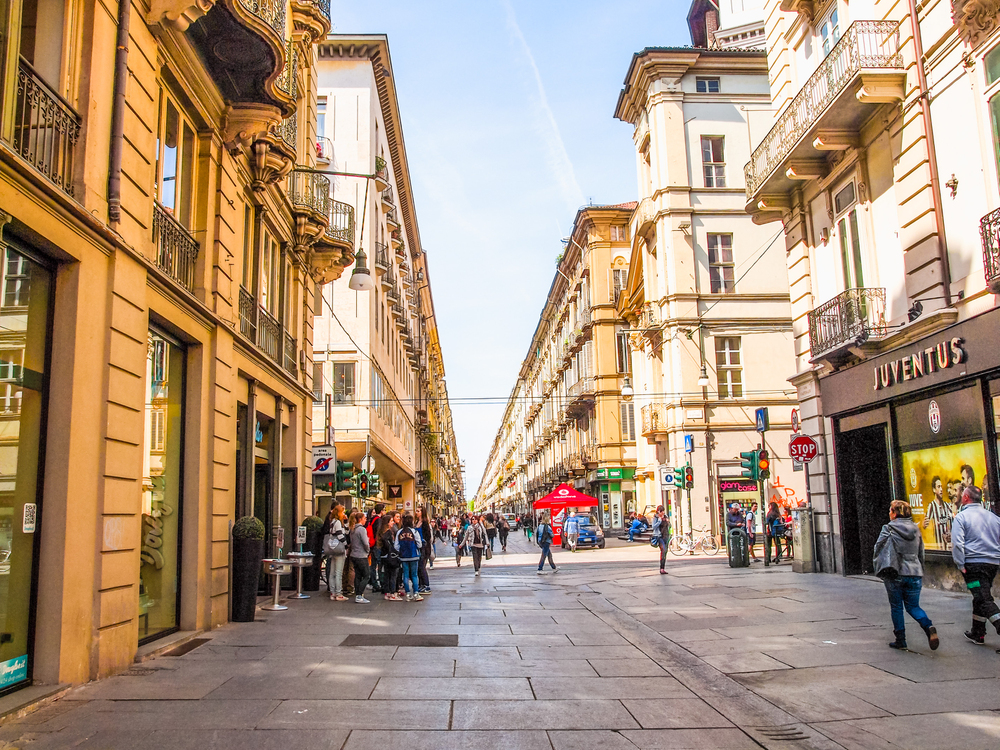
Via Garibaldi (Strada Nuova) and the Musei di Strada Nuova
Historic street and palace museumsA short street of UNESCO listed Palazzi dei Rolli, the guest palaces where the old republic lodged visiting royalty. Palazzo Rosso, Palazzo Bianco and Palazzo Doria-Tursi form one ticketed museum circuit, with Van Dyck, Rubens and Caravaggio, and a rooftop belvedere over the port.
Buy the combined Strada Nuova ticket at Palazzo Rosso and check the weekday closing day before you walk over.
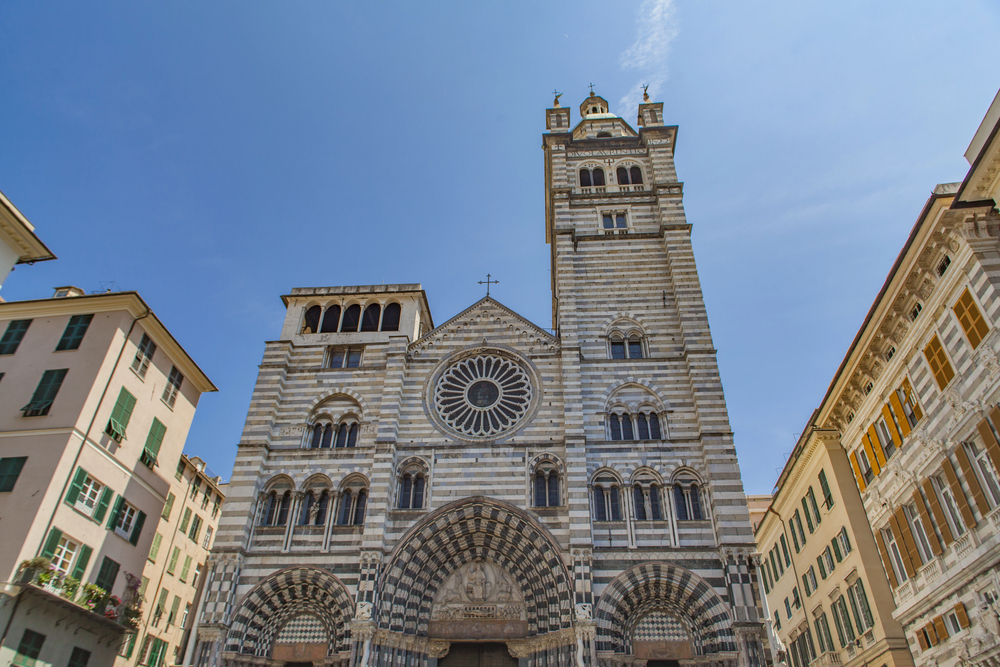
Caruggi del centro storico and the Cattedrale di San Lorenzo
Old town walkEurope's densest medieval core, a shaded maze of tall narrow lanes running from Porta Soprana down to the water. Aim for Piazza San Matteo, the Doria family's private square, then the striped marble Cattedrale di San Lorenzo with its unexploded naval shell in the nave.
Walk it in late afternoon, wear grippy shoes for the slate paving, and note that the cathedral treasury needs a separate ticket.
What Sam said
Here's the advantage of lying on pebbles. If the wind gets up, you don't have sand blown in your face. Sam Newman, on the ground
Sam Newman in Genoa
Filmed on Sam's own trip through Europe, parts of which Cartier World Travel arranged.
Other stops on Sam's journey

Genoa
Tell us roughly when and for how long. We build the rest around you, the way we built Sam's.