Most travellers meet Patras through a ferry timetable, which is a pity, because visiting Patras in Greece is worth a night or two in its own right. This is the third largest city in the country and the great port of the western Peloponnese, a working place of arcaded footpaths, neoclassical facades and a waterfront that faces the Ionian. It sits where the Gulf of Corinth narrows and opens out to the sea, and that geography has shaped everything about it, from the fortress on the hill to the enormous bridge at its shoulder.
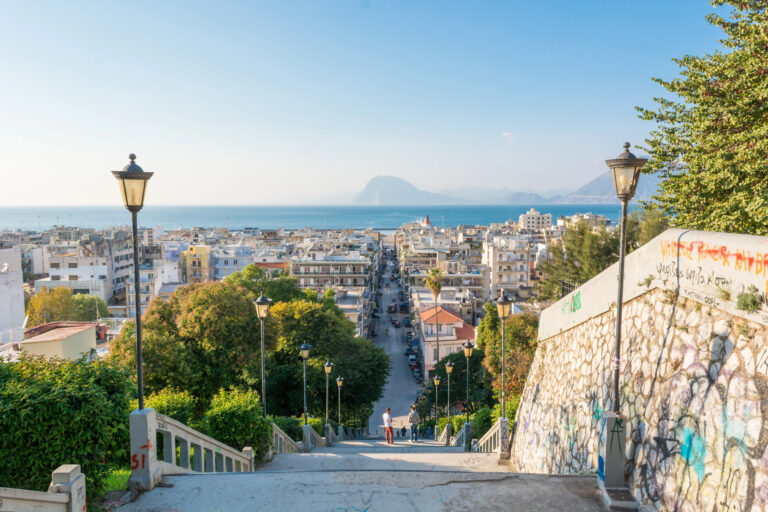
Climb the steps and the whole city arranges itself below you
Patras is built on two levels. The lower town is flat, commercial and busy with the port. The upper town, Ano Poli, is quieter, older and cooler in summer, and the two are stitched together by monumental stairways, the best known of them the steps of Agiou Nikolaou running straight up from the harbour end of the city. It is a proper climb of a couple of hundred steps, and Sam took it on rather than drive around. What you get at the top is the reward the locals have always had: rooftops falling away to the water, and the mountains of Roumeli standing on the far shore of the gulf.
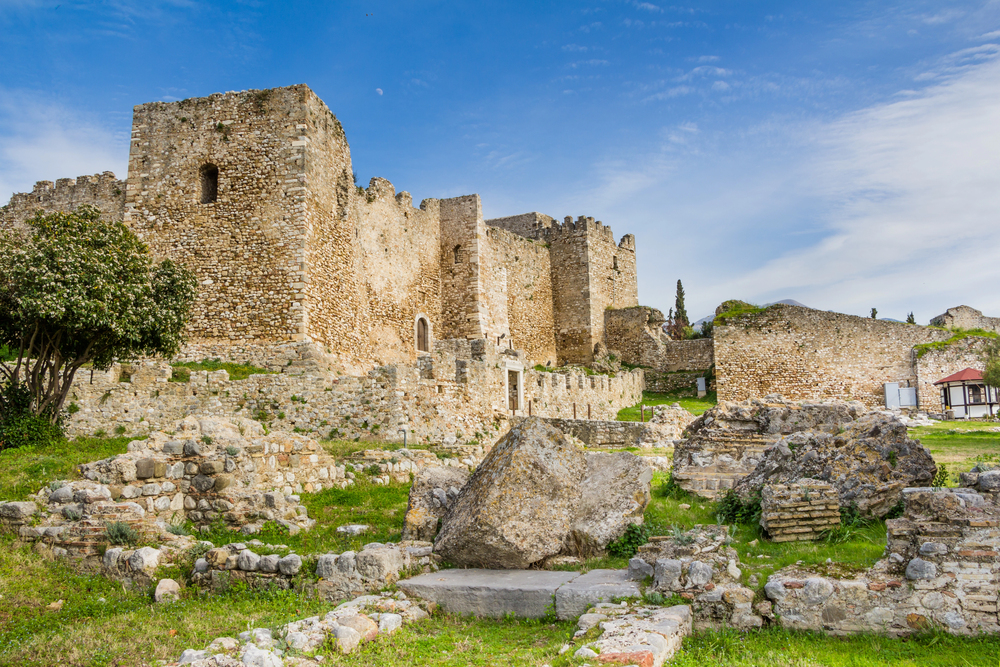
Up here sits the castle of Patras, built on the ground of the ancient acropolis and worked over in turn by Byzantines, Franks, Venetians and Ottomans. Just below it lie the remains of the Roman odeon. One caution worth carrying: the castle keeps a Tuesday closing day, which Sam discovered at the top of the stairs with the day already spent. Check before you climb, then go anyway for the view over the walls.
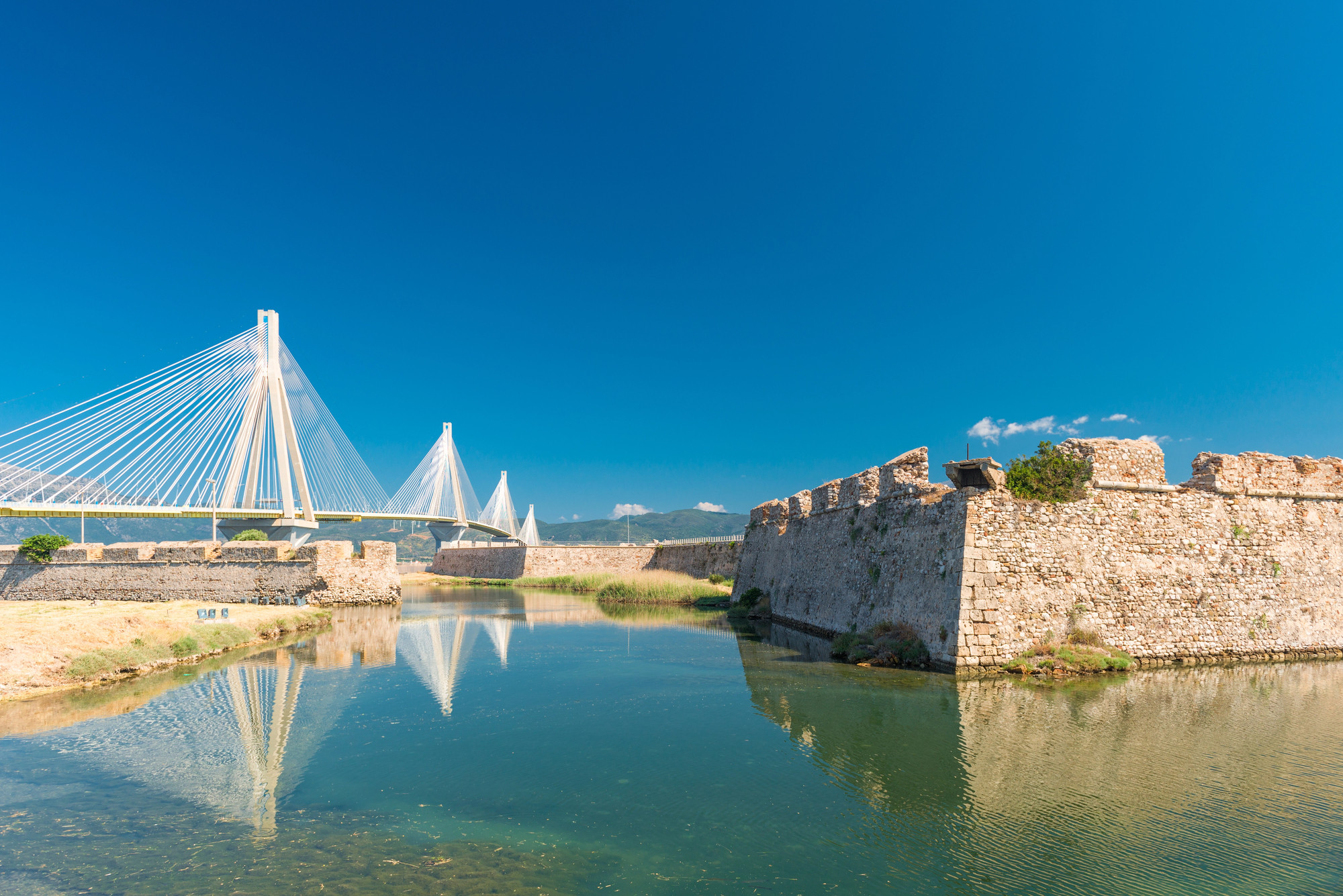
The Rio-Antirrio bridge, cables like harp strings
A short drive east of the city the Gulf of Corinth pinches to its narrowest point, and the Charilaos Trikoupis bridge, known to everyone as Rio-Antirrio, leaps across it. It is one of the longest cable-stayed bridges in the world, carried on pylons standing in deep, seismically restless water, and its fans of white cable do look uncannily like strings waiting to be played. An Ottoman-era fortress guards the approach on the Peloponnese side, so you get medieval stonework and modern engineering in a single frame.
The shoreline either side is ordinary in the best way. There are small beaches, umbrellas, people swimming within sight of those cables. It is the kind of place where you park, walk out for ten minutes and end up staying an hour.
What visiting Patras in Greece actually feels like
Patras is not polished for visitors and that is the appeal. It is a university city and a port, so the cafes are full on weeknights, the squares are used rather than staged, and conversation starts easily. Sam ended up in a phone repair shop in town and got into a conversation with a local who wanted to talk about Australian television, which is about as Patras an experience as you can have.
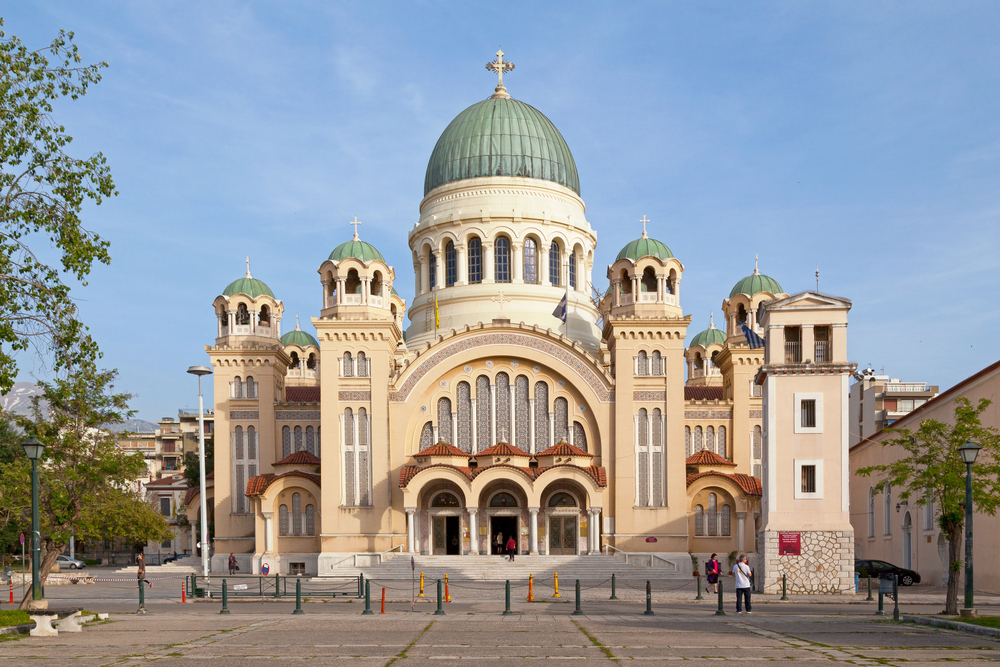
Beyond the castle and the bridge, give time to the great church of Agios Andreas on the waterfront, dedicated to Saint Andrew, and to the vineyards of Achaia in the hills behind the city, home of the dark, sweet Mavrodaphne of Patras.
When to go and how it fits a wider trip
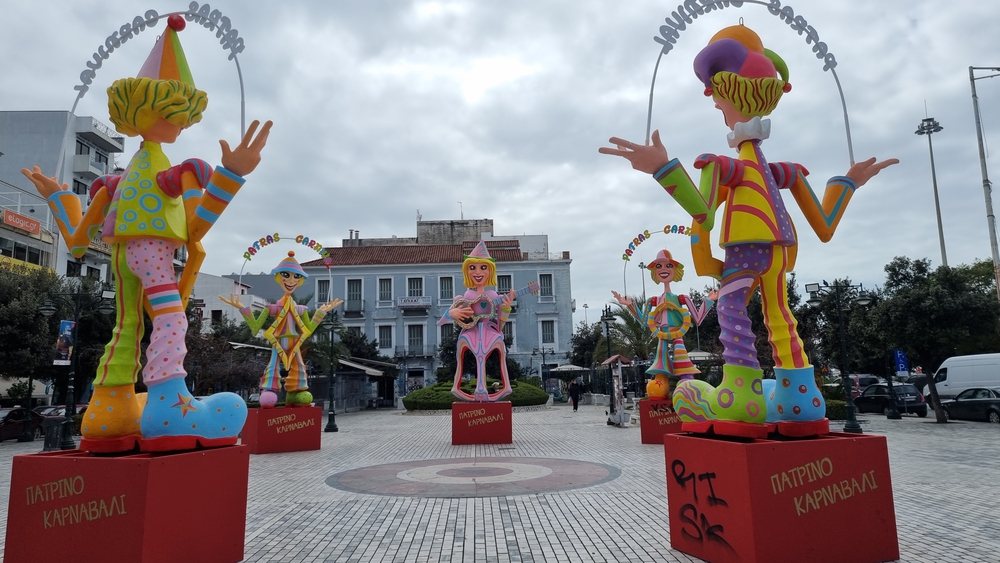
Late spring and early autumn are the kindest seasons here, with warm sea, walkable hills and none of the August heat that makes those steps a trial. Winter is mild but wet, and the city is at its liveliest in the carnival weeks before Lent.
Patras works beautifully as a hinge rather than a destination on its own. It is roughly two to three hours from Athens by road, an easy run to Olympia, Nafpaktos and the Peloponnese wine country, and the departure point for ferries to Italy and the Ionian islands. Built into a wider Greek itinerary, two nights here gives you the castle, the bridge and a proper feed by the water before the next leg begins, which is exactly the sort of connection worth getting right when you are planning from Australia.