Visiting Cinque Terre is one of those Italian days that stays with you long after the tan fades. Five villages are stitched into a steep stretch of the Ligurian coast between La Spezia and Levanto, each one folded into a crease in the cliffs, each one painted in colours that look almost implausible against the water. There are no motorways here and barely any road at all. You arrive by train, by boat or on foot, and that single fact shapes everything about how the place feels.
Australian travellers tend to build this into a wider Italian itinerary, and rightly so. It is a coastline rather than a city, best given a full unhurried day, or better still a night or two so you can watch the villages empty out in the evening.
The five villages, one by one
Riomaggiore
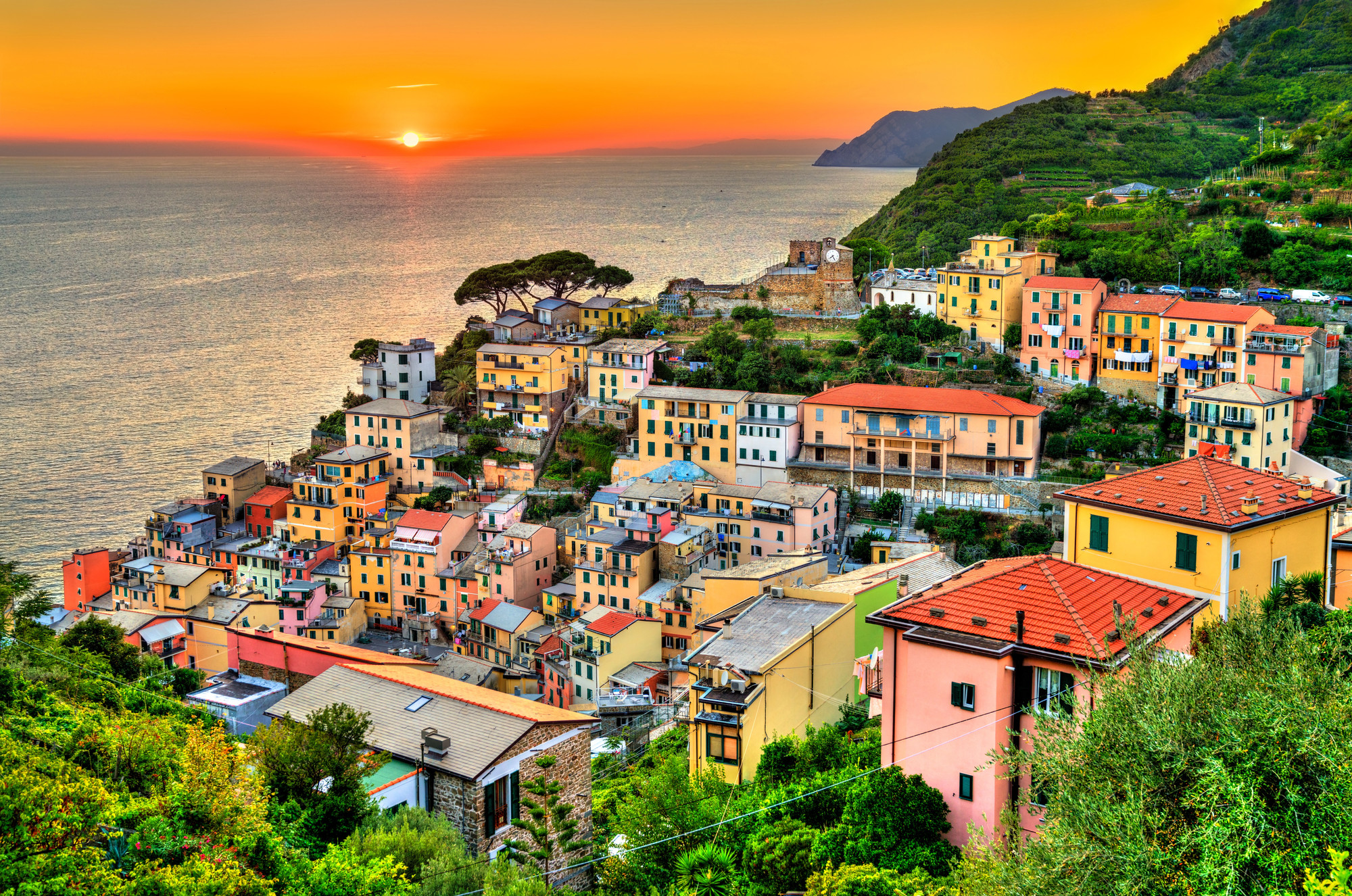
The southernmost of the five and, for most people arriving from La Spezia, the first. Tall houses stack up a narrow ravine and tumble down towards a tiny slipway of a harbour where boats are hauled up onto the stones.
Manarola
Manarola is the postcard, a wedge of coloured buildings above a rocky inlet where locals swim off the flat rocks. The village climbs, and so do you. Above the houses sits the parish church, quiet and cool after the walk up, with candles to light for a few coins. Sam lit one for peace, and for making it back down to the boat.
Corniglia
The odd one out. Corniglia sits on a headland rather than at the water’s edge, and reaching it from the station means a long staircase or the shuttle bus. Ferries do not call here. The reward is the quietest of the five villages and a terrace view straight down the coast.
Vernazza
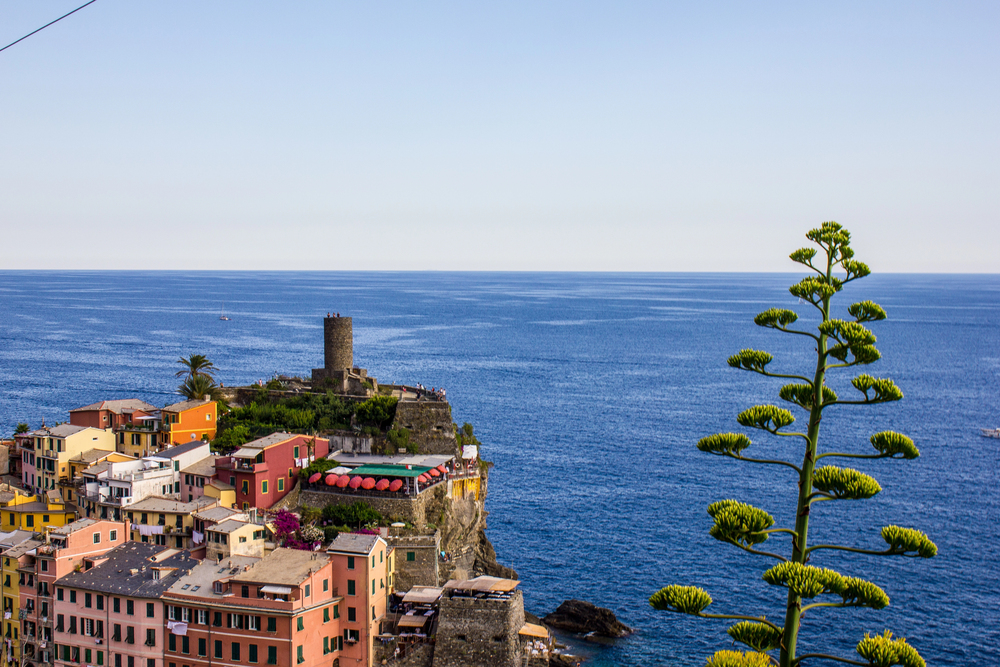
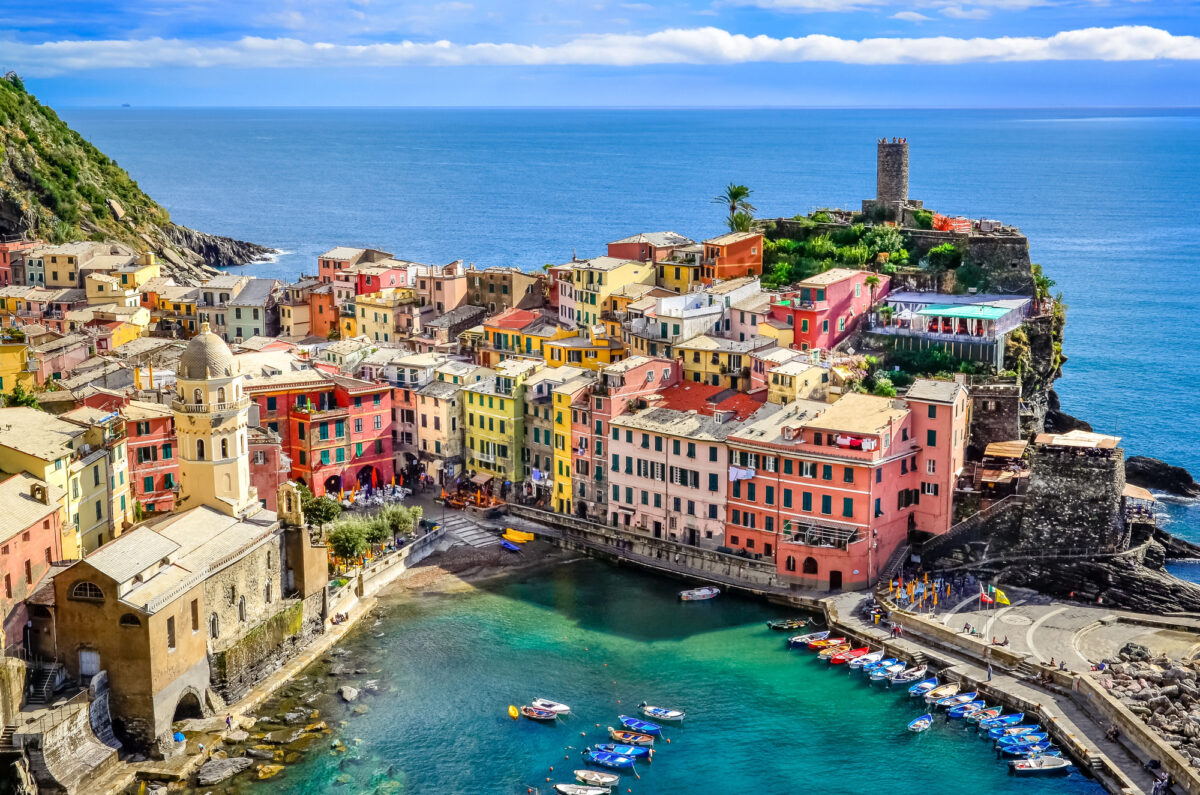
Many people call this the prettiest, with a proper little harbour, a church built almost into the sea and a main lane that runs from the railway down to the water. The centre is closed to cars, which is exactly what makes it work. As Sam noted while walking through, it is automobile free, and the difference in noise is immediate.
Monterosso al Mare
The largest and the flattest, split into an old town and a newer beach quarter. This is where the sand is, rows and rows of umbrellas along the shore, full on a warm day. It is also the easiest of the five for a long lunch, with restaurants set high enough above the bay to make the view part of the meal.
Visiting Cinque Terre by train, ferry and footpath
The local train is the workhorse. It runs the length of the coast in a series of tunnels, popping out at each village for a moment before diving back into the rock, and the hop between neighbours takes only a few minutes. The ferry is the slower and far prettier option, and it gives you the one thing the train cannot, which is the sight of these villages from the water, exactly as they were meant to be seen from a fishing boat.
Then there is the walking. Paths link the villages along the cliffs and up through the terraced vineyards behind them, and sections open and close depending on landslips and maintenance, so it pays to check what is walkable on the day rather than planning a full five-village hike months out. Even one leg on foot changes the character of the visit. The stone walls, the lemon trees, the vines held up on the slope by generations of hand-built terracing, none of that reads from a train window.
What Cinque Terre asks of you
Two things: legs and patience. Almost nothing here is flat. Steps run between the houses, the churches sit above the harbours, and the heat in high summer makes even a short climb honest work. A pair of shoes you can actually walk in matters more than anything else you pack.
The patience is for the crowds. These villages draw people from all over the world, and a hot afternoon on the main lane of Vernazza or Monterosso is a shuffle. The trick is timing. Early morning and the hour before sunset return the villages to something close to themselves, and the middle of the day is best spent on the water, in the sea or at a long table with a bottle of Ligurian white.
Eating on this coast
Liguria is anchovy and basil country. Pesto belongs here, focaccia is a daily staple rather than a novelty, and the seafood comes out of the water below the terrace you are sitting on. A proper lunch with a view over the bay is not a cheap exercise in the better restaurants, but it is one of the genuine pleasures of the region and worth building into the day rather than squeezing between ferries.
When to go and how it fits a wider trip
Late spring and early autumn are the sweet spot: warm enough to swim, gentle enough to walk, and without the peak of summer numbers. July and August are hot and very busy. In winter the villages are quiet and lovely, though ferry services thin right out and some places close for the season, so the train becomes your only reliable link.
Cinque Terre slots neatly between Florence and Genoa, and pairs well with Portovenere and Levanto at either end of the coast, or with Pisa if you are coming up from Tuscany. Give it more than a rushed day trip if you can. Sam’s route ran the full string, Riomaggiore through to Monterosso, and even then the ferry back and the drive home made for a very long day. Two nights on the coast turns a checklist into a holiday, and lets you see the five villages the way they are best seen, slowly and on foot.