There are ruins you look at and ruins you stand inside, and visiting Ancient Olympia belongs firmly in the second group. This is a green river valley in the western Peloponnese where, for something like a thousand years, the Greek world put down its weapons and came to compete. Sam Newman drove down from Patras to see it on his European trip, and the pull of the place is easy to understand: very few sites on earth can claim to be the origin of something the whole planet still does every four years.
Where the Games began
Olympia was never a city. It was a sanctuary, a walled precinct of temples, treasuries, altars and athletic buildings set between the Alfeios and Kladeos rivers, and it existed to honour Zeus. The Games grew out of the religious festival held there, and for centuries athletes and spectators travelled from across the Greek world to attend. What survives today is a broad, shaded expanse of fallen columns, foundations and olive trees, and it takes a little imagination to repopulate it. That is part of the pleasure.
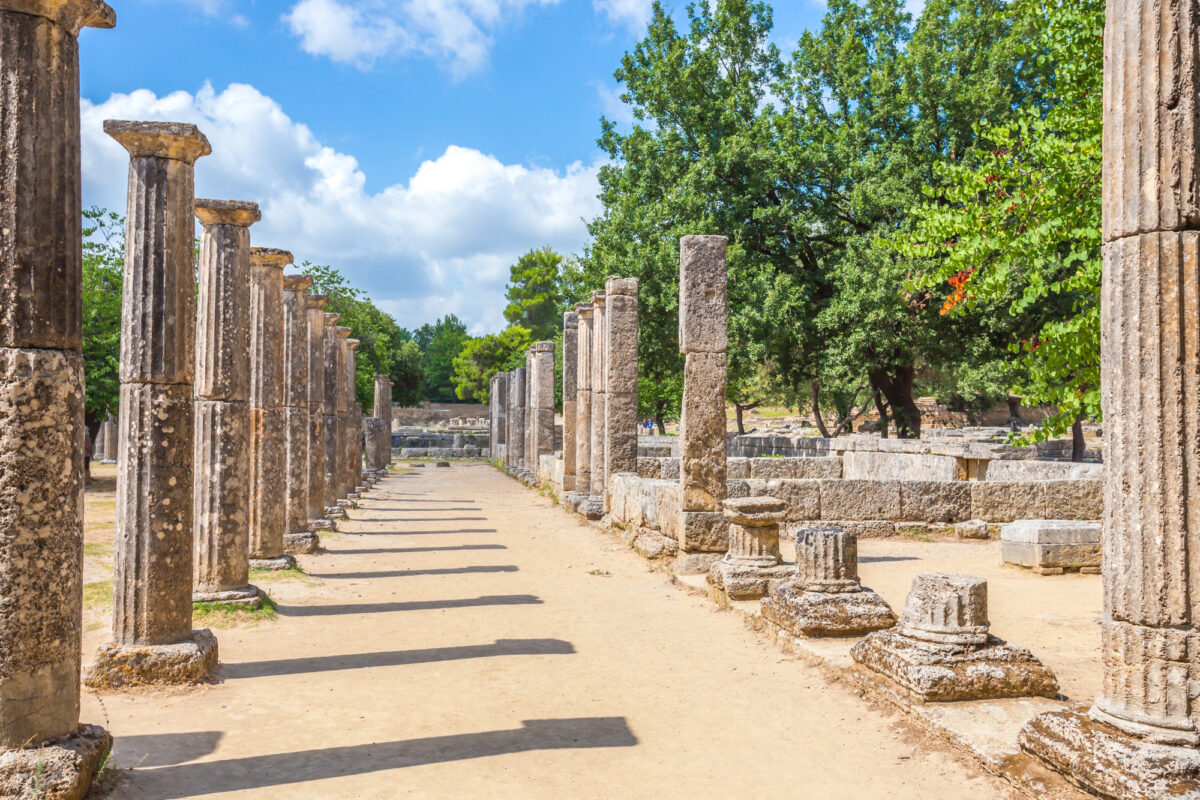
Walk the site slowly and the plan starts to make sense: the training grounds of the palaestra and gymnasium, the workshop where the sculptor Pheidias worked, the round Philippeion, the row of treasuries built by different cities, and the temples at the heart of it all.
The Temple of Zeus and a lost Wonder
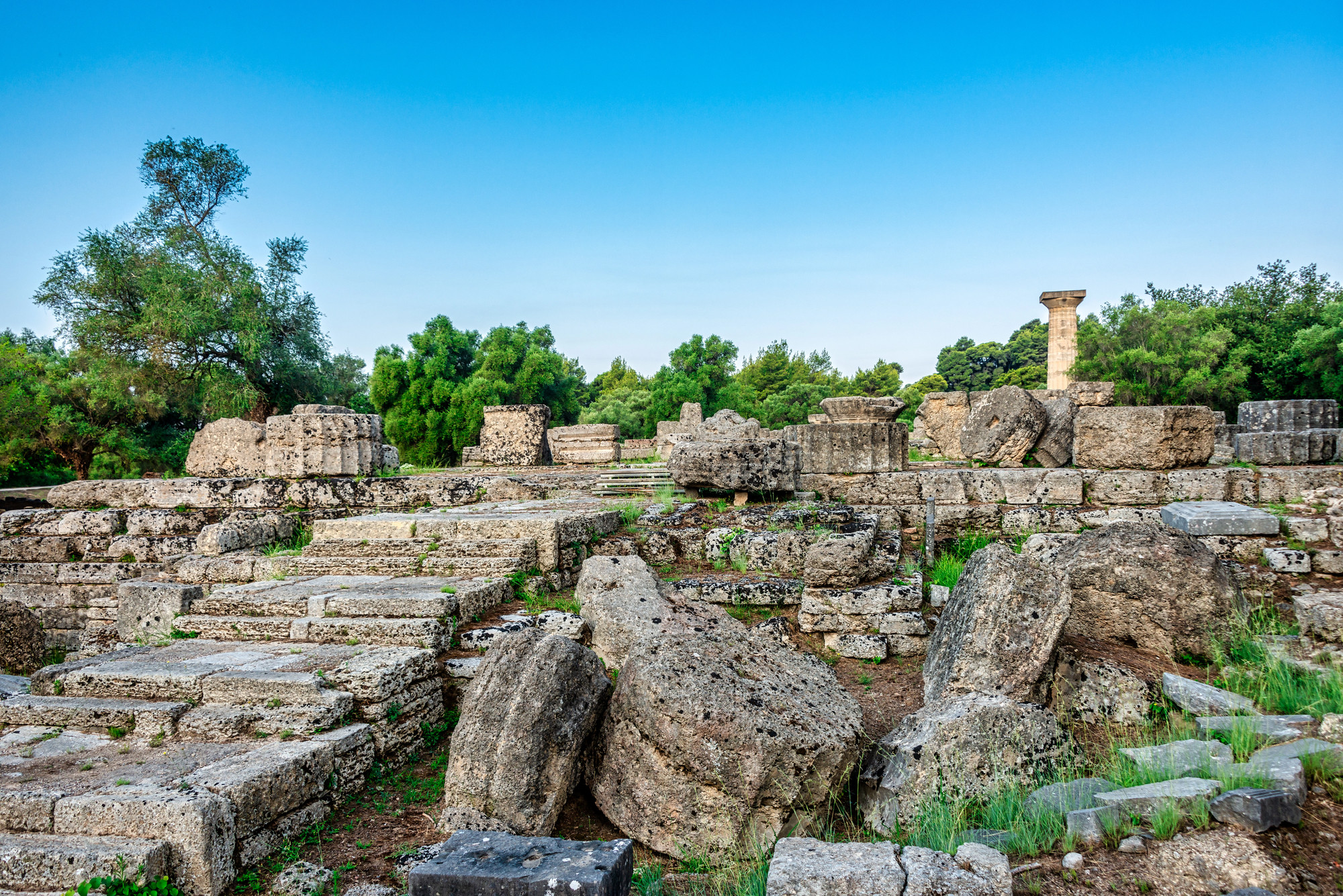
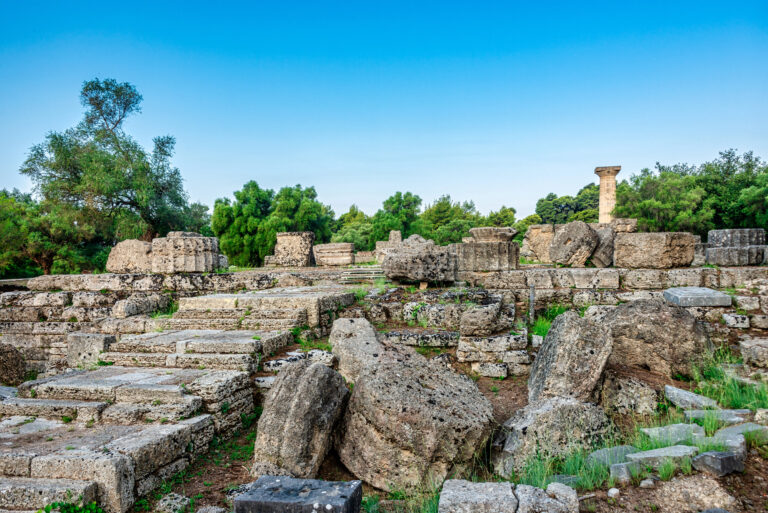
The Temple of Zeus once held the seated statue of Zeus made of gold and ivory, counted among the Seven Wonders of the Ancient World alongside the pyramids, the Colossus of Rhodes and the lighthouse at Alexandria. The statue is long gone. The temple itself was brought down by earthquakes, and its enormous column drums now lie in the grass exactly where they fell, stacked like toppled coins. It is one of the more affecting sights in Greece, precisely because nobody has tried to tidy it up.
Nearby stands the older Temple of Hera, where the Olympic flame is still kindled from the sun before each modern Games and carried on to the host city. It is a short walk between the two, and it joins the ancient site to the one you watch on television.
The stadium and the athletes’ entrance
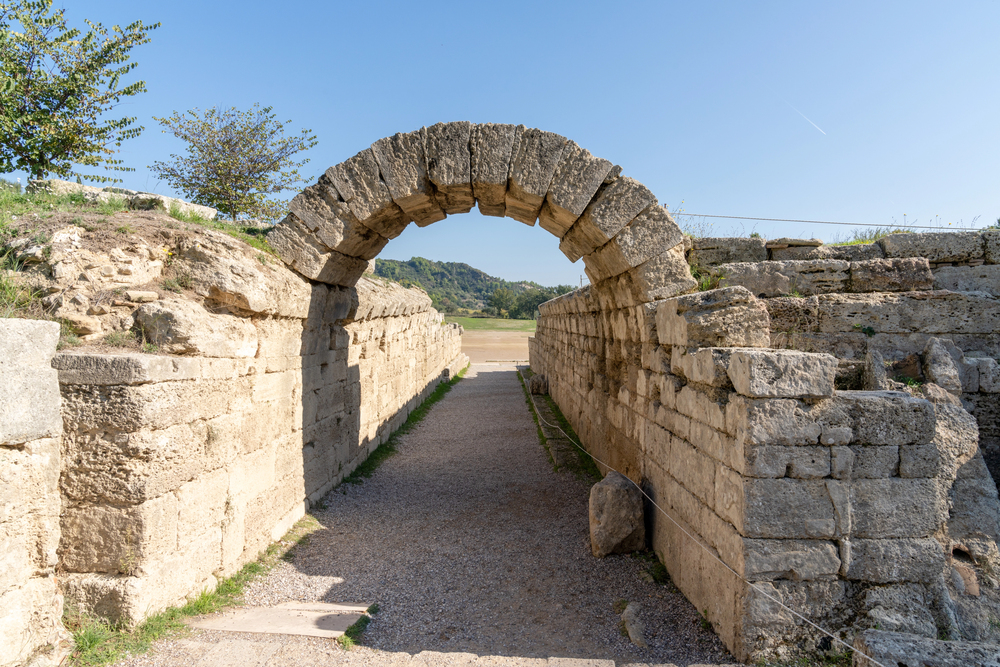
The stadium sits just beyond the sanctuary, reached through a vaulted stone tunnel that athletes once used to enter. It is a plain rectangle of grass and earth banks rather than tiered marble seating, with the original stone start and finish lines still in place. Stand on them and the scale is surprisingly human. Ten thousand or more spectators could sit on the slopes, and there is nothing stopping you pacing out the track yourself.
The museum next door
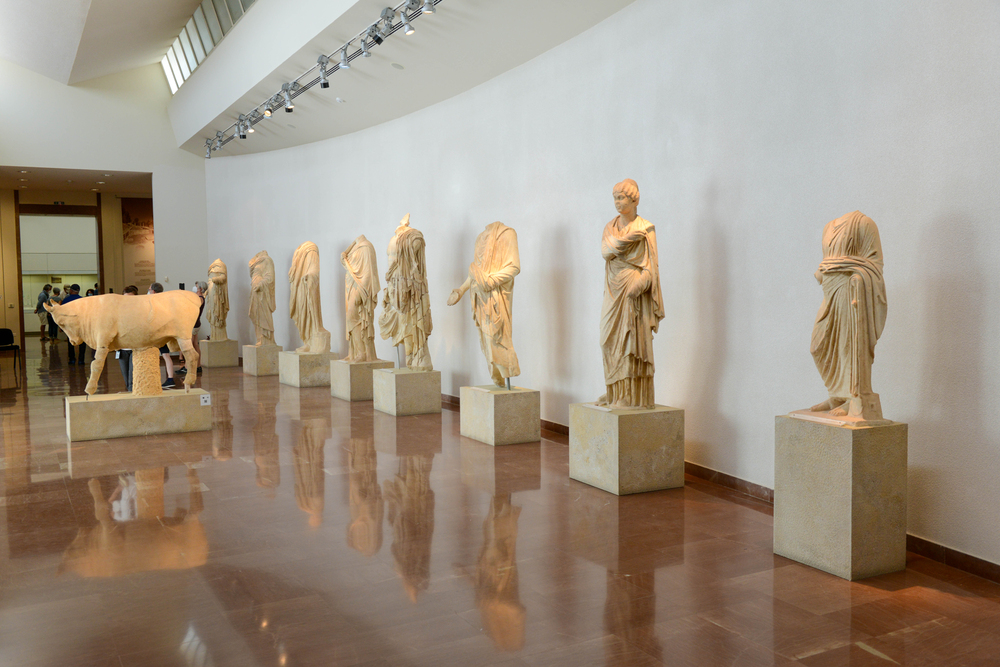
The Archaeological Museum of Olympia is the other half of the visit and should not be treated as optional. The sculpture from the pediments of the Temple of Zeus is displayed as it was arranged on the building, which explains the ruins outside far better than any sign can. There is bronze armour, votive offerings and some of the finest ancient sculpture in the country. Doing the site first and the museum second usually works best.
What visiting Ancient Olympia is actually like
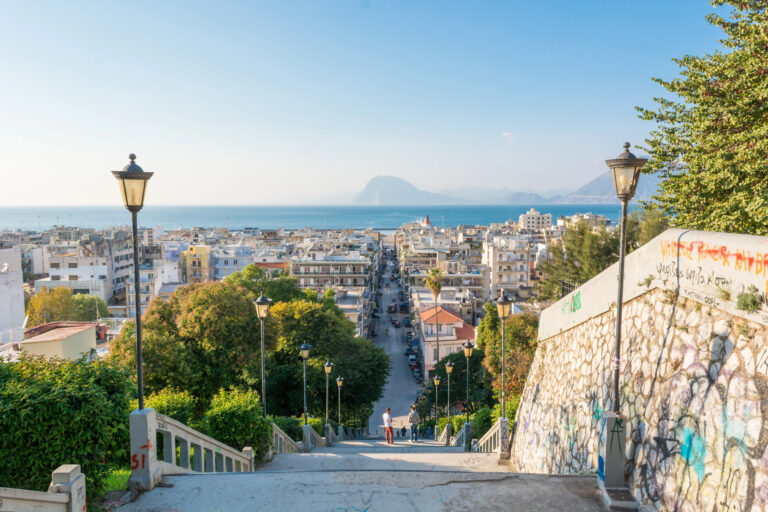
The approach is a road trip. Olympia sits inland from the west coast, an easy drive south from Patras, and the Peloponnesian motorways are quick and scenic. They are also tolled, repeatedly, and the payment machines are not always as straightforward as they look. Sam found that out at one booth, where tapping the card achieved nothing and the attendant had to come out, insert it and ask for a PIN. Keep a card that works in a chip reader and some euro coins in the console, and none of it matters.
On site, shade is limited and Sam was walking it in the low thirties. Bring water, a hat and proper shoes, since the ground is uneven and the site is large.
When to go and how it fits a wider trip
Spring and autumn are the kindest times, with the surrounding hills green in spring and the crowds thinner either side of high summer. If you do come in the heat, go early in the day and let the museum carry the middle hours. Olympia rewards a full morning rather than a rushed hour, and staying the night nearby means you can be at the gates when they open.
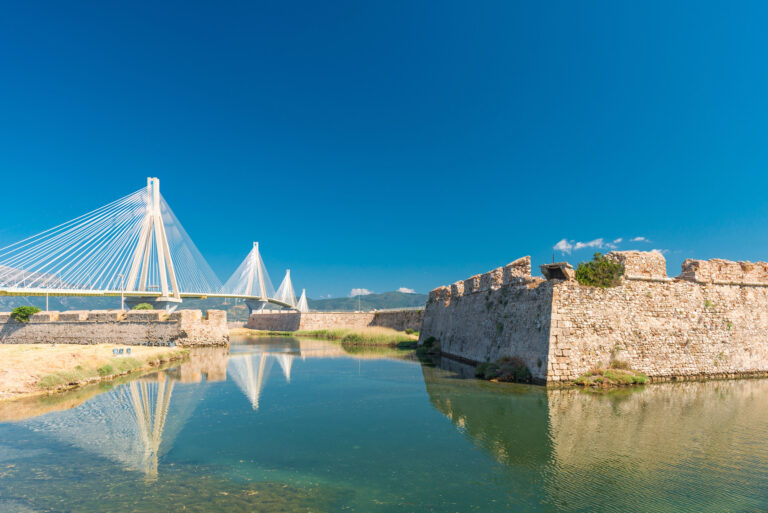
It slots naturally into a self-drive loop of the Peloponnese, paired with Nafplio, Mycenae and Epidaurus to the east, the Mani further south, or Delphi across the Gulf of Corinth via the Rio-Antirrio bridge. That is exactly the kind of trip we like to build: a sensible route, the right nights in the right towns and a car that is waiting where it should be, so the only thing you have to work out is a toll booth.