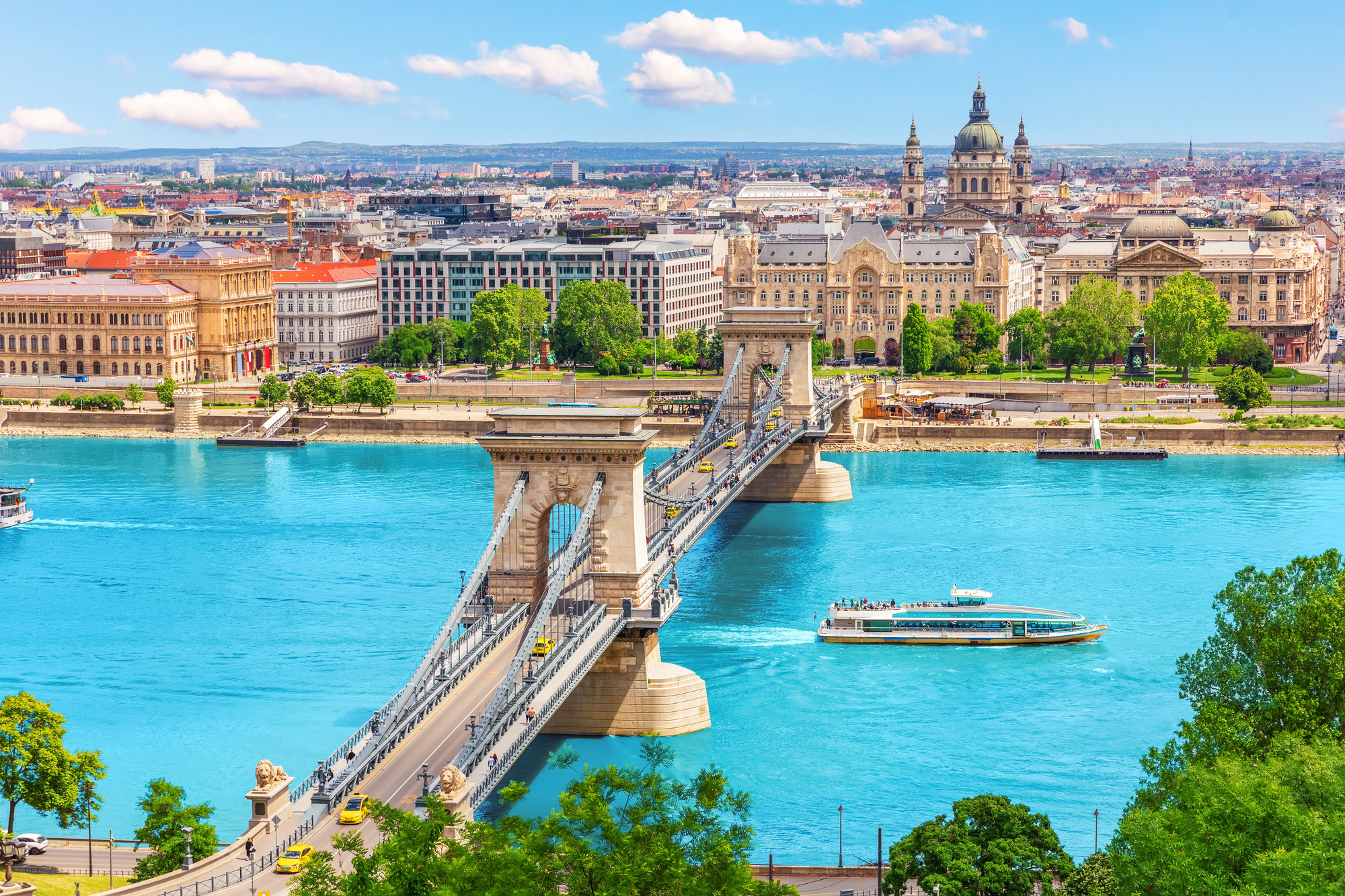
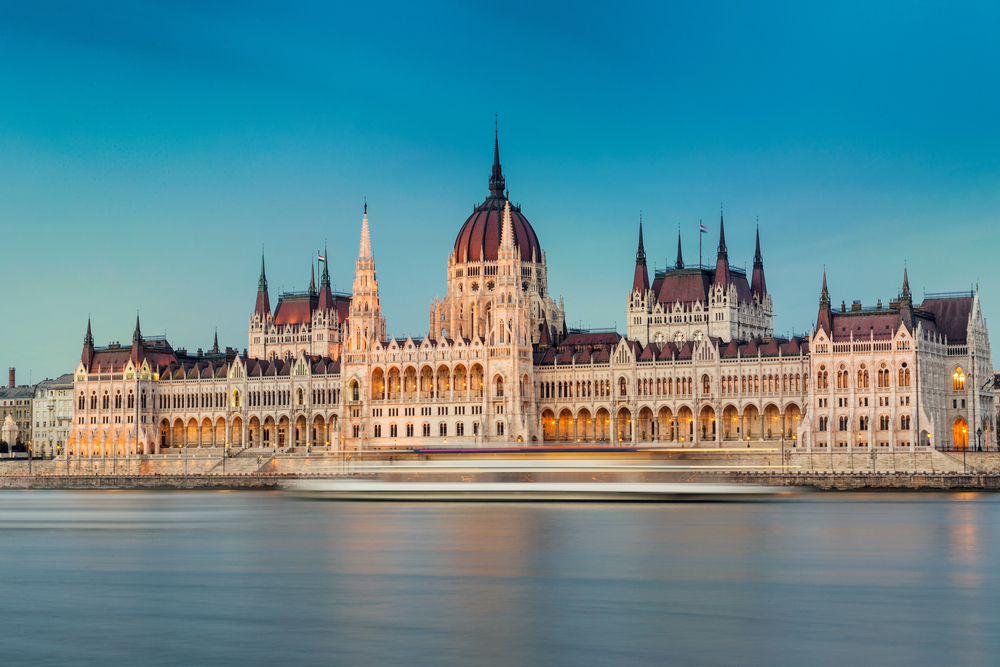
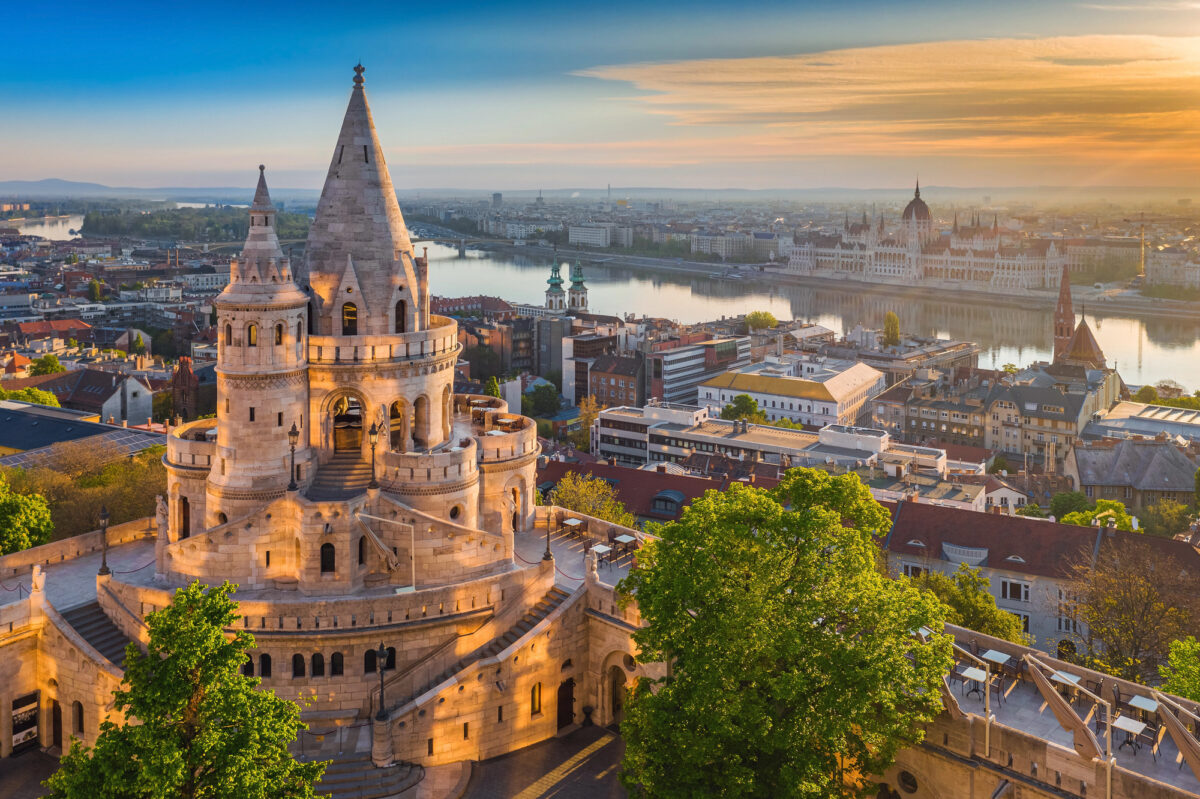
Most of Europe’s great cities grew around one centre. Budapest grew around two, and anyone planning a trip to Budapest works that out within an hour of arriving. Buda sits high on the western bank, all hills, castle walls and church spires. Pest spreads flat and grand on the eastern side, with wide boulevards, coffee houses and the Parliament along the water. Between them runs the Danube, wide enough to feel like weather rather than scenery, and the bridges across it are the thing you end up walking for no reason other than the view.
It is a city that rewards travellers who slow down. There is no single monument you tick off and leave. There are baths, river traffic, long lunches, a racetrack out past the suburbs, and a habit of doing ordinary things with a certain amount of style.
Two cities, one river
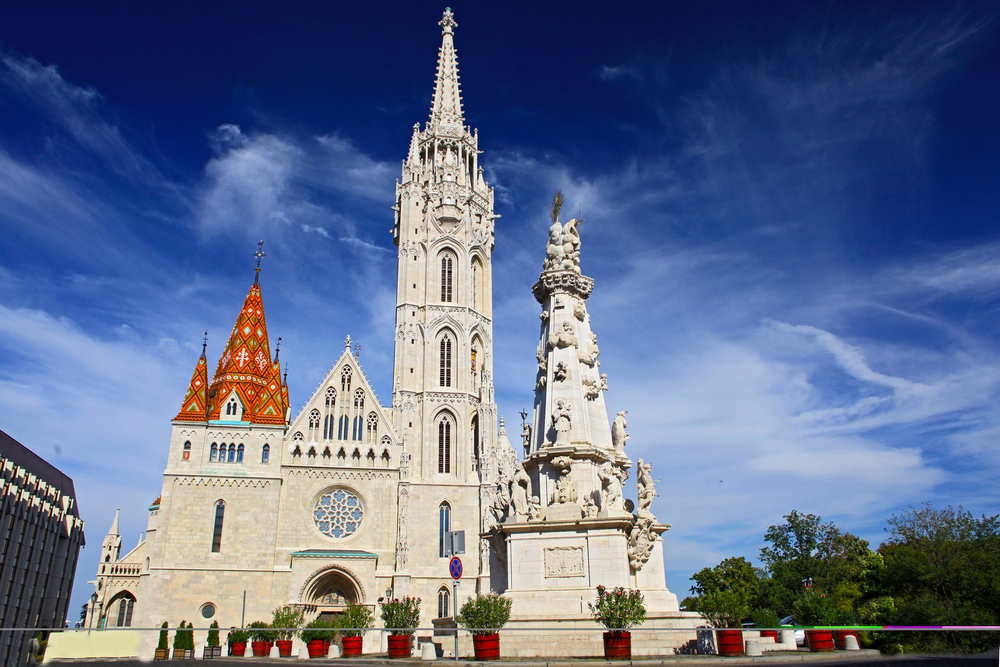
Knowing which side you are on matters more here than in most places. Buda is the older half, climbing up to Castle Hill with its palace complex, the Matthias Church and the lookout terraces that give you the postcard shot of Parliament across the water. It is quieter in the evenings and steeper than it looks on a map, so take the funicular or a bus up and walk down.
Pest is where the city lives. Shops, the great market hall, the Jewish Quarter, the Opera House, the long straight avenues laid out in the nineteenth century when Budapest was determined to look like a capital. Cross back and forth deliberately, at least once at night when the bridges and the Parliament are lit.
The thermal baths and why they are Turkish
Budapest sits on hot springs, and bathing in them is a genuinely old local habit rather than a tourist novelty. Several of the bathhouses date from the Ottoman period, when the city was under Turkish rule for well over a century, and a few of those domed chambers with their small star-shaped skylights are still in use as public baths today. Later grand complexes in the neo-baroque style added outdoor pools, steam rooms and thermal water at a range of temperatures.
Expect them to be busy. The water is hot, the etiquette is relaxed, and the whole point is to sit still for longer than you normally would. Bring thongs and a towel, and set aside a proper couple of hours rather than squeezing it between two other things.
Getting out on the Danube
The river is the reason to spend one part of a day doing nothing but looking. Short sightseeing cruises run through the middle of the city and are worth it purely for seeing the Parliament and the Castle District from the water. At the other end of the scale, the long river ships that feature in every brochure about Europe use Budapest as a starting or finishing port, eating and drinking their way between the towns upstream.
There is also the amphibious bus, which drives through the streets on a normal tour and then rolls straight off a ramp into the river and keeps going. It depends on the water level, which can drop low enough to limit what the operators can do, so treat it as a bonus rather than a fixture.
Motorsport, villages and castles beyond the city
Outside the city to the north-east is the Hungaroring, the circuit that hosts the Hungarian Grand Prix. It is an easy run from central Budapest and a natural detour for anyone following motorsport through Europe. Hungary’s first Formula One driver, Zsolt Baumgartner, remains a well-known figure at home, and racing is taken seriously here in a way that surprises visitors who only know the country for its baths.
Head upstream instead and the Danube curves through a stretch of river towns with basilicas, hilltop fortresses and medieval villages, all close enough to see in a day and back. Add one of those excursions and Budapest stops being a city break and becomes a small region.
When to go, and where it fits
Late spring and early autumn are the sweet spot, with warm days, manageable crowds and the outdoor thermal pools still a pleasure rather than an endurance test. Summer is hot and busy, though it is also when the river and the racing calendar are at their liveliest. Winter has its own case to make, because sitting in steaming water while the air is cold is one of the better things this city offers.
Give it three nights at a minimum. Four or five lets you fit the baths, both banks, a stretch of river and a day trip without rushing. Budapest also works beautifully as a hinge in a longer itinerary, whether you are coming up from the Adriatic by road, arriving on a river ship, or using it as your first taste of Central Europe before Vienna, Prague or the Balkans. As Sam found, arriving late after a long driving day is no obstacle here, because the first thing this city asks of you is simply to sit in the water and stop moving.